Every once in a while, something reminds me that I am very, very old.
For example, I recently came across a comment on Reddit from someone who had just purchased the two-record vinyl version of the Who’s Tommy:
[I] was confused by how the tracks were laid out.One record contained sides one and four while the second record contained sides two and three.I was wondering if this was the way it was meant to be laid out or if this was some sort of misprint?
If you’re a member of my generation, you know why that is because you know how record changers work.
But if you’re a member of the current generation, record changers – like pay phones and Polaroid cameras – are like artifacts of an ancient civilization.You may have heard about such items from the village elders, but it’s unlikely that you’ve ever seen or used one of them.
* * * * *
Tommy is generally considered to have been the first “rock opera.”The Pretty Things’ S. F. Sorrow – which can’t hold a candle to Tommy – is the other primary contender for that honor. (If you’ve never hear of S. F. Sorrow, you’re not alone – it failed to chart in either the U.S. or the UK.)
The Tommy album cover
The rock opera is a pretty rara avis. (The Who somehow managed to produce a second one – Quadrophenia – four years after giving birth to Tommy.)
I think Jesus Christ Superstar deserves to be called a rock opera, and I wouldn’t argue with you if you called Hazards of Love by the Decemberists a rock opera.
* * * * *
Don’t confuse the Decemberists and the Decembrists.
The Decemberists are an indie band from Portland, Oregon.
The Decembrists were the Russian noblemen and military officers who fomented an unsuccessful uprising to overthrow Tsar Nicholas I in December 1825.
My oldest son is named Nicholas, but he wasn’t named for Tsar Nicholas I.Nor was he named for Tsar Nicholas II, the last Russian tsar.
My younger son is named Peter, but he wasn’t named for Peter the Great – it’s a coincidence that my two boys share first names with Russian emperors.
My daughters are named Caroline and Sarah.There have been more Queen Carolines than you can shake a stick at – the two most famous ones were the wives of the English kings George II and George IV, but there were also Queen Carolines of Bavaria, Denmark, Hungary, Naples, and Saxony – but my daughter wasn’t named for any of them.
Caroline of Ansbach, who married King George II and became Queen Caroline of England and Ireland
The only queen named Sarah I’ve been able to find was Sarah of Turnovo, the second wife of Tsar Ivan Alexander of Bulgaria (who ruled from 1331 to 1371).
* * * * *
I could go on and on like this, but it’s getting late. Time to wrap things up!
(Those lines fit 2 or 3 lines to a T, wouldn’t you say?)
* * * * *
In the 1947 movie, Kiss of Death, Richard Widmark portrayed a psychopathic killer named Tommy Udo:
The late movie, music, and book critic Allan McLachlan – who died in 2019 – used Tommy Udo as his nom de plume. A hitman like Widmark’s Udo would seem to be an unlikely inspiration for someone who wrote magazine articles for a living, but McLachlan’s NME piece on the Who’s Tommy reads like something that the Kiss of Death character – who has been described as a “cackling, vindictive psychopath” – might have produced if he had spent his spare time between murder-for-hire gigs writing record reviews:
[I]n his quest to push pop music to the limit, [Pete Townshend] ended up producing this seething, rancid turd of an album, fit only for fly-food and scaring the neighbors. In all fairness, this remastered version by The Who is nowhere near as bad as the “all-star” production that came out a few years later and that in turn was not fit to lick the arse of arseness that was the movie soundtrack that had Oliver Reed and Ann-Margret singing.
Tommy is a fucking woeful album; individual tracks like “I’m Free,” “Eyesight To The Blind,” and “Pinball Wizard” are classic Who . . . but the padding around them is like drinking vomit. How a man capable of writing “Substitute” or “I Can See For Miles” could also be responsible for “1921” or “Go To The Mirror” is a major mystery. This was the absolute nadir for Townshend and the Who; and the heavily-flawed Quadrophenia seems like a masterpiece in comparison. Tommy stands as an object lesson for any of today’s young turks; as soon as you think, “Rock opera: good idea,” then it’s time to think, “Give up drugs!”
* * * * *
My grandmother told me to never speak ill of the dead, which Allan McLachlan most certainly is. But I think McLachlan’s review of Tommy is so full of you-know-what that his eyes must have been brown when he wrote it.
“Seething, rancid turd of an album”? A “f*cking woeful album”? Listening to it is “like drinking vomit”?
I’ve written a lot of over-the-top sh*t in my life, so I know over-the-top sh*t when I see it. And that review is some seriously over-the-top sh*t.
* * * * *
Other reviewers had a very different view of the Who’s rock opera.
Rolling Stone went ga-ga over Tommy. “For the first time,” its 1969 review of the album opined, “a rock group has come up with a full-length cohesive work that could be compared to the classics.”
“For sheer power, invention and brilliance of performance,” Albert Goldman wrote in Life magazine, Tommy “outstrips anything that ever come out of a rock recording studio.”
The Village Voice’s rock critic, Robert Christgau, called Tommy the most successful “extended work” in rock music to date, and said it was the best album of 1969.
The most prominent American classical music figure of his era, Leonard Bernstein, said that the album’s “sheer power, invention and brilliance of performance outstrips anything which has ever come out of a recording studio.” (When you remember that Bernstein is the man behind West Side Story – which probably deserves a spot on the Mount Rushmore of Broadway musicals – his opinion deserves to be taken very seriously.)
Finally, in an appreciation of the album published 50 years after its release in 1969, the National Review said that Tommy was the “ultimate expression of the upwardly surging creative arc” that produced extraordinary albums like the first Led Zeppelin album, the Rolling Stones’ Let It Bleed, and the Beatles’ Abbey Road – all of which appeared in stores that same year.
* * * * *
I’m in the camp that considers Tommy to be an uncanny work of genius. (I say “uncanny” because Pete Townshend – the rock deity who almost single-handedly created Tommy – was only 23 when he started work on what is indisputable the greatest “rock opera” ever composed.)
And while Tommy is chockfull of interesting songs, the one I’ve chosen for induction into the 2 OR 3 LINES “GOLDEN DECADE” ALBUM TRACKS HALL OF FAME is its tour de force finale, “We’re Not Gonna Take It,” the second half of which is you may know as “See Me, Feel Me.”
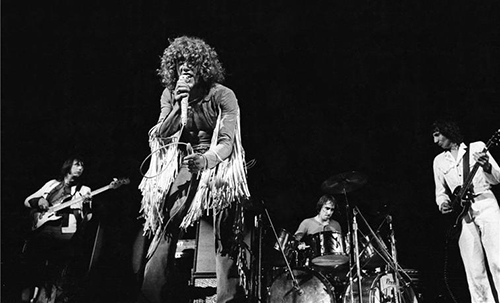
The Who at Woodstock
Click here to watch the Who performing the “See Me, Feel Me” part of today’s featured song at Woodstock. (I have never seen rock musicians working harder than Pete Townshend and especially Keith Moon work in this performance.)
The first three weeks of my life as a retired guy have been mostly about (1) grandsons, (2) biking, and (3) beer.
The last couple of 2 or 3 lines posts focused exclusively on biking and beer. This one mixes in some grandson stuff, as well as some incisive social commentary.
* * * * *
The day after I returned from my Virginia Capital Trail trip, I headed to Capitol Hill to visit my younger grandson, Thomas.
I took the subway to Union Station, where I used my Capital Bikeshare membership to unlock a shared bike to ride to Tommy’s house:
Capital Bikeshare bikes are heavy and clumsy. You don’t want to ride one very far.
But there are Capital Bikeshare docking stations all over DC and the surrounding suburbs, and the price to ride them is right – $85 for a year’s membership, which entitles you to an unlimited number of rides as long as they last no longer than 30 minutes. (I’m not sure what the reason for that annoying policy is.)
I loaded Tommy into his stroller and we headed to Lincoln Park, which is the largest park on Capitol Hill. It’s a very popular destination for city dwellers looking for some open space for their kids and their dogs to enjoy.
See the statue behind Tommy and me in this selfie?
Here’s a closeup of it. It depicts Abraham Lincoln emancipating a slave:
Tommy was seven months old the day I took him to Lincoln Park. He’s an affable lad, but he's sort of a one-trick pony: he doesn’t do much more than stick stuff into his mouth:
(Nice hat!)
* * * * *
After returning Tommy to his mother, I checked out another shared bike and rode to a docking station near Public Option, a small brewpub I had heard about only recently.
Unfortunately, that docking station was filled up – there was no room at the inn, so to speak. So I had to ride to another docking station six blocks away and walk back to Public Option.
A Capital Bikeshare docking station
I called the Capital Bikeshare customer service line and politely expressed my displeasure with their misfeasance and stupidity while walking back to Public Option. (I don’t know much the guy who answered my call gets paid, but it’s not enough to have to deal with assh*les like me.)
* * * * *
Public Option is a small, no-frills microbrewery that's about three miles north of Lincoln Park:
A sign on the door said that Public Option’s maximum capacity was 134 people. I would have guessed more like 34– seating was limited to a few picnic tables out front, maybe half a dozen small tables inside, and four spots at the bar.
But there were half a dozen Public Option beers on tap and free Cheez-Its:
And the brewery’s owner and the young lady helping him pour pints couldn’t have been friendlier and more welcoming.
* * * * *
One thing that’s unique about Public Option is its strict “no tips allowed” policy. Here’s what its website has to say about that policy:
THOUGHTS ON TIPPING PRACTICES
Market-based economies have bestowed innumerable benefits on humanity throughout our history by enforcing a dynamism in the ways we produce and distribute goods and services. From ancient bazaars to the New York Stock Exchange, markets have flourished under a wide variety of rules. . . .
One established "rule" or norm in restaurants is the practice of tipping. When I eat out, I normally leave 20%. I know that the servers can't live on their base pay. And I assume that they will share some of their tip income with other staff. But let's take a look at what these assumptions rests on. If I see that an establishment lists the price of a beer as $6, I know that the actual price is 20% higher, or $7.20. Further, I assume that the staff at the establishment is not being paid a living wage and that it is up to me as a customer to step in with a subsidy.
You won't find one of these at Public Option
The tipping system has worked pretty well in restaurants for many years. But it has its flaws. Although staff at some restaurants make a very solid living on tips, at other places tip-based income can be unpredictable. Additionally, gender, age and racial biases can skew outcomes for individuals. And the dynamic is complicated, with servers relying on their employment at an establishment to give them access to their wages, but relying on individual customers for those wages. We believe it's time to try some alternatives.
The Public Option pays a starting wage of $15/hour and provides full-time (40 hours/week) work. We ask customers not to leave tips as our prices provide for living wages for all employees. If a customer leaves a tip, it will be added to a fund which will be donated to a local non-profit to be decided on by the staff.
Can this work? Will this model accrue a competitive advantage to The Public Option? Will we play a part in displacing a flawed incumbent system with something better? Or will we just crash and burn? Who knows?
I don’t have strong feelings about tipping. I’m a pretty cheap guy, so you would think I be in favor of a no-tipping policy. But tipping doesn’t really bother me – I understand what the expectations are when it comes to tipping at restaurants and bars, so I factor that into the equation.
Having said that, I’m all in favor of the Public Option trying something different instead of just going along with the crowd. “Let a hundred flowers bloom, let a hundred schools of thought contend,” as that dirty Commie Mao Tse-Tung once said. (Yes, I know it’s spelled “Mao Zedong” nowadays but I grew up spelling it the other way.)
Chairman Mao
* * * * *
A 2010 article in the International Journal of Hospitality management reported the results of research showing that the lyrical content of songs played in restaurants has a significant effect on tipping behavior.
One would think that every waitress in the country would be pushing her boss to put today’s featured song on the playlist at the restaurant or bar where she works.
“Tip That Waitress” was released on Loudon Wainwright III’s 1993 live album, Career Moves, which was recorded at the Bottom Line in New York City:
The last 2 or 3 lines discussed the true story behind this Gawker.com headline:
Lady in Sumo Suit Bludgeoned Ex with Smirnoff Ice for Flirting with Man Dressed as a Candy Bar
If you’re not familiar with Gawker, it was recently described in a magazine article as “a spiteful, bile-fueled gossip rag whose decisions of questionable newsworthiness included posting a video of a heavily intoxicated woman having sex in a public bathroom.”
Typical Gawker headline
That may be true, but more traditional news outlets could learn a thing or two about writing headlines from Gawker.
Big media companies are struggling to make money these days. TV viewers refuse to sit through commercials, and TMZ is eating the old-school networks’ lunch when it comes to breaking the kind of stories that the hoi polloi care about – which is to say stories about celebrities, stories about sex scandals, and stories about celebrity sex scandals.
No one under the age of 50 reads newspapers any more, so even snooty publications like the Washington Post are relying on sensational National Enquirer-style headlines to get attention.
Best headline of all time?
I get a daily e-mail called The Post Most that highlights the most popular stories in that paper that day. Here are the subject lines from four recent The Post Most e-mails:
May 11: Why a South Carolina man got bail after he shot, buried and ‘slow-cooked’ two people.
May 17: “They cut my son’s head off, and they took my son’s head. Who would do that?”
May 19: Teen killed his girlfriend’s parents and celebrated with sex. He’s being released after 5 years.
June 1: “Her blood was drained”: Graphic novelist charged with killing girlfriend in Hollywood.
It’s hard to say which one of these is the most appalling.
I might write a post about each of those four stories, or I might write about only one of them. It will depend largely on whether the stories live up to the headlines, and how quickly I get bored or distracted.
*****
“Miracle Cure,” which is only 13 seconds long, is the shortest song ever featured on 2 or 3 lines. It’s one of five tracks on Tommy that’s less than one minute long.
“Extra” is short for “extra edition,” which newspapers used to publish when war was declared, or a President was assassinated, or there was some other news event that was so extraordinary that it couldn’t wait for the regular edition of the paper to be published. Newspaper street vendors would shout “Extra! Extra! Read all about it!” to get the attention of potential newspaper buyers.
Here’s “Miracle Cure”:
I can’t imagine anyone in his or her right mind would spend $1.29 to buy a 13-second song, so I’m skipping the usual link to Amazon.
Since the protagonist of the Who's brilliant Tommy is a deaf, dumb, and blind boy, I always assumed that "Eyesight to the Blind" – which is about a woman whose mojo is working so well that just encountering her can restore hearing to the deaf, speech to the dumb, and eyesight to the blind – was written especially for Tommy.
But as we learned in a previous 2 or 3 lines, "Eyesight to the Blind" was written by Sonny Boy Williamson II in 1951, almost two decades before Tommy was released. It is the only song on Tommy not written by the Who.
Tommy's father was an RAF pilot in World War II who was presumed dead after his plane was shot down over Germany. His pregnant wife gave birth to Tommy, then met a man who became her lover. When Tommy's father returned home after years in a Nazi POW camp, he found his wife in bed with her new lover and murdered him.
At least, that's what happened in the original recording of Tommy and in the 1993 Broadway musical based on the album. In the 1975 movie version of Tommy, the lover killed Tommy's father.
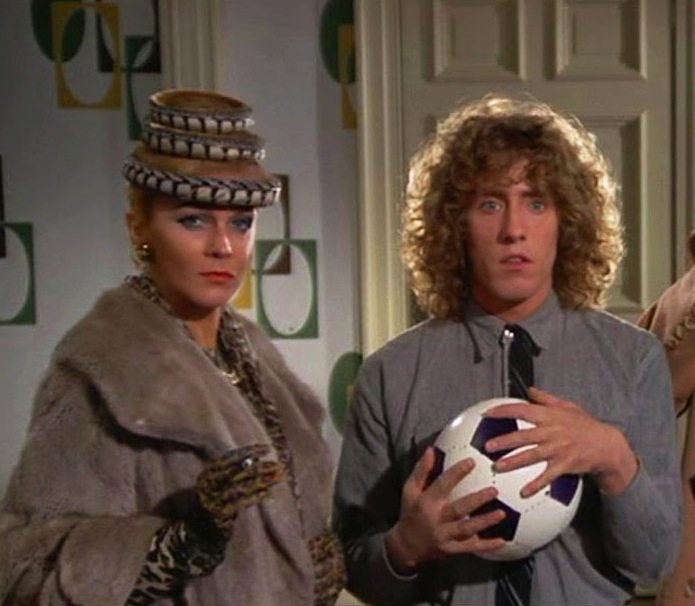
From the 1975 movie: Ann-Margret (as Tommy's mother) and Roger Daltrey (as Tommy)
Either way, Tommy witnessed the murder. But his mother commanded him to ignore what he had seen and heard, and to KEEP HIS MOUTH SHUT:
You didn't hear it
You didn't see it
You never heard it, not a word of it
You won't say nothing to no one!
Tommy eventually overcomes his deafness, dumbness, and blindness, which are psychosomatic rather than physical in nature.
Here's the Who's version of "Eyesight to the Blind," which is very different from the Sonny Boy Williamson II original and the covers that other blues musicians (like Mose Allison) recorded.





 Posts
Posts

