Try a little bit
To make my mouth dribble
Come on baby, let's ride away in the rain
[NOTE: I first wrote about "She Said Yeah" on January 15, 2012. I believe that was the first 2 or 3 lines post to refer to a record as a "stick of dynamite" – a term that I’ve used to death since then. Regardless of that, "She Said Yeah" is perhaps the ultimate example of a stick-of-dynamite record – it’s 95 seconds of pure mid-sixties chaos. There's no such thing as a 2 OR 3 LINES "STICK OF DYNAMITE" HALL OF FAME – at least not yet – but there is a 2 OR 3 LINES "GOLDEN DECADE" COVER RECORDS HALL OF FAME, and "She Said Yeah" certainly belongs in that HOF.]
* * * * *
Years ago, I ran into an infomercial producer I had known for a long time at a trade show in Las Vegas. He waxed rhapsodically about his new infomercial.
"It's a stick of dynamite!" he told me. (This guy was known to engage in a bit of hyperbole on occasion.)
A "stick of dynamite" is the best description I can imagine for this very high energy song, which is the first track on the Rolling Stones' 1965 December's Children album.

* * * * *
The Stones were "my" group when I was in junior high school, December's Children was the first album of theirs that I owned. I knew every word of every song on that LP – I played it to death.
December's Children was a bit of hodgepodge. It had covers – Chuck Berry, blues legend Muddy Waters, and C&W star Hank Snow were all represented, and there was a live cover version of "Route 66" – and it had Mick Jagger-Keith Richards originals, including the #1 hit single "Get Off of My Cloud" and "As Tears Go By."
"She Said Yeah" was a cover of a 1959 hit by Larry Williams, a New Orleans R&B singer/songwriter/pianist in the mold of Little Richard, who was a close friend of his. Williams also wrote and recorded "Bony Moronie," "Dizzy Miss Lizzie" (which might have been inspired by Little Richard's "Good Golly Miss Molly"), and "Short Fat Fannie" (which was definitely inspired by "Long Tall Sally"). All three songs were covered by the Beatles and many others.
* * * * *
Williams was as big a badass as any modern-day rapper. He had supposedly been a pimp before becoming a recording artist. He was convicted of dealing drugs at the height of his musical career and spent three years in prison. After he got out of the joint, Williams made something of a comeback. Among other things, he produced a couple of Little Richard albums.
 |
| Larry Williams |
But the two friends hit a major bump in the road in 1977 when Williams pulled a gun on Little Richard and threatened to kill him over an unpaid drug debt. (Both performers were serious cocaine and heroin users, boys and girls.)
Williams may have used that gun on himself in 1980, when he was found dead from a gunshot wound to the head at age 44. The death was ruled a suicide, but some believed he had been killed as a result of his involvement with drugs and/or prostitution.
There's an odd coda to Williams's story. Martin Albritton is a musician who began to call himself Larry Williams after the real Williams was found dead. He continues to claim that he is the real Larry Williams and perform under that name, despite requests from Williams's family to stop.
* * * * *
"She Said Yeah" was co-written by Roddy Jackson (a rockabilly singer/pianist who is often compared to Jerry Lee Lewis) and . . . wait for it . . . Sonny Bono? (Before there was Cher, Bono worked for Specialty Records, an independent R&B/rock and roll label whose stable of performers included Sam Cooke, John Lee Hooker, Little Richard, Lloyd Price, and Larry Williams.)
Williams' original recording of "She Said Yeah" is very good, and the Animals included a good cover of the song on their 1964 debut album. But both those versions pale in comparison to the Stones' recording, which is performed at a frantic tempo – the track is only one minute, 34 seconds long. One reviewer said "She Said Yeah" is "one of the Stones' most outta hand moments ever," and another said it sounded more like a punk song than an R&B cover.
 |
| Bleu de Chanel |
I listened to December's Children dozens (if not hundreds) of times when I was a teenager, but I haven't played it in decades. The Stones' "She Said Yeah" appeared on my radar recently thanks to Bleu de Chanel, a men's fragrance from the legendary French fashion house and parfumeur.
Click here for a review of Bleu de Chanel by a guy in a Mets cap. (He seems to be serious.)
As the reviewer notes, one of the main ingredients in Bleu de Chanel is labdanum, a sticky brown resin obtained from the cistus (rockrose) plant, a flowering shrub that is native to the Mediterranean region. In ancient times, labdanum was gathered by combing the beards and thighs of goats and sheep that grazed on the shrubs.
 |
| Cistus creticus |
* * * * *
Bleu de Chanel has a ubiquitous television advertisement that you might have seen recently. It features French actor Gaspard Ulliel, who tried to ride his pet dog like a horse when he was six years old, was scratched by the dog, and ended up with a big scar on his cheek that is trés sexy.
Click here to watch the E*trade baby's mom coming down on him after he pulled the same stunt.
The Bleu de Chanel TV spot was directed by Martin Scorsese, who directed the 2008 Rolling Stones documentary, Shine A Light. Scorsese used a number of Rolling Stones songs in his movies -- "Gimme Shelter" was on the soundtrack of three of his movies (Goodfellas, Casino, and The Departed).
Ulliel portrays a celebrity at a press conference who suddenly starts to have flashbacks of an old girlfriend – a blonde who is not only hotter than hot but appears to be a lot less high-maintenance than his current squeeze.
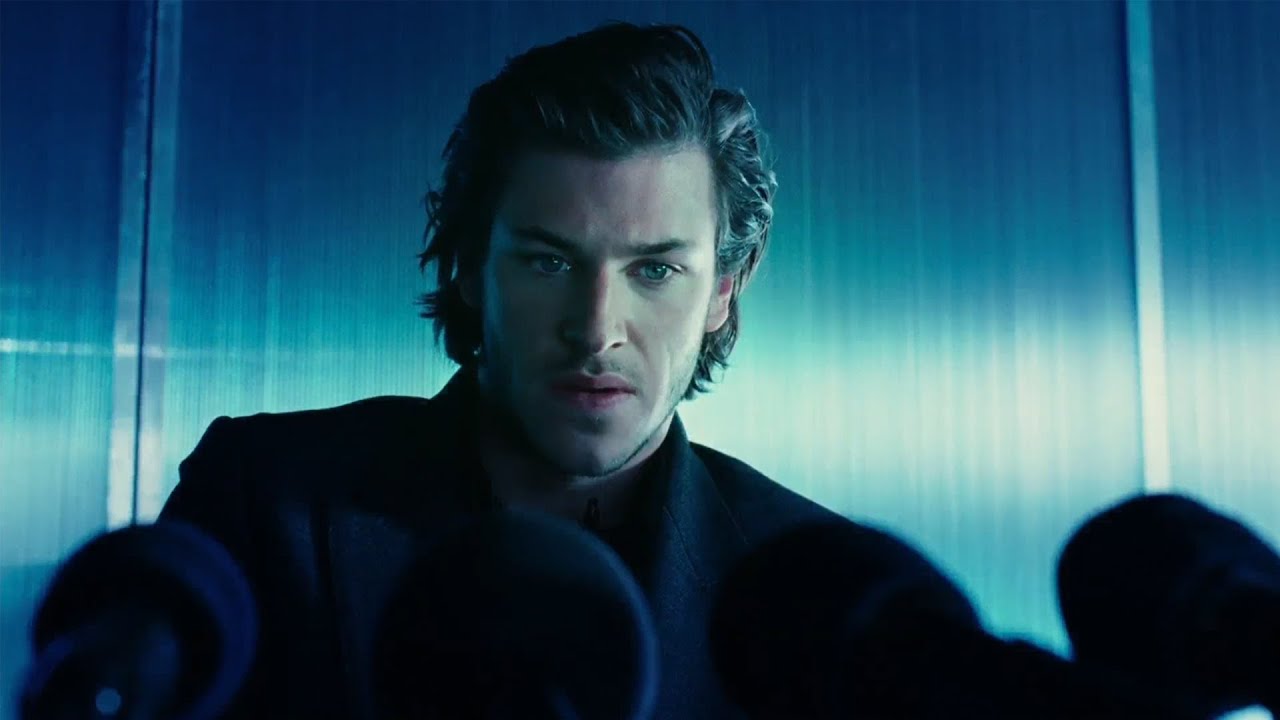 |
| Gaspard Ulliel |
At the end of the spot, he suddenly makes a startling pronouncement – "I'm not going to be the person I'm expected to be anymore!" – and then walks away from the assembled crowd of reporters and paparazzi "like a peg-legged pirate" (to quote a Youtube commenter).
Click here to watch the 60-second version of the Bleu de Chanel commercial.
[NOTE: Gaspard Ulliel died from injuries sustained in a skiing accident in January 2022. He was 37 years old.]
* * * * *
Click here to listen to Larry Williams's version of "She Said Yeah." Note that the first verse of his version has different lyrics than those quoted above, which are what Jagger sings:
Dum deedle dee dum dum,
Little girl, where did you come from?
You fine little thing,
You make my heart sing,
Come on baby, let me buy a wedding ring
I wonder if Jagger intended to change the words, or if the words he sang are what he thought Larry Williams was singing.
Click here for the Rolling Stones' cover of "She Said Yeah." If you're looking for a stick of dynamite, you've come to the right blog.
Click here to order the song from Amazon.


 Posts

