Showing posts with label Alice in Chains. Show all posts

Tuesday, April 25, 2023

Alice in Chains – "Rooster" (1992)


Here they come to snuff the Rooster

Yeah, here comes the Rooster

You know he ain't gonna die!


Washington, DC has a number of first-rate art museums.  But I think most art experts would agree that the National Gallery of Art (or “NGA”) has the most impressive collection of any of them.


I wouldn’t necessarily argue that Katharina Fritsch’s Hahn/Cock sculpture – a 15-foot-tall fiberglass rooster that is displayed on the roof of the National Gallery’s East Building – is the greatest work of art at that museum.  But it’s almost certainly the most amusing one:


*     *     *     *     *


Fritsch – who is German – spent two and a half years working on Hahn/Cock, which was originally placed on the empty fourth plinth in London’s Trafalgar Square.


She has described it as a feminist sculpture “since it is I who am doing something active here – I, a woman, am depicting something male.”


“Historically it has always been the other way around,” she went on to say. “Now we are changing the roles. And a lot of men are enjoying that.”


I don’t necessarily disagree with Katharina, but I think she should stop putting words in the mouth of men – womansplaining is just as annoying to men as mansplaining is to women.


*     *     *     *     *


2 or 3 lines saw Hahn/Cock (a/k/a “The Blue Rooster”) for the first time only a few weeks ago.  Here are a few of the other works I saw at the NGA that day:


Alexander Calder – Blue Elephant with Red Ears (1971)

Wassily Kandinsky – Improvisation 31 (1913)

Roy Lichtenstein – Look Mickey (1961)


*     *     *     *     *


I’ve been spending a fair amount of time visiting museums recently.  One of those visits was with one of my young grandsons – I’ll tell you about what we saw in my next post.


Visiting art museums is only one of the time-consuming activities I find myself engaged in these days.  The others include playing trivia, riding my bike – the warm spring weather makes it hard for me to stay indoors – and talking with 2 or 3 lines fans.  (I spend a LOT of time communicating with 2 or 3 lines fans – it’s very hard for me to ignore all the texts, e-mails, and phone calls that I’ve been getting from these devotees of my wildly popular little blog.)


All that has prevented me from spending time writing new 2 or 3 lines posts.  As you’ve probably noticed, the frequency of my posting isn’t what it used to be – to say nothing of the quality of those posts.


My fans tell me that 2 or 3 lines is still the ne plus ultra of narcissistic pop music blogs.  


That may be true.  But it’s a far cry from what it used to be.  (I weep when I go back and read some of my older posts.  They are SO GOOD!)


They are also very long . . . unlike this one.


*     *     *     *     *


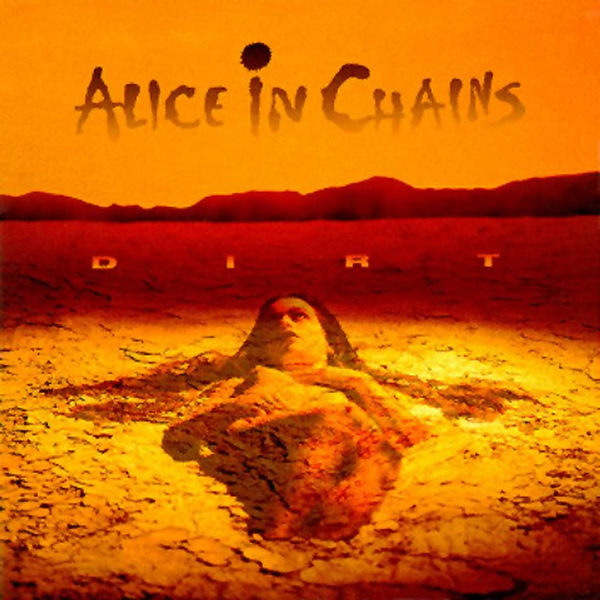
“Rooster” was released in 1992 on Dirt – the second Alice in Chains studio album:


It was written by the group’s lead guitarist, co-lead vocalist, and chief songwriter, Jerry Cantrell Jr.  (“Rooster” was the nickname of Cantrell’s father, Jerry Cantrell Sr., who served in the U.S. Army in the Vietnam War.)


I bought Dirt in 1994 at a used CD store in the Manayunk section of Philadelphia.  I also picked up Soundgarden’s Badmotorfinger, Nirvana’s In Utero, and Pearl Jam’s Vitalogy album at the same time – that’s a pretty impressive haul if I do say so myself.


Click here to watch the official music video for “Rooster.”  (Warning!  This video includes some very unpleasant images.)


Click here to buy the record from Amazon.


Tuesday, August 21, 2018

Alice in Chains – "Them Bones" (1992)


Gonna end up 
A big ol’ pile
Of them bones

In 2003, author Richard Rubin began interviewing all of the living American veterans of World War I that he could find.

Last of the Doughboys, Rubin’s book of interviews with these veterans – each of whom was over 100 years old – was published in 2013.

Frank Buckles in 1917 and in 2008
All of the men Rubin interviewed are now dead.  Frank Buckles, the last surviving veteran of World War I, died in 2011.  He was 110 years old.

*     *     *     *     *

After publishing Last of the Doughboys, Rubin travelled to France to visit World War I battlefields and cemeteries.  He explored trenches, tunnels, and bunkers, and viewed hundreds of artifacts.


I read Rubin’s 2017 book about his experiences, Back Over There, before heading to France and Belgium this past July.  It was excellent preparation for my exploration of various World War I sites in the company of the small group of Americans I was traveling with.

*     *     *     *     *

One of the sites Rubin visited was the Douaumont Ossuary, the final resting place of more than half of the 230,000 French and German soldiers who died in the battle of Verdun, which began on February 21, 1916, and lasted until December 19 of that year.

The Douaumont Ossuary
An ossuary can be anything from a small box to a large building that contains human bones.  The Douaumont Ossuary is a large structure with a 150-foot-high tower that offers a panoramic view of the largest French World War I cemetery.  (About 16,000 French soldiers who died at Verdun are buried in that cemetery, including almost 600 Muslim soldiers from French colonies in northern Africa.  Their graves face Mecca.)

The interior of the Douaumont ossuary
The interior of the Douaumont Ossuary was designed to put visitors in a reverent and meditative frame of mind.  Stained-glass windows admit a subdued orange-red light.  The walls and vaulted ceilings are engraved with the names of unknown soldiers who died at Verdun.

*     *     *     *     *

If I had not read Rubin’s book, I would not have known to bend down and look into the small ground-level windows on the north-facing wall of the ossuary.

Those windows reveal thousands and thousands of bones belonging to unidentified French and German soldiers who lost their lives at Verdun:


My group visited a number of World War I cemeteries, memorials, and museums.  But nothing brought home the reality of that war like the view through those windows at the Douaumont Ossuary.

*     *     *     *     *

Every year, farmers or tourists or others discover the bones of soldiers killed at Verdun.

For example, in 2013, German tourists found a single human bone while exploring the site of the destroyed village of Fleury-devant-Douaumont. 

That village, which had a population of 422 before the Great War broke out, was captured and recaptured by the French and Germans sixteen times during the battle of Verdun.  

A postcard showing Fleury-devant-Douaumont
before the Great War
By the time that battle ended, Fleury-devant-Douaumont was not only uninhabited, it was uninhabitable due to the presence of unexploded artillery shells and poison-gas residues.  It is one of the six villages in the area that is officially designated as “a village that died for France.”  Each of those villages have a mayor but no residents.

Archaeologists who excavated the area where the tourists had discovered the bone discovered the remains of 26 French soldiers, all of whom were killed in action at Verdun.  Only a few of their bodies could be identified.  

Descendants of two of the soldiers whose bodies could be identified chose to repatriate their remains to  the towns where they were born.  The remainder were interred at Douaumont Cemetery

*     *     *     *     *

“Them Bones” is the opening track from Dirt, the second Alice in Chains album.  The day they went into the studio to start recording it was the first day of the riots that broke out in Los Angeles after a jury acquitted the LAPD officers who were videotaped beating Rodney King.  To get out of harm’s way, the band left the city and hung out in the desert until the riots ended. 


Dirt is a great album, but it’s not exactly feel-good music.   One article characterized Dirt’s songs as being “focused on depression, pain, anger, anti-social behavior, relationships, drug addiction (primarily heroin), war [and] death.”

That pretty much sums it up.

Click here to listen to “Them Bones.”

Click on the link below to order the song from Amazon.  

Sunday, May 8, 2016

Alice in Chains – "Down in a Hole" (1992)


Down in a hole
Out of control

I lost my father in January.  My mother is still alive, but I’ve really lost her as well.

My parents – who were both 90 years old – were married for 68 years.  Despite a number of health issues, they were still living at home and managing reasonably well until my father’s final illness.

My parents (two weeks before my father's death)
His passing devastated my mother, although her grief didn’t take the form I expected – I never saw her cry after he died.  

Instead, she became consumed by anxiety and fear.  When friends came to visit her, she wouldn’t open the door because she thought they were someone else.  

When I called her on the phone, she didn’t believe that it was really me calling – “It doesn’t sound like you,” she would say, convinced that I was an imposter trying to take advantage of her.  (She said the same thing when my children called her.)  

My parents in 1974
She was overwhelmed by even the most insignificant decisions, and begged me to take control of things.  But she questioned every action I took on her behalf.  

When I tried to explain (as patiently as I could) why I had done something, she always had the same response: “There’s no use arguing with you.  You’ll just do whatever you want to do.”

*     *     *     *     *

The evening of my father’s funeral, my children and I tried to persuade my mother to come home with us and move into assisted-living facility in our neighborhood, where we could visit her daily and she could join us for birthdays and holidays and family dinners.  (We live over a thousand miles away from the town where my parents lived their entire married lives.)  

At my daughters' high-school
graduation in 2005
But she wasn’t ready to leave her home yet.  So we increased the number of hours that her home health care worker stayed with her and tried to oversee her bills and other business.

After a couple of months, she seemed to be coming around to the idea of moving, so my sister and I started planning to relocate her.  But one night, she fell while walking down the hallway to her bedroom.  The next day, a cousin took her to the emergency room, where she found out that she had suffered a type II fracture of the odontoid process of her C2 neck vertebra – a not uncommon injury for people who fall on their faces.


A neurosurgeon fitted her for a large and very uncomfortable brace that’s designed to immobilize her neck until the fracture heals.  I haven’t had the heart to tell her that she is likely to have to wear that brace for a year.  (The only time it comes off for even a moment is if the doctor thinks some kind of adjustment or refitting is necessary – otherwise she wears it 24/7.)

I moved my mother to a skilled nursing center after she left the hospital.  It’s relatively new and pleasant for a nursing home, and the staff are warm and caring.


I’ve flown back to visit her twice since she fell, and will head back shortly for another visit.  She should be able to move to the assisted-living facility near my home in a month or two.  

*     *     *     *     *

I can’t say I’m all that optimistic about how well she will adjust to moving to an unfamiliar environment.  She’s a long way from being over my father’s death, and we have no idea what the long-term effects of her neck fracture will be.

I’ve been spending a lot of time over the past few months trying to take care of the myriad of practical issues that my father’s death and my mother’s injury have raised.  

I’ve made appointments with her dentist, her audiologist, and her doctors, and arranged for her transportation to those appointments; filed claims on my father's life insurance policies; set up automatic monthly bank withdrawals to cover her utilities and other bills: enrolled her in Medicare part B and part D, and signed her up for supplemental “Medigap” health insurance; sold my father’s pickup truck (a 2003 GMC Sierra with only 12,000 miles); and cashed a number of matured U.S. savings bonds that haven’t been earning interest for years.  (I don’t know what happened on April 23, 1975, but my parents bought no fewer than eighty $50 savings bonds on that date.)

All that needed to be done.  But I may have done it mostly to make myself feel that I was being useful.  

*     *     *     *     *

There a scene in Ian Rankin’s newest book, Even Dogs in the Wild, where a brother and a sister are visiting their ailing father – who is near death – in a hospital.  When the sister accidentally spills the contents of her purse, the brother immediately starts picking everything up:

"Just leave them," she hissed. "They're not what's important."

"But they're something I can fix," her brother said, straightening up, her things gathered in his hand.

Paying bills, enrolling my mother in Medicare, selling that pickup truck, handling all those old savings bonds . . . those are all things that I could fix.

What I can’t fix is my mother’s grief and loneliness.  She fell into a deep psychological and emotional hole when my father died, and I want desperately to help her out of that hole.

But I’m not going to lie to you – and I’m not going to lie to myself.  Despite talking with ministers and grief counselors and elder care consultants and social workers in hopes of gaining some insight into how to do that, I really have no idea how to help her overcome her anxiety and depression.

*  * * * * 

“Down in a Hole” was released by Alice in Chains in 1992.


It’s the best song on their second album, Dirt, which I bought the same day I bought Nirvana’s In Utero, Pearl Jam’s Vitalogy, and Soundgarden’s Badmotorfinger.  That was enough grunge to last me for twenty years, when I added Mudhoney’s My Brother the Cow to my iTunes account (which currently contains 22.615 songs).

Click here to listen to “Down in a Hole.”


Click below to buy the song from Amazon: