Showing posts with label Fleetwood Mac. Show all posts

Friday, October 17, 2025

Fleetwood Mac – "Jewel Eyed Judy" (1970)

I just wondered if
Your eyes still shine
As they did when you were mine

[NOTE: What appears below is my October 22, 2010 post about today's featured record, which I've chosen as one of the members of this year's class of the 2 OR 3 LINES "GOLDEN DECADE" ALBUM TRACKS HALL OF FAME.  I wonder whatever happened to good ol' Norm, the rather hapless freshman who introduced my to "Jewel Eyed Judy" and the Kiln House album.  But since I can't remember his last name, I'll probably never know.]   

*     *     *     *     *

I own Fleetwood Mac's Kiln House album now, but I first became familiar with it when I was a sophomore in college.  A freshman named Norm who lived just a few rooms away from me used to play it a lot.

The Kiln House album cover
Norm and his roommate were major marijuana consumers.  At night, the smoke in their dorm room was so thick room that you could barely see your hand in front of your face.  (I think Norm and another freshman who lived on my floor went to south Texas during spring break that year to harvest peyote buds – people were serious about drugs in those days.) 

I have a vivid memory of returning Norm's copy of this record on my way to lunch one day in  December.  I knocked on the door and Norm eventually answered in a T-shirt and tighty whiteys.  (Real men don't wear boxers!)

It was obvious I had gotten him out of bed.  It was about noon, but it wasn't all that uncommon for students to sleep late in those days, so I wasn't too surprised.

Norm was a bit nonplussed to learn that it was already lunchtime – and not because he was afraid of missing a meal.  You see, it was finals week, and Norm had slept through his 900a final exam.  This may have been his very first college final exam – not a promising start for a student whose plan was to go to medical school.  

I'll never forget Norm (who looked a little like Sean Penn as Jeff Spicoli) asking me very calmly in his soft Texas drawl what I thought he should do about the situation.  I advised him to contact his professor as soon as possible, explain that he had overslept, and see if something could be worked out.  He thanked me politely, and I handed him his copy of Kiln House and proceeded to the dining hall for my midday repast.  

Norm made it through his freshman year, I think, but I don't know what happened to him after that – I moved off campus at the end of that year and don't remember seeing him again.  

I kind of doubt that he ever achieved his dream of becoming a doctor, but who knows?  Stranger things have happened.  I mean, this guy became president of the United States -- and she almost did as well:


*     *     *     *     *

There was a lot of high-falutin' "progressive" rock music around when I was in college – for example, Emerson, Lake & Palmer's Pictures at an Exhibition album, an album based on Russian classical composer Modest Mussorgsky's 1874 piano suite.  (British conductor Henry Wood recorded his orchestration of Mussorgsky's suite in 1920, but prohibited public performance of his work after Maurice Ravel published his orchestration because Wood considered Ravel's work vastly superior to his own.  Can you imagine someone doing that today?)

But Kiln House was a back-to-basics kind of album.  The words that comes to mind when I think of it are unaffected and naive – the songs have an innocence and a simplicity that was not like anything I listened to in those days.  

About the half the songs on the album – including "Jewel-Eyed Judy" – were written by the late Danny Kirwan, who had been an 18-year-old wunderkind when he joined the band a couple of years earlier.  Most of the other songs on the album were written by Jeremy Spencer, who deserted Fleetwood Mac to join a religious cult while the band was touring in support of Kiln House.

Danny Kirwan
"Jewel-Eyed Judy" has a very simple structure.  After a 12-bar instrumental introduction, there are two verses, the chorus, two more verses, the chorus again, and a brief instrumental "outtro."  It's typical of Fleetwood Mac songs of this era – especially Kirwan's compositions.  There aren't a lot of words, the music isn't very complicated, and the performance isn't at all showy.

*     *     *     *     *

The lyrics of the song are relatively straightforward.  As the song begins, it's nighttime – or "moonshine time" as he puts it – the singer is having thoughts of a girl he once loved – thoughts that are "spinning 'round/as thoughts do."  He asks if the girl's "eyes still shine/as they did when you were mine."

The second verse uses similar imagery: the singer wonders "would your eyes/still sparkle then/if we were/once again?"  

Once again what?  That's not explicitly stated, but we can fill in the blank pretty easily – if they were once again a couple, once again together.  

The instrumental accompaniment for these two verses is quiet at first, but gradually becomes louder.  Then we get to the chorus, which Kirwan belts out at full volume:

Jewel-eyed Judy please come home!
Jewel-eyed Judy don't leave me alone!

Each line of the chorus is exactly the same musically, built around a figure of six forceful guitar chords (A, B, D, A, B, E).  The singer's mood has changed from the wistfulness of the verses to outright desperation.

In the final verse, it's no longer Judy's sparkling, jewel-like eyes shining in the moonlight.  Rather, it's the singer's eyes that are shining – but not from joy:  "So am I/sitting here/moonlight glistens/on my tears."

The loud, anguished chorus is repeated once more, followed by an instrumental passage that quickly fades out.  And that's all she wrote – or, in this case, all he (Danny Kirwan) wrote.  

When you break it down like that, it all seems so easy to write a song, doesn't it?

Click here to listen to "Jewel Eyed Judy."

Click here to buy "Jewel Eyed Judy" from Amazon.


Friday, May 23, 2025

Fleetwood Mac – "Child of Mine" (1972)


I miss you again

I let the sunlight through my eyes

I won’t cry


In the previous 2 or 3 lines, I introduced you to Marc Elrich, the County Executive of Montgomery County, Maryland – where I’ve lived for many years.


A day rarely goes by without Elrich issuing press releases and posting photos of himself on Facebook, X, and other social media – like this photo of Elrich at a Hare Krishna festival where celebrants throw colored powder at each other:


Elrich won the first time he ran for county executive despite winning only 29% of the votes cast in the Democratic primary.  (Montgomery County Democrats outnumber Republicans by a four-to-one margin, so winning the Democratic primary pretty much guarantees victory in the general election.)


In most jurisdictions, if no candidate gets a majority of the votes cast, there’s a runoff between the top two vote-getters.  


But that’s not the case in the People’s Republic of Montgomery County, where the candidate who gets the most votes wins even if – like Elrich – he didn’t come close to getting a majority.


So we ended up with a County Executive who had been rejected by 71% of the voters from his own party.


*     *     *     *     *


Elrich was re-elected to his second term by an even narrower margin.  


Once again, Elrich fell far short of winning a majority of the votes cast in the Democratic primary – most of the members of his party preferred another candidate.  


But because we don’t believe in majority rule in Montgomery County, that didn’t matter.  All Elrich needed to win re-election was a tiny plurality – which is exactly what he got.


After the 140,000-odd ballots cast in the Democratic primary that year were tabulated, Elrich ended up with 32 more votes than the runner-up.  


Winner, winner, chicken dinner!  


*     *     *     *     *


After winning two such fluky victories, a humbler man would have thanked his lucky stars and quit while he was ahead.  


But Marc “I Don’t Need No Stinkin’ Majority” Elrich is made of sterner stuff.  So after squeaking through the 2022 election, he immediately announced his intention to run for a third term in 2026.


“Not so fast!” said tens of thousands of horrified Montgomery County voters, who rushed to the polls at the next opportunity to approve a measure that prevented Elrich from running for a third term by a two-to-one margin.


“You’ve got Republicans who couldn’t beat me in a one-on-one election.”  Elrich whined to the Washington Post.  “The best strategy, as they knew, was to try to knock me out using term limits.”  


Which is utter nonsense.  As previously noted, Montgomery County Democrats outnumber Republicans by a four-to-one margin.  The term-limit ballot question that threw cold water on Marc Elrich’s dream of winning a third term was supported by about twice as many Democratic voters as Republicans.  


So even if zero Republicans had voted in that election, there would still have been a majority in favor of denying Elrich a third term.


It’s simple math, Marc.


*     *     *     *     *


A few years ago, the Houston Astros used 151 different starting lineups – which is believed to be a record.


Fleetwood Mac fell far short of that mark, but did field nine different lineups between 1967 (when the group was founded) and 1975 (when they released their hugely successful tenth studio album, Fleetwood Mac, which probably outsold their first nine albums combined).  


Drummer Mick Fleetwood and bassist John McVie were members of all nine of those lineups, but the band has had more guitarists and lead vocalists than you can shake a stick at.  


Peter Green and Jeremy Spencer were the group’s original guitarists and singers, but were eventually displaced by Danny Kirwan and Bob Welch, respectively.  Kirwan was booted in favor of Bob Weston, who bailed after two albums.  Then Welch was replaced by Lindsey Buckingham.


The late Danny Kirwan

The group had started out as an all-male aggregation but eventually added the late Christine McVie (John McVie’s wife) and then Stevie Nicks (Lindsey Buckingham’s girlfriend).


My favorite Fleetwood Mac member is probably Danny Kirwan, who made his debut on Then Play On (the group’s third studio album) and stayed around through Bare Trees (their sixth).


Today 2 or 3 lines is featuring “Child of Mine” from Bare Trees, which demonstrates Kirwan’s talents as both a songwriter and a guitarist.  


“Child of Mine” is a relatively simple composition, and Kirwan’s guitar work on the track is restrained rather than show-offy.  (Less can be more, you know.)


Click here to listen to “Child of Mine.”


Click here to buy “Child of Mine” from Amazon.    


Friday, January 6, 2023

Fleetwood Mac – "Oh Well (Part 1)" (1969)


Don't ask me what I think of you

I might not give the answer

That you want me to


Julian Barnes is one of the most highly regarded British novelists alive today.  He’s taken home more literary prizes than you can shake a stick at – including the uberprestigious Man Booker Prize (now simply called the Booker Prize), which he won in 2011 for The Sense of the Ending


Julian Barnes

I first became acquainted with Barnes about 20 years ago, when I was in the midst of a Madame Bovary obsession – Gustave Flaubert’s masterpiece, which is arguably the greatest of all 19th-century novels.  (That’s saying something given all the great novelists who were writing in that century – including Dickens, Dostoevsky, George Eliot, Henry James, Melville, Trollope, Tolstoy, Twain, and Zola, just to name a few.)


*     *     *     *     *


I first read Madame Bovary in print, then listened to the book on CDs, then watched the 1991 Claude Chabrol movie adaptation (which starred Isabelle Huppert).  


I then moved on to Flaubert’s other works – including the novel Sentimental Education and Three Tales, which included a story titled “A Simple Heart.”


The main character in “A Simple Heart” was an unmarried, childless female servant who has a pet parrot.  Flaubert apparently had a stuffed parrot sitting on his desk when he was writing “A Simple Heart” – at least that’s what Julian Barnes says in his 1984 book, Flaubert’s Parrot, which is a novel about a retired English widower who becomes obsessed with Flaubert.  


Once I discovered Flaubert’s Parrot, of course I had to read it. 


*     *     *     *     *


Flaubert’s Parrot is a very odd duck.  It’s mostly fiction, but also includes quite a bit of biographical information about Flaubert and a fair amount of literary criticism to boot.  (The penultimate chapter takes the form of a faux college essay exam on the material presented in the previous chapters of the book.)


Whether the stuffed parrot really existed or is a fragment of Barnes’s imagination is something I’m not sure about.


Barnes’s most recent novel, Elizabeth Finch, is just as odd as Flaubert’s Parrot


Its first third of the book is about the narrator’s obsession with the titular character, a spinster English professor who was a great influence on him.  The next part is a biographical essay about Julian the Apostate, the last non-Christian Roman emperor, who ruled for less than two years before dying in the Battle of Samarra in 363.


I haven’t read the final third of the book yet, but I hope Barnes explains what the hell all the Julian the Apostate stuff is about.


*     *     *     *     *


Early in the book, a fellow student of the narrator’s named Linda asks him for advice.  Specifically, Linda asks him if she should ask the professor for advice concerning her love life.  The narrator finds Linda’s idea somewhat bizarre – Elizabeth Finch is a somewhat forbidding presence, and has never uttered a word about her own relationships or said anything else that would make a reasonable person conclude she would be open to dispensing advice about relationships to one of her students – but he doesn’t tell her so:


Linda came to seek my advice. . . . But I soon realized that Linda didn’t really want my input; or rather, she wanted my input as long as it coincided with what she’d already decided to do.  Some people are like that; perhaps most.  So, to make her feel better, I shifted my position and approved her intention.


I think most people are like that.  I’m probably like that – are you like that?


*     *     *     *     *


I first featured “Oh Well (Part 1)” in 2020.  The lines from that song quoted above are the Madame Flaubert of rock lyrics – I can’t think of better ones.


Click here to listen to “Oh Well (Part 1).” 


Click here to buy the song from Amazon.


Tuesday, February 25, 2020

Fleetwood Mac – "The Chain" (1977)


I can still hear you saying
You would never break the chain

Imagine if David Crosby, Stephen Stills, and Graham Nash left Crosby, Stills and Nash and were replaced by three other musicians and started playing heavy metal.  The band wouldn’t really be Crosby, Stills and Nash, now would it?


That’s sort of what happened to Fleetwood Mac in the early seventies – the band’s singers, songwriters, and guitarists were all replaced and the band started playing and recording a completely different style of music, but the band didn’t change its name.  (Luckily for Fleetwood Mac, it was named after its drummer and bassist, Mick Fleetwood and John McVie, who stuck it out through all the changes.)  

It was sort of like if Coca-Cola had started putting Sprite in Coke cans.

*     *     *     *     *

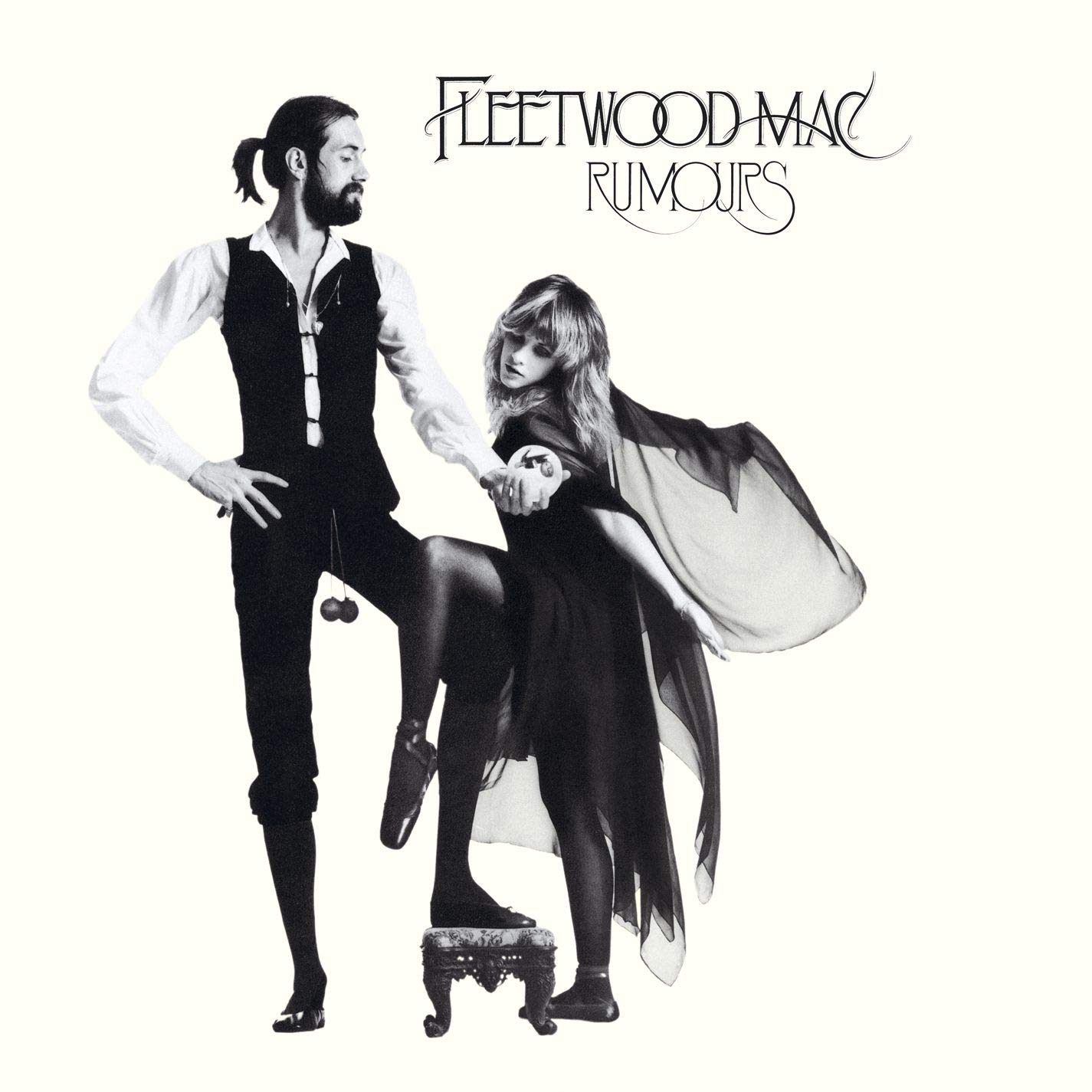
The new Fleetwood Mac – which was built around the singing, songwriting, and instrumental skills of Lindsay Buckingham, Stevie Nicks, and Christine McVie – became one of the most successful pop groups of all time.  Its 1977 album, Rumours, has sold 20 million copies in the U.S., making it one of the dozen top-selling albums of all time:


(Do you know what the weird photo on the Rumours cover signifies?  Neither do I.)

The four other Fleetwood Mac albums released in the seventies and eighties also went platinum, and nine of the group’s singles were top-ten hits. 

Was the new Fleetwood Mac really that good?  I was a hater for a long time, but the group’s music started to grow on me a couple of decades after it was released.  

That doesn’t mean that I don’t think the new Fleetwood Mac isn’t overrated – just that it’s not as overrated as the Eagles and the Police.

*     *     *     *     *

I was surprised to learn that today’s featured song was never released as a single.  (For me, no song says “new Fleetwood Mac” more than “The Chain” – the group often opened its live shows with the song.)  


Click here to listen to “The Chain.”

Click below to buy the song from Amazon:


Monday, February 24, 2020

Fleetwood Mac – "Oh Well (Part 1)" (1969)


But don’t ask me what I think of you
I might not give the answer that you want me to

Fleetwood Mac, whose original members were guitarists Peter Green and Jeremy Spencer, bassist John McVie, and drummer Mick Fleetwood, was formed in 1967.  Shortly after the release of the band’s second studio album, 18-year-old Danny Kirwan joined the group, which played electric blues almost exclusively.

Peter Green left Fleetwood Mac in 1970.  The band’s manager, Clifford Davis, gave this explanation for Green’s departure:

The truth about Peter Green and how he ended up how he did is very simple.  We were touring Europe in late 1969.  When we were in Germany, Peter told me he had been invited to a party.  I knew there were going to be a lot of drugs around and I suggested that he didn’t go.  But he went anyway and I understand from him that he took what turned out to be very bad, impure LSD.  He was never the same again.

Spencer was the next to go.  He went out to buy a magazine one morning while Fleetwood Mac was on tour in the U.S. in 1971 and promptly disappeared.  It turned out that he had joined a religious cult, and he never came back.

Danny Kirwan developed an alcohol dependency and was fired by Fleetwood after freaking out during a 1972 tour of the U.S.

(Not entirely true!)
The band soldiered on with replacement guitarists Bob Welch and Bob Weston.  But during the group’s 1973 U.S. tour, Fleetwood found out that Weston was having an affair with his wife, Jenny Boyd Fleetwood, whose sister Pattie was married to George Harrison, then to Eric Clapton.  Weston got booted and the 1973 tour was cancelled.  

If my math is right, that’s three American tours and three lost guitarists.  (You would have thought that the band would have learned from previous experience and given up on touring the U.S., but they didn’t).  

*     *     *     *     *

Fleetwood Mac got off to a strong start in the UK – their first three albums made the top ten, and “Albatross” was a #1 single in 1968.

But the group’s records sold very poorly in the U.S.  None of the Green-Spencer-Kirwan albums climbed higher than #69 on the American album charts, and Fleetwood Mac never had a top 40 single.


That’s partly because Fleetwood Mac didn’t seem all that interested in commercial success.  (They all had started out as blues purists, and blues purists don’t sell a lot of records in this country.)

Another problem might have been a certain inconsistency in style – it was hard to pin down Fleetwood Mac.  (The songs Green wrote didn’t sound much like the songs Spencer wrote, which were quite different from the songs Kirwan or Bob Welch wrote.)

I once owned three of Fleetwood Mac’s early albums.  I had to listen to them quite a few times before I started to get into them.  (Obviously most Americans weren’t as patient as I was.)

*     *     *     *     *

Later, Fleetwood Mac revamped their lineup, adding guitarist Lindsey Buckingham and his girlfriend, singer-songwriter Stevie Nicks, and giving Christine McVie – John McVie’s wife – a more prominent role in the group.

The “new” Fleetwood Mac’s music couldn’t have been more different than that featured on the group’s early albums – original Coca-Cola and new Coke were a lot more alike than the original Fleetwood Mac and the new Fleetwood Mac.  The change in direction was a big hit with the public, and Fleetwood Mac became one of the most successful recording artists in the world.

You certainly can’t say the new Fleetwood Mac is underrated.  But I think the old Fleetwood Mac was – not as underrated as many of the other underrated artists featured previously in this year’s “29 Posts in 29 Days,” but underrated nonetheless.

*     *     *     *     *

Click here to listen to “Oh Well (Part 1),” which is a major stick of dynamite.

Click on the link below to buy the song from Amazon:

Sunday, August 4, 2013

Fleetwood Mac -- "Dust" (1972)


When your swift hair is quiet in death
And through the lips corruption thrust
Has stilled the labor of my breath --
When we are dust, when we are dust!

You don't expect to come face-to-face with the death of a young man and the grief that death caused his family -- especially his mother -- when you set off to take a bike ride on the first day of your summer vacation.

It all started when I decided to take a break near the end of my long drive to Cape Cod last month and pulled off the interstate in Fairhaven, Massachusetts, to ride on the Phoenix Rail Trail.


The Phoenix is a fairly nondescript rail trail that goes through some not-very-scenic neighborhoods in Fairhaven.  This sign is indicative of the businesses that are located along the old railroad right-of-way that the trail follows:


(As that sign indicates, a "honeywagon" is a truck that's used to pump out septic tanks or cesspools.  It also refers to the mobile toilet unit used by the cast and crew when a movie or television show is being shot on location.) 

Here is an enigmatic message that someone had spray-painted on to the trail:


If you know what "We live on crumbling cries/Indulge in pleasure/And choke on the crust" means, I hope you'll tell me -- because I don't have a clue.

I had ridden to the end of the trail, turned around, and was almost back to my car when I saw a side trail heading south towards Buzzards Bay and decided to explore it.  It went past a radio station tower and several large windmills, and then dead-ended at a small body of water.  This plaque was affixed to a concrete slab upon which there was a wooden bench overlooking the water:


Next to the bench was a sort of shrine:


I don't know who created this memorial to Matt.  It could have been his girlfriend.  (There was no mention of a wife in his obituary, so I assume he wasn't married.)  It could have been his father, or one or both of his brothers, or a close friend.  But I'm guessing that Matt's mother was responsible for this collection of devotional objects.

Here's a closeup of the small metal pyramid that hangs from the wooden post that you can see in the previous picture:


And here's a closeup of the printed card you can see at the base of the wooden "T" in that picture:


It's difficult to read the words on that card from the photo.  Here's what it says:

Thinking of you --

I miss you so much.  Everyday I expect the phone to ring or a letter to come, but it doesn't.  I hope you know how much I love you and even though you have passed from this life you are forever in my heart.  You were such a fine young person ready to share with the world all the talents you had.  I count my blessings to have had you here as long as I did but I wish it were longer.

Love always and more --

Sounds to me like a mom wrote that -- but regardless of who the author is, it's a lovely message.

I got on the computer the next day and found Matt's obituary, which said that he had died from injuries suffered in a car accident.  His survivors included his parents, two brothers, three grandparents, five uncles, two aunts, and several nieces and nephews -- according to the obituary, he loved spending time with those nieces and nephews.

Another story in the local newspaper reported that Matt's mother -- who worked at the hospital where he died -- was also the assistant coach for the local high school cheerleading squad, which was scheduled to travel to the state championships a few days after Matt's death.  The girls thought about cancelling their trip, but decided that Matt's mom would want them to go.

Fairhaven High School
Mrs. Lovegrove showed up unexpectedly when the team assembled at 6:30 in the morning to board the school bus that would take them to the competition.  The girls took third place in the statewide meet, and on the drive back to Fairhaven, asked the bus driver to drive them to the Lovegrove home so they could show her their trophy and give her some hugs.


"Dust" is from the 1972 Bare Trees album.  I originally was going to write about the title song from that album, but there are several songs on Bare Trees that are suitably somber and elegiac for this post -- in particular, "Dust."


The lyrics to "Dust" are taken from the first two stanzas of the Rupert Brooke poem of the same name.  Brooke was an English poet who was born in 1887.  He was admired equally for his brilliance and his good looks.  (Yeats described him as "the handsomest young man in England," and Virginia Woolf claimed to have gone skinny-dipping with him when they were both students at Cambridge.)

Rupert Brooke
But Brooke's life ended in 1915, when he was just 27.  He was stationed on a Royal Navy ship in the Mediterranean, and developed sepsis after a mosquito bite became infected.  He was buried in an olive grove on the Greek island of Skyros.


Here's "Dust" -- one of the most haunting songs you'll ever hear: