Friday, November 4, 2022

Talking Heads – "Take Me to the River' (1978)

[NOTE:  It’s become a tradition for 2 or 3 lines to interview 2 or 3 lines every year on the anniversary of the first 2 or 3 lines post, which appeared on November 1, 2009.  Here’s part two of this year’s interview, which marks the 13th anniversary of my wildly popular little blog.]


2 or 3 lines: 2022 marked the fifth year that you’ve been doing the 2 OR 3 LINES “GOLDEN DECADE” HIT SINGLES HALL OF FAME and the 2 OR 3 LINES “GOLDEN DECADE’ ALBUM TRACKS HALL OF FAME.  I assume we can count on you to induct another class into both of those halls of fame next summer?


2 or 3 lines: Yes indeed – I’m already making a mental list of deserving “Golden Decade” hit singles and album tracks.


Happy 13th anniversary to 2 or 3 lines!

Q: Last February, you devoted your always-popular “28 Posts in 28 Days” to roll out the 2 OR 3 LINES “SILVER DECADE” HALL OF FAME.  Remind us again what years are covered by the “Golden Decade’ and the “Silver Decade”?


A: The “Golden Decade” of pop music runs from the summer of 1964 to the summer of 1974 – that is, from the summer before I started junior high school to the summer after I graduated from college.  We’re talking the Rolling Stones, the Beatles, the Beach Boys, Led Zeppelin, the great Motown groups, “House of the Rising Sun,” and so on.


Q:  And the “Silver Decade” was the decade that followed?


A:  The “Silver Decade” picks up in the fall of 1974, runs through my law school years and swinging-single days, and ends in the fall of 1984, when I decided to leave apartment living behind and buy a house for myself, my wife, and my infant son.  My favorite artists from that decade include the Pretenders, Talking Heads, Elvis Costello, and so on.


Q:  Any new halls of fame in the works?


A:  I considered doing a one-hit-wonder hall of fame – but there are already a number of one-hit wonders in the “Golden Decade” hit singles hall of fame.  I also thought about creating a rap/hip-hop hall of fame – accusations of cultural appropriation be damned.  But then I had a better idea.


Q:  Which is . . . ?


A:  I’ve decided to do a “Golden Decade” cover records hall of fame.


Q:  Why cover records?


A:  For one thing, covers don’t get no respect – the original recording of a song is usually considered to be better.  But the best covers illustrate something that I’ve come to believe in very strongly – that it’s the singer, not the song, that really matters . . . not literally but figuratively.


Q:  Please explain.


A:  What I mean is that starting with a great song doesn’t necessarily mean that you’ll end up with a great record.  You need a great arranger and a great producer in addition to great musicians.  A great song is to a great record what a great screenplay is to a great movie – necessary, but not sufficient.  Read the screenplays for “The Godfather Part II” or “The Wild Bunch” or “Mean Streets” or “The Long Goodbye” – they’re interesting, but pale in comparison to the finished movies.  The same is true for a great song – there’s no guarantee that a record that’s made from a great song will be a great record.  In fact, there are a lot of bad recordings of great songs.


Q:  Aren’t most covers just attempts to capitalize on the success of previously-released hits?


A:  A lot of them are.  They don’t bring much new to the party.  But look at a great cover record like Vanilla Fudge’s version of “You Keep Me Hangin’ On.”  The original recording of that song by the Supremes is wonderful, but I like Vanilla Fudge’s cover even more.  It’s completely original – it not only doesn’t borrow anything from the Supremes, it turns the original upside down and inside out.  It’s like having a girlfriend who seems pretty perfect – until a girl who is different in every way comes along and makes you realize that she’s better.   


Q:  Can you give us a little preview of the first group of inductees into the 2 OR 3 LINES “GOLDEN DECADE” COVER SONGS HALL OF FAME?


A:  You’ll have to wait until January for the announcement of which cover records made the cut.  But I will tell you something about the records that will be in the first group of inductees into that hall of fame: virtually all of them will be either covers by a black group or individual performer of a song originally recorded by a white group or individual performer, or vice versa.


Q: So I’m guessing that Ike and Tina Turner’s cover of Creedence Clearwater’s “Proud Mary” will be one of your selections.


A:  No comment.


Q:  That sounds like a “yes” to me!


*     *     *     *     *


Click here to listen to the original Al Green recording of “Take Me to the River,” which was released in 1974.  (Winner, winner, chicken dinner!)


Click here to listen to the Talking Heads’ very different but equally great cover of “Take Me to the River.”  It was released in 1978, so it doesn’t qualify for the 2 OR 3 LINES “GOLDEN DECADE” COVER SONGS HALL OF FAME.


Click here to buy the Talking Heads’ cover from Amazon.


Tuesday, November 1, 2022

Ben Folds Five – "Song for the Dumped" (1997)


Give me my money back

Give me my money back

You b*tch!


2 or 3 lines became a teenager today.  Fasten your seatbelts, readers – it’s going to be a bumpy few years.


It’s become a tradition for 2 or 3 lines to interview 2 or 3 lines on each anniversary of our first post (which dates to November 1, 2009).  Here’s part one of this year’s interview:


2 or 3 lines:  Today represents yet another 2 or 3 lines milestone – it’s the 13th anniversary of the very first 2 or 3 lines post.


2 or 3 lines:  Today’s post is number 1882, if my math is correct.


Q:  That’s amazing – I don’t think anyone expected that your wildly popular little blog would still be going after 13 years.  I know I certainly didn’t.


A:  To quote Matthew 8:26, “Oh you of little faith!”


Q:  I hear that big changes are coming to 2 or 3 lines in the coming year.


A:  That’s right.  The entire 2 or 3 lines organization will be moving to new digs in the very near future.


Q:  Sounds like you’ve got a big job ahead of you.  


A:  We certainly do – but the change is long overdue.  It’s time to bite the bullet, pack up the whole kit and kaboodle, and get the hell out of Dodge.


Q:  Wow – that’s a lot of idioms in one sentence.  


A:  I don’t do things halfway.


Q:  So why are you making this move now?


A:  It’s been said that the best time to plant a tree was 20 years years ago.  The second-best time is now.


*     *     *     *     *


Q:  I’m guessing that this move is going to be very stressful for you and the entire 2 or 3 lines team. 


A:  Mos’ def’.  I intend to maintain our regular, two-posts-a-week schedule throughout the relocation process, but that may turn out to be impossible.  So if we skip a post or two (or three) in the coming weeks, you’ll know the reason why.


Q:  Speaking of the 2 or 3 lines team, you said you wanted to give kudos to your staff for something they’ve done for you recently.


Q:  That’s right.  Every Saturday morning when the weather is decent, I visit a local farmer’s market to buy goodies for myself and my grandkids – the organic, non-homogenized chocolate milk from grass-fed Jersey cows is a big hit – before taking a long ride on a paved bike trail in Prince George’s County, Maryland. 


A:  Followed by a visit to a local craft brewery, no doubt.


Q:  Yes, but you’re jumping the gun.  


A:  Sorry – back to the bike ride.


Q:  This year, some of my crack staff have been getting up early on Saturdays and using colored chalk to write inspirational messages on the trail.  Here are photos of some of those messages:


“Keep Going”


“You Got This”


“Enjoy The Beauty”


“You Are It”


A:  I don't understand why horses are allowed on the bike trail, but they are.  Fortunately, my staff takes pains to warn me when when an equine has fouled the path:


“Poop”


A:  This past week, one of the 2 or 3 lines team came up with the idea of incentivizing me to keep going by giving me points for reaching certain milestones:


“You Crossed a Bridge: +5 points”

“You Are Reading This: +10 points”


“You Are Still Going: +5 points”


*     *     *     *     *


Q:  You’ve chosen a very interesting record to feature in this 13th anniversary post.  Care to explain what’s behind your choice?


A:  Not really.


Q:  In other words, I should mind my own business?


A:  You took the words right out of my mouth.


Click here to watch the official video for “Song for the Dumped,” which was released in 1997 on the Ben Folds Five’s second studio album, Whatever and Ever Amen.


Click here to buy the record from Amazon.


Friday, October 28, 2022

Tyler Childers – "Charleston Girl" (2013)


I don't know if it’s the wine or the coke

That makes her sound like her jaw is broke


In the previous 2 or 3 lines, I told you about seeing the “twang and bang” band Buckle & Shake perform when I day-tripped to Nantucket earlier this month.


My initial impression of the band’s lead singer was not favorable.  He sort of smirked his way through the old Waylon Jennings hit, “Are You Sure Hank Done It This Way” (which pays tribute to the great Hank Williams), which raised my hackles a bit.  


Buckle & Shake

I assumed that this too-cool-for-school dude was from Boston or New York City or someplace that was purt near one of those burgs, which he clearly felt entitled him to condescend to those who were from  parts further south and west – a group that mos’ definitely includes yours truly.


“I know that none of you is a Trump-loving hillbilly,” was the unspoken, read-between-the-lines message that the singer seemed to be trying to communicate to his audience.  “I’m just playing this country crap to demonstrate what a well-developed sense of irony I have.”


If I had been content with only one beer, I would have mounted my rented bicycle and ridden off into the sunset.  But I wanted a second beer, so I hung around and listened to the rest of Buckle & Shake’s set.


*     *     *     *     *


Most records do nothing for me the first time I listen to them – I almost always need to hear a record several times before it starts to grow on me.


But that wasn’t my experience with the utterly unfamiliar song that Buckle & Shake played after “Are You Sure Hank Done It This Way.”  I was mesmerized by it.


The frontman deserves much of the credit for that – he sold that song.


I had a hard time deciphering my mystery song’s lyrics, but I was able to suss out some of the chorus – there was something about leaving West Virginia and crossing a river.  I did a quick Google search for those phrases, and was rewarded with several hits relating to today’s featured song.


*     *     *     *     *  


Tyler Childers is a 31-year-old Kentucky singer-songwriter who has been described as a country/bluegrass neotraditionalist.


He was born in Lawrence County, Kentucky – which is right across the Big Sandy River from West Virginia.  (The chorus of “Charleston Girl” includes a reference to that river: “Don’t know why but every time I cross that river/There’s somethin’ tears me up, and makes me wild.”)


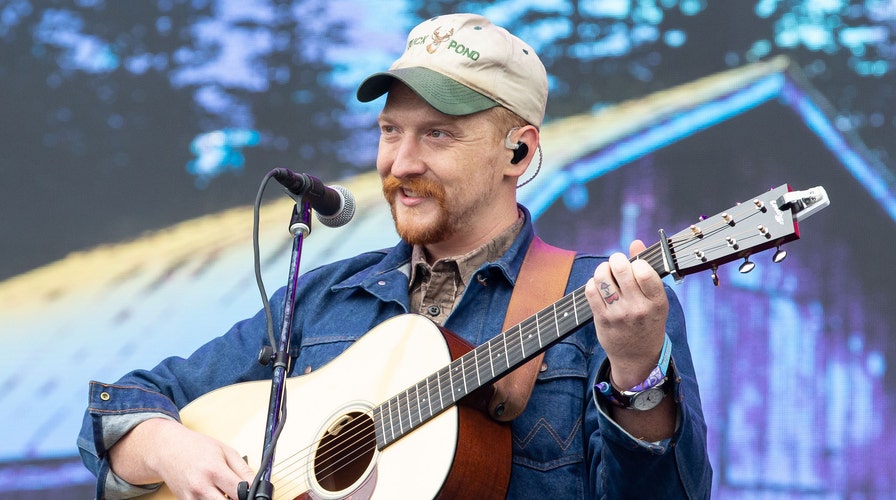
Tyler Childers

But Childers went to high school in neighboring Johnson County, which was home to the late great Loretta Lynn.  (The fathers of both Loretta and Tyler were coal miners.)


“Charleston Girl” doesn’t appear on any of the five studio albums Childers has released to date.  But there’s a live version of it on a 2013 digital EP titled Live on Red Barn Radio.  (“Red Barn Radio” is a weekly syndicated radio show that features interviews with and live performances by traditional country musicians from Kentucky.)


I probably should listen to some other Tyler Childers tracks, but life is too short to waste time on speculation.  So for the time being I’m sticking with a sure thing – I’m just going to continue listening to “Charleston Girl” over and over.


*     *     *     *     *


The lyrics from “Charleston Girl” that are quoted at the beginning of this post are the most striking lines in the song.  But these lines are the ones that keep running through my head:


I wish to God that I could help her out

I wish I knew what she was talkin’ bout


Click here to listen to “Charleston Girl.”


Click here to buy the Red Barn Radio EP from Bandcamp.   


Tuesday, October 25, 2022

Waylon Jennings – "Are You Sure Hank Done It This Way" (1975)


I’ve seen the world with a five-piece band

Looking at the back side of me


Once a year, I take a ferry from Cape Cod to Nantucket and spend the day riding my bike, taking photos, buying T-shirts for my grandkids, and drinking beer.


The Boston Business Journal has accurately described Nantucket as “a playground for the well-to-do.”  The average Nantucket house is valued at more than $1 million, making it the most expensive place to live in the country.  (Median housing prices in Marin County, California, and Manhattan – which rank just behind Nantucket – are pretty outrageous, but they’re about 20% lower than prices on Nantucket.)


A typical Nantucket house

I’ll never own a house on Nantucket – hell, even the cost of renting there for a week is out of reach for me – but it’s a great place to go for a day trip.


*     *     *     *     *


This year, after I was finished biking and taking pictures and buying T-shirts, I stopped at Cisco Brewers’ sprawling outdoor taproom on Bartlett Farm Road, which opened in 1995.  (Cisco – which now operates four taprooms in addition to the one on Nantucket – was independent for many years, but now is owned by Anheuser-Busch InBev.)


I sat at a picnic table and enjoyed a Whale’s Tale pale ale while a local “twang and bang” country-rock band that called itself Buckle & Shake serenaded the crowd.


*     *     *     *     *


Buckle & Shake started off their set by playing “Are You Sure Hank Done It This Way,” which was a big hit for Waylon Jennings in 1975.


Jennings – who would be on the Mount Rushmore of outlaw country music if there was a Mount Rushmore of outlaw country music – wrote “Are You Sure Hank Done It This Way” to pay tribute to Hank Williams in particular and classic country and western music in general.  (Yes, I know there should be a question mark at the end of the song’s title, but that’s not how Waylon wanted it.)   


Buckle & Shake

I got the feeling that Buckle & Shake’s frontman was inwardly smirking as he sang “Are You Sure Hank Done It This Way” – his performance practically oozed condescension.   


“I know that none of you is a Trump-loving hillbilly,” was the unspoken, read-between-the-lines message that the singer seemed to be trying to communicate to his audience (who were mostly effete snobs from Boston, New York City, and points between).  “We’re just playing this country crap to demonstrate what well-developed senses of irony we have.”    


*     *     *     *     *


It turns out that I was reading the singer’s message loud and clear.


In 2019, the local Nantucket newspaper reviewed a performance by Buckle & Shake.  The review noted that the lead singer went on stage that night wearing a Reagan-Bush ’84 cap, which he said he did  “ironically.”


Here’s some irony for you: Ronald Reagan won Massachusetts in 1984 by over 70,000 votes.  (In case you weren’t around in 1984, Reagan carried 49 states that year – including not only Massachusetts, but also California, Connecticut, New Jersey, New York, Oregon, and Vermont, which are all bluer-than-blue liberal bastions today.  The only state that Walter Mondale won was his home state of Minnesota – and he prevailed there by only 0.18% of the vote, a much smaller margin of victory than that achieved by Reagan in any of the states he won.)


Here’s a little more irony for you: Ronald Reagan carried Nantucket County in 1984 by a margin of 53% to 47%!


The Buckle & Shake singer thought he was directing all his high-powered irony at born-and-bred rednecks like yours truly.  It turns out that he also being condescending to his fellow Nantucketeers.


*     *     *     *     *


I thought about leaving Cisco right then and there, but a single beer didn’t seem like fair recompense for all the miles I had biked that day.  So I bought another one and listened to the rest of Buckle & Shake’s set.


I was glad I did when I heard the next song they played.  I had no clue what the name of the song was, or who had written it – but I knew it was good.


I’ll tell you all about that song in the next 2 or 3 lines.


*     *     *     *     *


Click here  to listen to “Are You Sure Hank Done It This Way.”


Friday, October 21, 2022

Jim Croce – "Bad, Bad Leroy Brown" (1973)


And he's bad, bad Leroy Brown

Baddest man in the whole damn town


The first record with a curse word in its lyrics to make it to #1 on the Billboard “Hot 100” was Isaac Hayes’s 1971 hit, “Theme from Shaft.”


The second #1 single with a curse word in its lyrics – in both cases, the curse word was “damn” – was Jim Croce’s “Bad, Bad Leroy Brown.” Croce died in a plane crash just two months after that record ascended to the top spot on the “Hot 100” chart.


Jim Croce

I heard “Bad, Bad Leroy Brown” on the radio a few days ago.  I’m not sure why I didn’t immediately change the station – “Bad, Bad Leroy Brown” is a truly awful song – but for some reason I listened to it all the way through.


I had never realized before what an extraordinarily racist song “Bad, Bad Leroy Brown” is.  Croce gives the title character so many stereotypically black characteristics that he wouldn’t have been out of place on the old Amos ’n’ Andy show.


*     *     *     *     *


Let’s begin with the title character’s name.  “Leroy” is a stereotypically black name – as the Racial Slur Database notes, Leroy is often used in racist jokes.  (I bet you’ve heard racist jokes where the butt of the joke is a black male named Leroy.)


What does Leroy drive?  A Cadillac Eldorado, of course.


A vintage straight razor

In addition to packing a gun, he carries a concealed straight razor.  Straight razors have long been viewed as weapons typically used by African-Americans – probably because Jim Crow laws prohibited the possession of firearms and more conventional edged weapons (like Bowie knives) by blacks.  But straight razors had a utilitarian purpose in addition to being a weapon, so it was legal for blacks to possess them.  (You can click here to read more on this subject.)


Leroy’s a gambler, and his game of choice appears to be shooting dice – a stereotypically African-American form of gambling.


Another thing we know about Leroy Brown that makes it almost certain that he is black, not white, is that he’s a resident of the South Side of Chicago – an area which is 93% African-American.  (Chicago as a whole is 29% black.)


Then there’s the line about Leroy being “badder than old King Kong.”  Disparaging comparisons of black people to monkeys and apes go back to the 1800s – Croce’s reference to King Kong could hardly be more insulting.


Finally, the song’s lyrics often use stereotypical African-American dialect rather than standard English.  For example, Croce consistently uses “badder” and baddest” instead of “worse” and “worst,” and he often leaves out the third-person singular “s” (e.g., “He stand ‘bout six foot four” and “He like his fancy clothes”).


I’m surprised that Croce didn’t have Leroy Brown eating fried chicken and watermelon.


*     *     *     *     *


Click here to listen to “Bad, Bad Leroy Brown.”


Click on the link below to buy the recording from Amazon:


Friday, October 14, 2022

Ramones – "Blitzkreig Bop" (1976)


What they want, I don't know

They're all revved up

And ready to go


Have you ever been “all revved up and ready to go,” wanting something – but you didn’t know exactly what?


God knows I have been.  (Most recently, just a couple of days ago.)


*     *     *     *     *


I recently heard Steven Van Zandt – among other things, he was Bruce Springsteen’s guitarist and a regular on The Sopranos – talking about the birth of punk rock on his “Little Steven’s Underground Garage” show on SiriusXM Radio. 


Van Zandt told how the Ramones – who were largely unknown in the UK at the time – made their British debut at the Roundhouse in London on July 4, 1976.  (Also on the bill that night were the Flamin’ Groovies, and the Stranglers – two of my all-time favorite groups.)


I understood Van Zandt to say that the Clash, the Damned, the Sex Pistols, and Chrissie Hynde (who would form the Pretenders in 1978) were present at that concert, and gave credit to the Ramones for inspiring all of them.


But when I sat down at my computer and started researching that legendary show, I found out that the Clash and the Sex Pistols were in Sheffield that night, playing at the Black Swan pub in Sheffield – which is a three-hour drive from London.


I think it’s safe to say that those two bands weren’t in the audience for that legendary Ramones show at the Roundhouse.


*     *     *     *     *


At times, “Little Stevie” Van Zandt is so full of sh*t that his eyes are brown.  But I’m not sure that it’s his fault that he was wrong about where the Clash and Sex Pistols were that night.


In the classic 1996 book, Please Kill Me: the Uncensored History Oral History of Punk, Ramones manager Danny Fields is quoted as saying that Mick Jones and Paul Simonon of the Clash were at the Roundhouse concert.  He goes on to say that “Paul and Mick weren’t in the Clash yet” – according to Fields, they were “afraid to play until they saw the Ramones.”  


The Clash were brand new – in fact, the Black Swan gig was their first public appearance – but they had been rehearsing for a few weeks before their July 4 debut.  So Fields got it wrong when he was interviewed by the authors Please Kill Me.


The late Joey Ramone
(né Jeffrey Hyman)

The memory of the Ramones’ late bass player, Dee Dee Ramone, wasn’t any better.  He is quoted in Please Kill Me as saying that Johnny Rotten of the Sex Pistols came backstage to meet the Ramones at the Roundhouse – but the Sex Pistols were playing in Sheffield that night.


*     *     *     *     *


The Ramones, Flamin’ Groovies, and Stranglers followed up their July 4 Roundhouse appearance with a show at a different London venue the next night.  Presumably that’s the performance attended by the Clash, Sex Pistols, et al.  


Mystery solved, thanks to good ol’ 2 or 3 lines!


*     *     *     *     *


The Please Kill Me interviews of Danny Fields and Dee Dee Ramone included some very interesting stuff.  


Fields – who signed the MC5 and the Stooges to record deals before he discovered and signed the Ramones – was openly gay, and he was immediately attracted to Clash bassist Paul Simonon:


Paul was sitting around with these white socks and they were really dirty and I thought, boy, that’s cool.  I got a big crush on Paul . . . because I loved his socks.  They were really dirty thin white socks.  You could see where they started to get real dirty as soon as they got below the shoe line.


Former Sex Pistol Johnny
Rotten (né John Lydon) today

Dee Dee Ramone told an equally yucky story:


The Ramones always put a few drops of piss in anything they give their guests as a little joke.  When Johnny Rotten came to see the Ramones . . . he asked . . . if he could come backstage and say hello.  Johnny Ramone said it was alright and was very friendly to Johnny Rotten when they met.  He shook his hand, patted him on the back, and asked him if he wanted a beer.  Ha ha ha.


Johnny Rotten took it and drank it down in one gulp.  


*     *     *     *     *


“Blitzkrieg Bop” was the first single the Ramones ever released.  It was also the first track on their eponymous debut album, which was released in April 1976.


Click here to listen to “Blitzkreig Bop.”


Click on the link below to buy the song from Amazon:


Friday, October 7, 2022

Al Kooper and Stephen Stills – "Season of the Witch" (1968)


When I look over my shoulder

What do you think I see?


A few weeks ago, I was doing some research in preparation for writing about the 1968 Al Kooper-Stephen Stills cover of Donovan’s “Season of the Witch” – which I had chosen to be a member of the 2022 class of the 2 OR 3 LINES “GOLDEN DECADE” ALBUM TRACKS HALL OF FAME.


In the course of that research, I was surprised to discover that the horn parts for that recording had been arranged by Kooper and a gentleman named Joe Scott – who I had interviewed for 2 or 3 lines some eight years ago.


Everything about the Kooper-Stills version of “Season of the Witch” is purt near perfect.  Most of the heavy lifting was done by Kooper (on the Hammond B-3 organ) and Stills (on electric guitar).  But the frosting on the cake of that record are the horns.  


The horns come and go as the volume and intensity of the various segments of the eleven-minute-long “Season of the Witch” wax and wane.  When they cut loose about eight minutes in, they help create a truly ecstatic thirty seconds of let-it-all-hang-out music that is the emotional climax of the record.


The horns keep quiet during the remaining two and a half minutes of “Season of the Witch,” which gives us a much-needed opportunity to catch our breath and let our pulse rate return to normal.


Click here to listen to “Season of the Witch.”


*     *     *     *     *


In 2014, I became more than a little obsessed with the Arbors’ 1969 recording of “The Letter.” (You may not remember that record, although it did peak at #20 on the Billboard “Hot 100.”  But I’m sure you’re familiar with the original recording of that song, which was a #1 hit for the Box Tops in 1967.)  


Joe Scott

With all due respect to the Arbors and the instrumentalists who backed them, what made their recording of “The Letter” so extraordinary was its inspired arrangement – which was the work of Joe Scott (né Joseph Scaduto), who was not only an arranger but also a very talented pianist and composer.


I eventually was able to track Joe Scott down and interview him.  I don’t remember exactly how long we spoke on the phone, but it was a very long conversation – Joe very kindly kept answering my questions until I finally ran out of them.


Here are links to the three 2 or 3 lines posts that I wrote after that conversation:


Click here to read my first Joe Scott post.


Click here to read the second post.


Click here to read the third one.


*     *     *     *     *


I’ve written almost 2000 2 or 3 lines posts since 2009.  Most of them are trifling – personal reminiscences of no great interest to anyone except their narcissistic author, or “humorous” pieces that occasionally work but most often do not.


Every once in a while, I write a post that digs deeply into a record’s overarching structure and its component parts.  Despite sometimes losing sight of the forest for the trees and succumbing to pedantry, I think those posts are worthwhile because they provide some illumination of what makes a record tick.


But I’m proudest of the posts I’ve written that feature interviews with musicians who may no longer be  well-known (if they ever were) but who were responsible for producing great records that are still worth listening to.


Among that latter group of posts, I think the ones that feature my interview with Joe Scott may be the best I’ve ever done.  He helped create a record that was so unique and utterly beautiful that I can’t imagine I will ever tire of listening to it, and I think that his contribution to that work of musical art deserved to be explored in detail.


*     *     *     *     *


When I discovered that Joe Scott had contributed to making “Season of the Witch” the great record that it is, I couldn’t wait to contact him and ask him what he remembered about his arranging collaboration with Kooper – who is only one of the most multitalented musicians of his generation.


But I was saddened to learn that Joe Scott died in February of this year after a long battle with leukemia.  


Joe Scott at the piano

From his obituary in the Palm Beach Post:


Joe was born to Sicilian immigrants Felipo and Maria Scaduto.  At an early age, Joe showed an extraordinary aptitude for music. In his teens, he attended Arts High School in Newark while working professionally on weekends and nights playing piano and accordion.  He went on to Manhattan School of Music where he earned a Bachelor and a Master degree.  During the sixties, Joe had a successful career arranging and conducting for such varied talents as Frank Sinatra, Frankie Valli and the Four Seasons, and Phyllis Diller, to name a few.


Always full of surprises, in the seventies Joe decided to go to law school.  After practicing law for almost fifteen years, Joe retired to Palm Beach County with his family in the late eighties and returned to music.


Here in Florida, Joe performed and shared his love for classical music and jazz with students of all ages at Palm Beach State College and Floria Atlantic University Lifelong Learning in Jupiter, Boca Raton and Vero Beach.  For more than thirty years, Joe Scott was a well-known figure on the Palm Beach music scene.  Although Joe was incredibly modest about his musical achievements, the sound of his piano was loved by many and delighted thousands throughout his life.


Click here to watch a video of Joe performing with the Joe Scott Trio.


*     *     *     *     *


As the Palm Beach Post obituary notes, Joe Scott’s many years of playing jazz piano in the Palm Beach area earned him many fans.  But I’m guessing very few of those people knew what an accomplished arranger he was.


I hope that my 2 or 3 lines posts about Joe Scott’s contributions to “The Letter” and “Season of the Witch” – two truly remarkable records – will help remedy that.