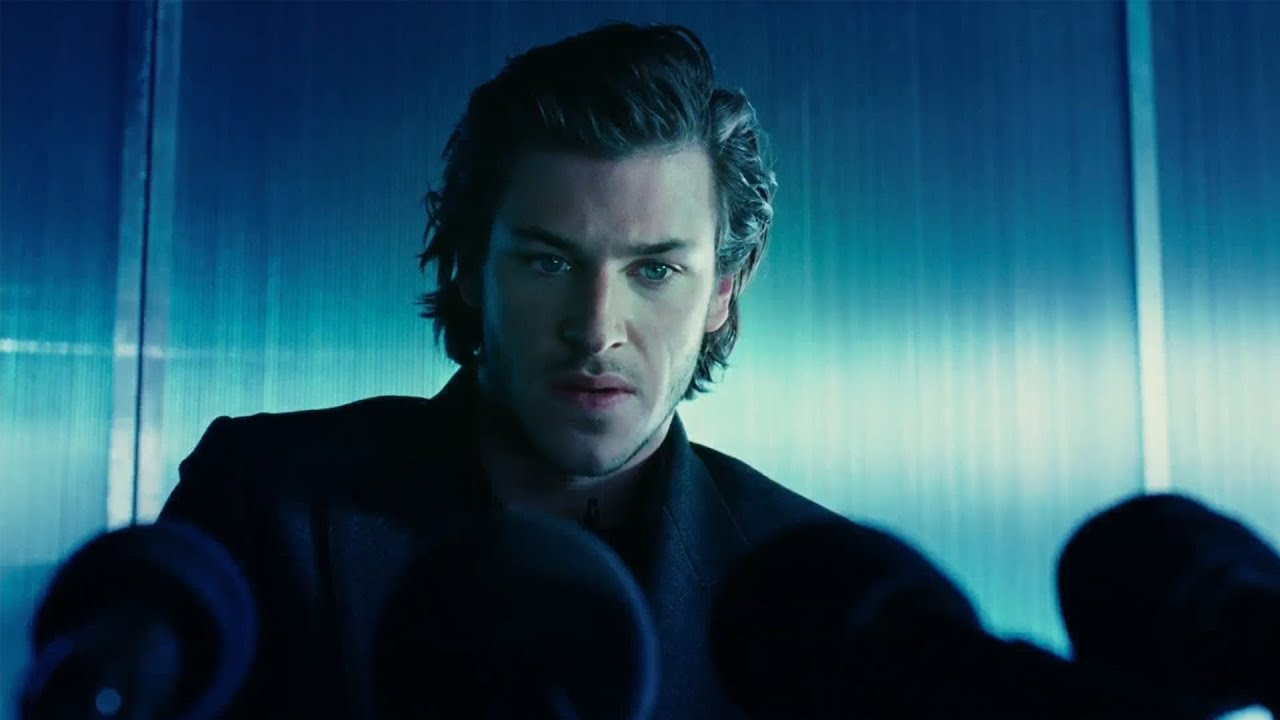
Tuesday, February 14, 2023

Vanilla Fudge – "Take Me For a Little While" (1968)


Deep inside I know 

You’re never gonna love me


While “You Just Keep Me Hanging On” is the ne plus ultra of Vanilla Fudge cover records, I think their version of “Take Me for a Little While” – which was also released on the group’s eponymous debut album in 1967 – is also worthy of being inducted into the 2 OR 3 LINES “GOLDEN DECADE” COVER RECORDS HALL OF FAME. 


But the real reason I chose it is that I wanted to shine a light on the career of the very underrated artist who recorded the original version of “Take Me for a Little While” – the one, the only Evie Sands.


*     *     *     *     *


You may not be familiar with Evie Sands, but you’re almost certainly familiar with several of the hit songs she was the first singer to record.


Evie Sands then

Unfortunately, if it wasn’t for bad luck, the young Evie Sands wouldn’t have had no luck at all.


From AllMusic:


Singer Evie Sands endured one of the more remarkable hard luck tales in pop music lore – time after time, her records seemed poised for chart success, only to fall prey to industry whim. 


The Brooklyn-born Sands’ husky, soulful voice first attracted the attention of Jerry Lieber and Mike Stoller's Blue Cat label in 1965, and upon signing with the company she entered the studio with the songwriting/production team of Chip Taylor and Al Gorgoni to record her debut single, “Take Me for a Little While.” 


Prior to the record's release, a test pressing was smuggled to executives at Chess Records, where Chicago soul singer Jackie Ross immediately cut her own version of the song; just as Sands' rendition of “Take Me for a Little While” cracked the R&B charts, Chess' marketing muscle assured that Ross' cover began receiving the lion's share of radio airplay, leaving the original in the dust. 


That’s bad enough.  But wait – there’s more:


The confusion and subsequent litigation severely hobbled Sands' fledgling career, and her follow-up, 1966's superb “I Can't Let Go,” was lost in the mire; a year later, the song became a major international hit for the Hollies. 


Moving to the Cameo label, in 1967 Sands resurfaced with the Taylor-penned “Angel of the Morning”; despite heavy early airplay, within weeks of the single's release Cameo went bankrupt, allowing Merilee Rush's recording of the song to top the pop charts a few months later. 


A lesser woman might have decided that success just wasn’t in the cards for her and walked away from the music business at that point.  But Evie Sands kept plugging away.


In 1969, her cover of Chip Taylor’s “Any Way That You Want Me” – originally released by the Troggs – spent 17 weeks on the Billboard “Hot 100.”  The next year she released her first album, also titled Any Way That You Want Me.


She subsequently released albums in 1975 and 1979 before retiring from performing for a number of years.  However, she carved out a niche for herself as a songwriter – the artists who recorded songs that she wrote or co-wrote included Barbra Streisand, Dionne Warwick, Karen Carpenter, Gladys Knight, and Dusty Springfield.
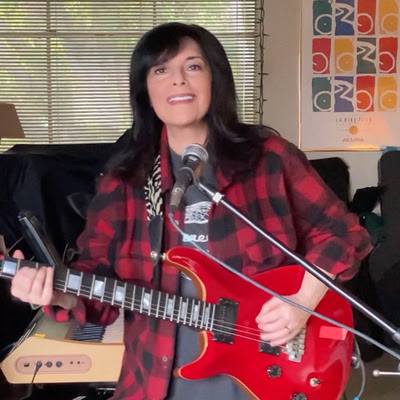

Evie Sands now

Sands returned to performing and recording in 1996, collaborating once again with her old friends, producer-songwriters Chip Taylor (the brother of actor Jon Voight) and Al Gorgoni, on the well-received Women in Prison album.


In the meantime, Evie became a skilled albeit eccentric guitarist.  From her own website:


She’s among the few who play lefty, with the strings upside-down (strung right-handed).  Pulling downward on bends instead of pushing up creates certain musical nuances different than guitars strung the traditional way.


*     *     *     *     *


A couple of Facebook friends from California introduced me – virtually – to Evie Sands over a decade ago, when she was living in Los Angeles and playing guitar with Adam Marsland’s Chaos Band.  (One of her bandmates was Teresa Cowles, an accomplished bass player who portrayed the famed “Wrecking Crew” bassist Carol Kaye in the wonderful Brian Wilson biopic, Love and Mercy.) 


After hearing from those Facebook friends that I was a big fan, Evie sent me a copy of a compilation CD featuring the near-miss singles mentioned above, “Anyway That You Want It,” “Billy Sunshine” (a delightful piece of sunshine pop penned by Taylor and Golden that should have been a big hit when it was released in 1968) and several other songs.


*     *     *     *     *


Click here to watch a video of Evie Sands performing “Take Me for a Little While” live on “Shindig.”  (That’s Darlene Love and the Blossoms singing backup.)


Click here to listen to Vanilla Fudge’s cover of that song.


Click here to buy the Vanilla Fudge recording from Amazon.


Sunday, February 12, 2023

Creedence Clearwater Revival – "Suzie Q" (1968)


I like the way you walk

I like the way you talk


Most of the cover records I’ve chosen for the inaugural class of inductees into the 2 OR 3 LINES “GOLDEN DECADE’ COVER RECORDS HALL OF FAME were recorded only a year or two after the originals.


But Creedence Clearwater Revival’s cover of Dale Hawkins’ 1957 hit, “Susie Q,” wasn’t released until 1968.  (CCR titled their cover “Suzie Q” instead of “Susie Q” – I don’t know why.)


Dale Hawkins

Click here to listen to the Dale Hawkins original.  The CCR cover is much more similar to it than I would have expected.


*     *     *     *     *


Creedence was the master of long tracks – “Suzie Q” is over eight minutes long.  


I remember playing on the jukebox at a Pizza Hut in my hometown (Joplin, MO) when I was in eighth grade.  I must have really liked it because I had to spend two dimes to hear the whole thing, not just one.  (Because it was so long, the record company had to use both sides of a 45 – the song faded out halfway through at the end of side one, and picked up where it had left off on side two.)


I could listen to the CCR “Suzie Q” for eight hours instead of eight minutes.  The CCR rhythm section didn’t believe in frills and furbelows – their approach was so simple that it seemed like anyone should have been able to do the same thing.  But I can’t think of anyone as good at that style as they were.


Click here to listen to Creedence Clearwater Revival’s “Suzie Q.”  If you didn’t already believe that less is often more, this record should convince you.


Click here to buy the record from Amazon.


Friday, February 10, 2023

Deep Purple – "Hush" (1968)


She's got loving like quicksand
Only took one touch of her hand

[Most of the inductees into the 2 OR 3 LINES "GOLDEN DECADE" COVER RECORDS HALL OF FAME are covers of records that were themselves big hits.  The original Billy Joe Royal recording of "Hush" was only a minor hit – it peaked at #52 on the Billboard "Hot 100" – but "Hush" is such an amazing record that I'm willing to bend the rules a little.  I originally wrote about "Hush" – which was inducted into the 2 OR 3 LINES "GOLDEN DECADE" HIT SINGLES HALL OF FAME – in July 2012, shortly after the death of Deep Purple organist Jon Lord.  Here's a slightly-edited version of that post.]

Jon Lord of Deep Purple died earlier this week at age 71.  The immediate cause of his death was a pulmonary embolism, but he also was suffering from pancreatic cancer.

Jon Lord in 2008
I don't enjoy writing obituary posts, but I have no choice here.  Lord was simply too talented and too unique a performer – I have to acknowledge his passing, and I'm doing so by featuring "Hush."

Deep Purple's version of the "Hush" is one of the great classic rock singles of all time, and it's Jon Lord's organ playing that makes it so special.  Like many great jazz, blues, and rock organists of the pre-synthesizer era, Lord's instrument of choice was the Hammond B-3 organ.  (Actually, Lord usually played a Hammond C-3, which is mechanically identical to the B-3, but comes equipped with "modesty panels" that hide the performer's lower body from the audience – very useful for lady church organists.)

*     *     *     *     *

"Hush" was written by Joe South, who had a big hit with another of his own compositions, "Games People Play."  It was originally released as a single in 1967 by Billy Joe Royal (of "Down in the Boondocks" fame), but failed to crack the top 40.  

Deep Purple's version of "Hush" – it's first single – made it to #4 on the U.S. charts despite the fact that was released on an obscure and short-lived label, Tetragrammaton Records.  (The name supposedly refers to the unspeakable Hebrew name of God.)

Jon Lord back in the day
I cannot overstate how good a record "Hush" is.  It has not lost a thing in the 44 years since it was released, and it is simply inconceivable to me that any group of musicians in the world could do "Hush" better than this.  

*     *     *     *     *

Click here to watch a video of Deep Purple playing "Hush" on the Playboy After Dark television show in 1968.  It is a 100% live performance, and it's pretty bad – Lord's organ is mixed way too low, and you can barely hear him.  Even worse is Hugh Hefner's painfully clumsy attempt to engage in small talk with Lord before the group performs.  (Watching this really makes you appreciate Johnny Carson.  Hefner was a major tool.) 

We didn't get this TV show in Joplin, Missouri.  The only time I saw it was when I represented the my high school's Key Club chapter at that the organization's international convention in Miami Beach 1969.  We were lucky that night: the show featured Hef's main squeeze of the moment, Barbi Benton – still the most appealing woman ever to grace the pages of Playboy.)

Barbi Benton
*     *     *     *     *

One final note.  Check out the lines quoted at the top of this post.  Can you name another song that mentions "quicksand"?

Of course, I'm referring to Spinal Tap's tribute to BBW, "Big Bottom":

The bigger the cushion
The sweeter the pushin'
That's what I said
The looser the waistband
The deeper the quicksand
Or so I have read

(Yes, 2 or 3 lines should feature "Big Bottom" some day – and it will, I promise you.)

*     *     *     *     *

Click here to listen to "Hush."  When you do, play close attention at the climax of Lord's organ solo (which almost sounds to me like two organists are playing at once, but which is all him).  Lord somehow ratchets up the intensity of his playing one more notch, then there's a drum roll that has the impact of someone kicking you in the behind, and then the singer comes back in with "Naaah-nah-nah-naaah" and we are heading into the homestretch.

Click here to order "Hush" from Amazon.


Tuesday, February 7, 2023

Al Kooper and Stephen Stills – "Season of the Witch" (1968)


When I look over my shoulder

What do you think I see?


[NOTE: Al Kooper was a musical genius with a capital “G.”  He was a songwriter, a performer, a record producer – he contributed the classic organ part on “Like a Rolling Stone,” founded Blood Sweat & Tears, and masterminded the Supersession album (among many other accomplishments).  Kooper was so smart, in fact, that he hired my late friend Joe Scott to arrange the horn parts of Kooper’s cover of “Season of the Witch,” which I’ve named to THE 2 OR 3 LINES “GOLDEN DECADE” COVER RECORDS HALL OF FAME.]


*     *     *     *     *


A few weeks ago, I was doing some research in preparation for writing about the 1968 Al Kooper-Stephen Stills cover of Donovan’s “Season of the Witch” – which I had chosen to be a member of the 2022 class of the 2 OR 3 LINES “GOLDEN DECADE” ALBUM TRACKS HALL OF FAME.


In the course of that research, I was surprised to discover that the horn parts for that recording had been arranged by Kooper and a gentleman named Joe Scott – who I had interviewed for 2 or 3 lines some eight years ago.


Everything about the Kooper-Stills version of “Season of the Witch” is purt near perfect.  Most of the heavy lifting was done by Kooper (on the Hammond B-3 organ) and Stills (on electric guitar).  But the frosting on the cake of that record are the horns.  


The horns come and go as the volume and intensity of the various segments of the eleven-minute-long “Season of the Witch” wax and wane.  When they cut loose about eight minutes in, they help create a truly ecstatic thirty seconds of let-it-all-hang-out music that is the emotional climax of the record.


The horns keep quiet during the remaining two and a half minutes of “Season of the Witch,” which gives us a much-needed opportunity to catch our breath and let our pulse rate return to normal.


Click here to listen to “Season of the Witch.”


*     *     *     *     *


In 2014, I became more than a little obsessed with the Arbors’ 1969 recording of “The Letter.” (You may not remember that record, although it did peak at #20 on the Billboard “Hot 100.”  But I’m sure you’re familiar with the original recording of that song, which was a #1 hit for the Box Tops in 1967.)  


Joe Scott

With all due respect to the Arbors and the instrumentalists who backed them, what made their recording of “The Letter” so extraordinary was its inspired arrangement – which was the work of Joe Scott (né Joseph Scaduto), who was not only an arranger but also a very talented pianist and composer.


I eventually was able to track Joe Scott down and interview him.  I don’t remember exactly how long we spoke on the phone, but it was a very long conversation – Joe very kindly kept answering my questions until I finally ran out of them.


Here are links to the three 2 or 3 lines posts that I wrote after that conversation:


Click here to read my first Joe Scott post.


Click here to read the second post.


Click here to read the third one.


*     *     *     *     *


I’ve written almost 2000 2 or 3 lines posts since 2009.  Most of them are trifling – personal reminiscences of no great interest to anyone except their narcissistic author, or “humorous” [sic] pieces that only occasionally work.


Every once in a while, I write a post that digs deeply into a record’s overarching structure and its component parts.  Despite sometimes losing sight of the forest for the trees and succumbing to pedantry, I think those posts are worthwhile because they provide some illumination of what makes a record tick.


But I’m proudest of the posts I’ve written that feature interviews with musicians who may no longer be  well-known (if they ever were) but who were responsible for producing great records that are still worth listening to.


Among that latter group of posts, I think the ones that feature my interview with Joe Scott may be the best I’ve ever done.  He helped create a record that was so unique and utterly beautiful that I can’t imagine I will ever tire of listening to it, and I think that his contribution to that work of musical art deserved to be explored in detail.


*     *     *     *     *


When I discovered that Joe Scott had contributed to making “Season of the Witch” the great record that it is, I couldn’t wait to contact him and ask him what he remembered about his arranging collaboration with Kooper – who is only one of the most multitalented musicians of his generation.


But I was saddened to learn that Joe Scott died in February of this year after a long battle with leukemia.  


Joe Scott at the piano

From his obituary in the Palm Beach Post:


Joe was born to Sicilian immigrants Felipo and Maria Scaduto.  At an early age, Joe showed an extraordinary aptitude for music. In his teens, he attended Arts High School in Newark while working professionally on weekends and nights playing piano and accordion.  He went on to Manhattan School of Music where he earned a Bachelor and a Master degree.  During the sixties, Joe had a successful career arranging and conducting for such varied talents as Frank Sinatra, Frankie Valli and the Four Seasons, and Phyllis Diller, to name a few.


Always full of surprises, in the seventies Joe decided to go to law school.  After practicing law for almost fifteen years, Joe retired to Palm Beach County with his family in the late eighties and returned to music.


Here in Florida, Joe performed and shared his love for classical music and jazz with students of all ages at Palm Beach State College and Floria Atlantic University Lifelong Learning in Jupiter, Boca Raton and Vero Beach.  For more than thirty years, Joe Scott was a well-known figure on the Palm Beach music scene.  Although Joe was incredibly modest about his musical achievements, the sound of his piano was loved by many and delighted thousands throughout his life.


Click here to watch a video of Joe performing with the Joe Scott Trio.


*     *     *     *     *


As the Palm Beach Post obituary notes, Joe Scott’s many years of playing jazz piano in the Palm Beach area earned him many fans.  But I’m guessing very few of those people knew what an accomplished arranger he was.


I hope that my 2 or 3 lines posts about Joe Scott’s contributions to “The Letter” and “Season of the Witch” – two truly remarkable records – will help remedy that. 


Sunday, February 5, 2023

Vanilla Fudge – "You Keep Me Hangin' On" (1967)


Let me get over you 
The way you've gotten over me

[NOTE:  Today marks the third time that 2 or 3 lines has featured the Vanilla Fudge cover of “You Keep Me Hangin’ On” . . . and it may not be the last.


You don’t have a problem with that, do you, bro?  ’Cause if you doubt me, dog, you’re gonna have to fight me, dog – and I always carry a loaded .44 on the low, where the cheese is at.


(Sorry, but sometimes my inner T.I. just can’t be contained.  What you know about that?)


“You Keep Me Hangin’ On” was included in the first group of inductees into the 2 OR 3 LINES “GOLDEN DECADE” ALBUM TRACKS HALL OF FAME back in 2018.  Vanilla Fudge’s cover of what may have been the best Supremes single ever was a stick of dynamite back then, and it’s still a stick of dynamite today.  


Today the record is being inducted into the 2 OR 3 LINES “GOLDEN DECADE” COVER RECORDS HALL OF FAME – the first record to be inducted into two different 2 or 3 lines halls of fame.


Or maybe not – I’m not entirely sure, and I’m far too busy to go back and search through my blog to figure out whether that statement is true or false.


In any event, what follows is a slightly revised version of my original 2015 post about “You Keep Me Hangin’ On.”] 


*     *     *     *     *


Why is it so hard to do a cover version of a good song that is an improvement on the original?

I think it’s mostly a matter of familiarity.  When you’re used to the original version of a song, a different version just doesn’t sound right.  The more popular the original version was and the more familiar it is, the less likely it is that people will cotton to a cover version.

The covers that I think work the best are the ones that deconstruct the song and put it back together in a completely different way.  


No one was better at doing that than Vanilla Fudge, who took simple little three-minute, top-40 songs and turned them upside down and inside out to such an extent that their own mothers wouldn't have recognized them.   

*     *     *     *     *

“You Keep Me Hangin’ On” was a classic Motown song that was a #1 hit for the Supremes.  It was written and produced by Motown’s legendary Holland-Dozier-Holland production team, and I think it’s the best song the Supremes ever did.  It has a little more punch than most of their songs.

Just in case you've forgotten what the Supremes’ version sounds like, you can click here to listen to it.

That’s a really good performance of a really good song – don’t you agree?

The Supremes
If you had been living in Long Island in 1966 and playing in a psychedelic band with a bunch of other white guys, why in the world would you have picked that song to cover and release as your first single just a few months after it had been a big hit for the Supremes?  What would have made you think you could do it better?

I certainly wouldn’t have chosen it as a song to cover.  And I would have been wrong.  (It just goes to show you.)

*     *     *     *     *

I recently stumbled across a video of Vanilla Fudge performing this song on The Ed Sullivan Show in January 1968.  

Sullivan's other guests that night included Duke Ellington and his band, Flip Wilson – he did a bit as “Geraldine” – and Topo Gigio, the famous mouse puppet who was a favorite of Sullivan’s.

Ed Sullivan with Topo Gigio
Make sure you’re sitting down before you watch this Vanilla Fudge video -- and if you have a bad heart, have those nitroglycerin tablets handy.

I’m not kidding.  This performance is the damnedest thing you’ve ever seen.  When it ends, you may feel like lying down in a dark, quiet room with a cool washcloth on your forehead.  Or maybe you'll be so jacked up you'll run outside, grab a baseball bat, and start taking out your neighbors’ mailboxes.

Each of the band members appear to be completely spastic (to use a word that was one of our favorites back in 1968).   I’m not sure which one is the most over the top, but I’m voting for drummer Carmen Appice.  

Vanilla Fudge
Appice’s demented performance puts even fellow nutjob/genius drummer Keith Moon to shame, and that is saying something.  (Check out how Appice twirls his drumsticks between beats, and literally hugs his cymbals to silence them.)

I wish I knew what Ed Sullivan was thinking as he witnessed the performance.  It probably scared the bejesus out of him.

OK, enough yakety-yak.  Here’s a link to the Sullivan show performance.  Drop your socks and grab your you-know-whats.  Hit the “full screen” button and set your volume control to 11 on a 10 scale.


Click here to buy the album version of the song from Amazon.

Friday, February 3, 2023

Rolling Stones – "She Said Yeah" (1965)


Try a little bit 
To make my mouth dribble 
Come on baby, let's ride away in the rain 

[NOTE:  I first wrote about "She Said Yeah" on January 15, 2012.  I believe that was the first 2 or 3 lines post to refer to a record as a "stick of dynamite" – a term that I’ve used to death since then.  Regardless of that, "She Said Yeah" is perhaps the ultimate example of a stick-of-dynamite record – it’s 95 seconds of pure mid-sixties chaos.  There's no such thing as a  2 OR 3 LINES "STICK OF DYNAMITE" HALL OF FAME – at least not yet – but there is a 2 OR 3 LINES "GOLDEN DECADE" COVER RECORDS HALL OF FAME, and "She Said Yeah" certainly belongs in that HOF.


*     *     *     *     *

Years ago, I ran into an infomercial producer I had known for a long time at a trade show in Las Vegas.  He waxed rhapsodically about his new infomercial.

"It's a stick of dynamite!" he told me.  (This guy was known to engage in a bit of hyperbole on occasion.)

A "stick of dynamite" is the best description I can imagine for this very high energy song, which is the first track on the Rolling Stones' 1965 December's Children album.


*     *     *     *     *

The Stones were "my" group when I was in junior high school, December's Children was the first album of theirs that I owned.  I knew every word of every song on that LP – I played it to death.  

December's Children was a bit of hodgepodge.  It had covers – Chuck Berry, blues legend Muddy Waters, and C&W star Hank Snow were all represented, and there was a live cover version of "Route 66" – and it had Mick Jagger-Keith Richards originals, including the #1 hit single "Get Off of My Cloud" and "As Tears Go By."

"She Said Yeah" was a cover of a 1959 hit by Larry Williams, a New Orleans R&B singer/songwriter/pianist in the mold of Little Richard, who was a close friend of his.  Williams also wrote and recorded "Bony Moronie," "Dizzy Miss Lizzie" (which might have been inspired by Little Richard's "Good Golly Miss Molly"), and "Short Fat Fannie" (which was definitely inspired by "Long Tall Sally").  All three songs were covered by the Beatles and many others.

*     *     *     *     *

Williams was as big a badass as any modern-day rapper.  He had supposedly been a pimp before becoming a recording artist.  He was convicted of dealing drugs at the height of his musical career and spent three years in prison.  After he got out of the joint, Williams made something of a comeback.  Among other things, he produced a couple of Little Richard albums.  

Larry Williams
But the two friends hit a major bump in the road in 1977 when Williams pulled a gun on Little Richard and threatened to kill him over an unpaid drug debt.  (Both performers were serious cocaine and heroin users, boys and girls.)

Williams may have used that gun on himself in 1980, when he was found dead from a gunshot wound to the head at age 44.  The death was ruled a suicide, but some believed he had been killed as a result of his involvement with drugs and/or prostitution.

There's an odd coda to Williams's story.  Martin Albritton is a musician who began to call himself Larry Williams after the real Williams was found dead.  He continues to claim that he is the real Larry Williams and perform under that name, despite requests from Williams's family to stop.

*     *     *     *     *

"She Said Yeah" was co-written by Roddy Jackson (a rockabilly singer/pianist who is often compared to Jerry Lee Lewis) and . . . wait for it . . . Sonny Bono?  (Before there was Cher, Bono worked for Specialty Records, an independent R&B/rock and roll label whose stable of performers included Sam Cooke, John Lee Hooker, Little Richard, Lloyd Price, and Larry Williams.)

Williams' original recording of "She Said Yeah" is very good, and the Animals included a good cover of the song on their 1964 debut album.  But both those versions pale in comparison to the Stones' recording, which is performed at a frantic tempo – the track is only one minute, 34 seconds long.  One reviewer said "She Said Yeah" is "one of the Stones' most outta hand moments ever," and another said it sounded more like a punk song than an R&B cover.

Bleu de Chanel

I listened to December's Children dozens (if not hundreds) of times when I was a teenager, but I haven't played it in decades.  The Stones' "She Said Yeah" appeared on my radar recently thanks to Bleu de Chanel, a men's fragrance from the legendary French fashion house and parfumeur.

Click here for a review of Bleu de Chanel by a guy in a Mets cap.  (He seems to be serious.)

As the reviewer notes, one of the main ingredients in Bleu de Chanel is labdanum, a sticky brown resin obtained from the cistus (rockrose) plant, a flowering shrub that is native to the Mediterranean region.  In ancient times, labdanum was gathered by combing the beards and thighs of goats and sheep that grazed on the shrubs.

Cistus creticus

*     *     *     *     *

Bleu de Chanel has a ubiquitous television advertisement that you might have seen recently.  It features French actor Gaspard Ulliel, who tried to ride his pet dog like a horse when he was six years old, was scratched by the dog, and ended up with a big scar on his cheek that is trés sexy.

Click here to watch the E*trade baby's mom coming down on him after he pulled the same stunt.

The Bleu de Chanel TV spot was directed by Martin Scorsese, who directed the 2008 Rolling Stones documentary, Shine A Light.  Scorsese used a number of Rolling Stones songs in his movies -- "Gimme Shelter" was on the soundtrack of three of his movies (Goodfellas, Casino, and The Departed).

Ulliel portrays a celebrity at a press conference who suddenly starts to have flashbacks of an old girlfriend – a blonde who is not only hotter than hot but appears to be a lot less high-maintenance than his current squeeze.  

Gaspard Ulliel
At the end of the spot, he suddenly makes a startling pronouncement – "I'm not going to be the person I'm expected to be anymore!" – and then walks away from the assembled crowd of reporters and paparazzi "like a peg-legged pirate" (to quote a Youtube commenter).

Click here to watch the 60-second version of the Bleu de Chanel commercial.

[NOTE: Gaspard Ulliel died from injuries sustained in a skiing accident in January 2022.  He was 37 years old.]

*     *     *     *     *

Click here to listen to Larry Williams's version of "She Said Yeah."  Note that the first verse of his version has different lyrics than those quoted above, which are what Jagger sings:
Dum deedle dee dum dum,
Little girl, where did you come from?
You fine little thing,
You make my heart sing,
Come on baby, let me buy a wedding ring

I wonder if Jagger intended to change the words, or if the words he sang are what he thought Larry Williams was singing. 
Click here for the Rolling Stones' cover of "She Said Yeah."  If you're looking for a stick of dynamite, you've come to the right blog.

Click here to order the song from Amazon.