Showing posts with label Otis Redding. Show all posts

Tuesday, April 7, 2026

Jay-Z and Kanye West – "Otis" (2011)


They ain’t see me ‘cause

I pulled up in my other Benz

Last week I was in my other other Benz


(Think about those Kanye West lines, boys and girls.  Imagine having a Mercedes-Benz that people are used to seeing you in.  But one day you pull up in your other Benz.  Which confuses everyone, because just last week you were in your other other Benz!)


*     *     *     *     *


In case you haven’t been to a baseball game since the 1980s, you may not know that teams play brief snippets of popular songs before each player comes to bat.  


There are “walk-up” songs representing every music genre – from hip-hop to metal to country to Latin.


Some players choose new walk-up songs frequently, while others stick with the same recording.  (Bryce Harper has used Moby’s “Flower” for many years.)  


*     *     *     *     *


Before the New York Yankees’ home opener last Friday, Empire Sports Media – an independent digital media company that covers New York’s professional teams – posted the team’s starting lineup, along with each player’s walk-up song:


The Yankees’ walk-up music runs the gamut.  Veteran sluggers Aaron Judge, Cody Bellinger, and Giancarlo Stanton walk up to the plate to hip-hop recordings.  Ryan McMahon uses a song by the country artist Hardy while Jose Caballero prefers Dandy Yankee.  Trent Grisham goes with a contemporary Christian record.


My two favorite Yankee walk-up songs are Led Zeppelin’s “Whole Lotta Love” (which is favored by catcher Austin Wells) and “Otis,” the Kanye West/Jay-Z collaboration that samples Otis Redding’s recording of “Try a Little Tenderness” (which is the walk-up choice of second baseman Jazz Chisholm Jr.).


“Otis” is a silly-bazilly song – its lyrics will remind you just how clever and witty Kanye and Jay-Z could be when they put their mind to it.  (I did a deep dive into those lyrics in 2013.  Click here to read that post, which was published exactly 13 years ago today.)  


Kudos to Jazz Chisholm for choosing “Otis” as his walk-up music.


*     *     *     *     *


The Spike Jonze-directed “Otis” video is one of my all-time favorites.


That video features Kanye and Jay-Z having the time of their lives cutting up a $350,000 Maybach sedan, filling the back seat with hot chicks, and then driving around much too fast.


Click here to watch the “Otis” video.


Tuesday, March 22, 2022

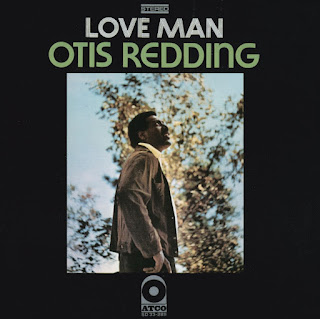
Otis Redding – "Love Man" (1969)


I'm six-feet-one, weigh two-hundred-and-ten

Long hair, real fair skin

I’m long-legged and I’m outta sight


The rumor is true – Otis Redding did, in fact, write “Love Man” about little ol' moi!


His numbers are a little bit off.  I’m actually a little taller than six-feet-one, and I weigh closer to 200 than 210.


But Redding’s numbers are close enough for government work (as I used to say when I worked for the government).


He’s a “Love Man,” too!

And the rest of the song’s description – “outta sight,” etc. – is just spot on, boys and girls.


*     *     *     *     *


“Love Man” was released on the album of the same name about 18 months after Redding and six others died in a plane crash on December 10, 1967 while en route to Madison, WI.  It was the third of four posthumous albums released between 1968 and 1970 that featured tracks recorded in 1967.


“Love Man” is one of the many records I might have never heard were it not for the Sirius/XM “Underground Garage” channel.


Click here to listen to “Love Man.”


Click below to buy the song from Amazon:


Wednesday, February 4, 2015

Doors – "Runnin' Blue" (1969)


Got to find the dock of the bay
Maybe find it back in L.A.

You don't hear much about Robby Krieger, the guitarist for the Doors, despite the fact that he wrote or co-wrote some of their best songs.  


"Runnin' Blue," from the band's fourth studio album, Soft Parade, was Krieger's tribute to Otis Redding, who had died when the small plane he and his band were touring in plunged into a Wisconsin lake on December 10, 1967.  Redding was only 26.


Redding's biggest hit, "(Sittin' On) The Dock of the Bay," was recorded shortly before his death.  It became the first posthumously-released #1 single ever.  

"Runnin' Blue" begins with these introductory lines, which were adapted from a Lead Belly song, "Poor Howard":

Poor Otis, dead and gone
Left me here to sing his song
Pretty little girl with the red dress on
Poor Otis dead and gone.

Robby Krieger
Jim Morrison sings the verses of "Runnin' Blue," but Krieger sings the chorus (accompanied by Grand Ole Opry mandolin legend Jesse McReynolds).

Here's "Runnin' Blue," which sounds more like a Blood, Sweat & Tears song than a Doors song:


Click below to buy the song from Amazon:

Friday, April 25, 2014

Detroit Cobras -- "Shout Bama Lama" (2001)


Lord have mercy on my soul
How many chickens have I stole?
One last night and the night before
I'm going back and try to get 
Ten or 'leven more . . .
I love a chicken, baby!

Amen to that, brothers and sisters -- I, too, love a chicken!

Today my go-to chicken comes from Crisp & Juicy, a local carry-out that serves fabulous Peruvian-style rotisserie chicken cooked in ovens fueled by charcoal.  

Crisp & Juicy chicken
A nice leg quarter of Crisp & Juicy chicken with some black beans and rice is hard to beat, boys and girls.  

But back in the day, my #1 seed for chicken was Chicken Annie's . . . or Chicken Mary's.  I could never really tell the difference, which will no doubt shock my high school friends -- I think most locals strongly favor one or the other.

Chicken Annie's and Chicken Mary's are large fried-chicken restaurants located directly across the road from one another out in the middle of nowhere.  (The mailing address for both restaurants is Pittsburg, Kansas, but the only building that's visible from Chicken Mary's is Chicken Annie's, and vice versa.)


Both restaurants were started by women whose coal-miner husbands became physically unable to continue working in the mines.  Chicken Annie's is the older of the two -- it was opened by Annie Pichler in 1934.  Mary Zerngast opened Chicken Mary's about a decade later.

Let's take a close look at Chicken Annie's menu.  (Chicken Mary's is similar.)

You can get one-, two-, three-, and four-piece dark-meat dinners, or dinners with one, two, three, or four chicken breasts.  If you can't decide between white and dark meat, you can get two-, three-, four-, and five-piece mixed dinners.


You can also get dinners featuring three, four, or six wings, and four or six backs.  

No part of the chicken goes unused: the menu offers chicken livers, gizzards, and hearts.  (My son Nick and are partial to chicken hearts, and we always get a side order of hearts to accompany our chicken dinners.)

Dinners are served with two side orders.  You can get everything from French fries to a baked potato to applesauce to cottage cheese to spaghetti.


But I pity the fool who isn't smart enough to opt for a double order of German-style potato salad -- which is wonderfully oily, vinegary, and garlicky.

In 1982, food writer Calvin Trillin wrote a long piece about Chicken Annie's and Chicken Mary's for the New Yorker.   I was stunned, then thrilled when I saw that article -- I would never have dreamed that the famed New Yorker would take notice of the two restaurants.

More recently, the Travel Channel visited Pittsburg and taste-tested both restaurants' fried chicken.  NBC news anchor Brian Williams -- who got his start at the local NBC affiliate -- was featured in that show.


Click here to read more about Annie's, Mary's, and some other local fried-chicken joints. 

By the way, all those restaurants serve bread from Frontenac Bakery, a small local bakery that was started by a coal miner who was injured on the job and had to find another way to make a living.  Click here to read more about Frontenac Bakery.


"Shout Bama Lama" is one of the tracks on Sympathetic Sounds of Detroit, a compilation album that was produced in 2001 by Jack White of the White Stripes.  Click here to read about another song featured on that album.  

The Detroit Cobras, one of the dozen-odd Detroit garage/punk bands whose music is featured on that album, specialize in doing covers of R&B records from the fifties and sixties.

The Detroit Cobras
Believe it or not, there's a blog that focuses on Detroit Cobras covers.  Here's what the author of that blog had to say about hearing "Shout Bamalama" for the first time while driving in his pickup one day:

WHOA -- What the f*ck was that?

So I played it again. WOW!

By this point I am home in my driveway, listening for the 5th time before one of my sons come out to leave -- spots me in my truck -- I invite him in to have a listen with me -- he tells me it's great (to appease me) and leaves.  Kids don't know sh*t about about music anyways.

Damn straight.


"Shout Bamalama" was Otis Redding's second single.  It was released in 1960 on the Confederate Records label.  (My, how times have changed.)

Here's Otis Redding's version of "Shout Bamalama":


Here's the Detroit Cobras cover of the song:


Click below to buy the song from Amazon:


Wednesday, February 5, 2014

Bar-Kays -- "Soul Finger" (1967)


Like Booker T. & the M.G.'s, the Bar-Kays were a group of studio musicians who backed a number of Stax Records artists -- including Otis Redding -- and also released records under their own name.  Several of the band's members perished in the 1967 plane crash that killed Redding.


(A number of legendary musicians have died in airplane crashes, but Redding was clearly the most talented of them.)

The surviving members (including the legendary bass player, James Alexander) rebuilt the band and continued to play on Stax recordings, including Isaac Hayes' Hot Buttered Soul.


The Bar-Kays first single was "Soul Finger," which was recorded before the Redding plane crash, and which made it to #17 on the Billboard "Hot 100" chart in 1967.  It features a chorus of neighborhood kids, who were told to shout out the song's title when directed, and were reportedly paid with bottles of Coca-Cola.

Here's "Soul Finger," which is a silly-bazilly song:


Click below to buy the song from Amazon:

Sunday, April 7, 2013

Jay-Z and Kanye West -- "Otis" (2011)


They ain't see me 'cause
I pulled up in my other Benz
Last week I was in my other other Benz

Think about that, boys and girls.  You've got one Mercedes-Benz that people are used to seeing you in, but you're not driving it.  Instead, you pull up in your other Benz.  

Which confuses everyone, because last week you were in your other other Benz!

Imagine what it would be like to be Kanye West . . . even for just a single day!

You might think it would be better not to live the life of Yeezy for just a day because you would never be satisfied with your own sad, dull life after that 24 hours of bliss had ended.  But I figure that 24 hours of Kim Kardashian would be plenty for any man -- after that, you'd be happy to have your own life back.

You see a picture like this one, and trading places with Kanye seems very, very tempting.  But pretty soon she'll going to start talking -- and once she does, she may never stop!

Kim from the front (for a change)
Jay-Z is a phenomenal rapper, but I think he has to take a back seat to Kanye as an artist.  And Kanye is younger and better-looking.  But Jay-Z has an edge on Yeezy in one area: he's married to Beyoncé.  Kim Kardashian certainly has her charms, but she's no Beyoncé when it comes to talent and wealth.

"Otis" was the second single from the 2011 Watch the Throne album.  It borrows heavily from Otis Redding's classic, "Try a Little Tenderness," which was one of the songs featured in this year's edition of the wildly popular "29 Songs in 28 Days."  Click here if you missed that post.  

The Watch the Throne album cover
After the song opens with a 30-second snippet from "Tenderness," Jay-Z kicks off the first verse of "Otis" by announcing "I got my swagger back."  (Who knew Jay-Z lost his swagger in the first place?)  He gives a shoutout to his new favorite Swiss watchmaker, Hublot.  

Jay-Z used to be an Audemars Piguet guy, but recently allied himself with Hublot -- likely in exchange for an equity stake in the company.  Click here to read what Forbes staff writer Zack O'Malley Greenburg, the author of Empire State of Mind: How Jay-Z Went from Street Corner to Corner Office, has to say about the Hublot deal.

Here's the Hublot "Big Bang" watch that Beyoncé bought for her hubby recently.  It has 1282 diamonds and cost an estimated $5 million:

Jay-Z's Hublot "Big Bang"

The highlight of Kanye's first verse are the Mercedes-Benz lines quoted above, plus an out-of-left-field reference to Phillip Drummond -- that was the name of the rich white guy (played by Conrad Bain) who adopted two black orphans named Arnold and Willis (played by the late Gary Coleman and Todd Bridges) on the Diff'rent Strokes TV show.

The Diff'rent Strokes crew
Jay-Z cranks up the narcissism in his second verse:

Photo shoot fresh, looking like wealth
I'm 'bout to call the paparazzi on myself

You might think that the reference to a "G450" in this verse is a reference to a Mercedes-Benz G450, but you would be wrong.  (You obviously don't own one Mercedes, much less an other other Mercedes.)

There is a Mercedes-Benz GL450, but there's no G450 model Benz.  Jay-Z is talking about the Gulfstream G450, a twin-engine long-range business jet with a list price of about $38 million.  Jay-Z owns a G450, although I'm guessing Beyoncé is helping pay for it.

Gulfstream G450
The good thing about being rich enough to have a Gulfstream G450 is that you can get the hell out of Dodge and bribe everyone you need to bribe if the sh*t really hits the fan some day -- Jay-Z says he's got five passports, so he's never going to jail in the good ol' US of A.

Kanye follows up with some luxury-goods-related lines of his own.  His brags that his verses are "couture-level" in quality, "the Hermès of verses" -- like high-end fashions, his rap "is never going on sale."

Kanye with his Hermès "Birkin" bag.
The next lines display the sophisticated wordplay that is West's hallmark:

I get it custom, you a customer
You ain't accustomed to going through customs 

Kanye has always mixed the sacred and the profane in his lyrics -- he "writes his curses in cursive."  He closes the verse by observing that (unlike most men) he doesn't have to impress women -- the women show off in hopes of impressing him.  After he's "done" with one of the many women who throw themselves at him -- this song was recorded before he found true love with Kim K, of course -- he starts to make the obligatory promise to call her tomorrow, but then changes his mind . . . and shows that he's a master of wordplay in more than one language: "I'll hit you up maña . . . NAH!"

In his second verse, Jay-Z picks up where he left off in verse one, which ended with him using his Gulfstream, his passports, and his cash money to get out of the country and obtain political asylum elsewhere -- perhaps in Havana, when he can indulge in his love of cigars with Fidel Castro.  

But Jay-Z says that he and all the other "illegals" that he consorted with when he was a drug dealer (Mexicans, Dominicans, etc.) will find their way into the United States regardless of the measures our government takes to keep them out:

Build your fences
We digging tunnels

Kanye's final verse is a tour de force.  Of course, so many of Kanye's verses are tours de force that the term has little meaning when applied to him.  He begins by taunting all his rap rivals, who have to take tour buses to get from concert to concert, while Kanye and Jay-Z travel on the G450:  "Can't you see the private jets flying over you?"

Jay-Z and Kanye in the "Otis" video
Kanye's closes out "Otis" with a reference to Reinhold Niebuhr's "Serenity Prayer" -- since other rappers can never match him, he hopes they don't drive themselves crazy trying:

Lord, please let them accept 
The things they can't change
And pray that all of 
Their pain be champagne

The champagne/"sham pain" pun in the last line is quite old.  There's an 1860 book titled The Toast-Master's Companion that contains this drinking toast:  "Champagne for our real friends, and real pain for our sham friends."  Click here to listen to Fall Out Boy's 2005 song of the same name.

Kanye and Jay-Z had such a good time doing this song -- that's obvious when you listen to "Otis," and it's even more obvious when you watch the music video (which is embedded below).  

Apparently they really did chop up a Maybach for the video.  (A new Maybach runs about $350,000, and it's estimated that another $150,000 was spent modifying it for the "Otis" video, which was directed by our old friend Spike Jonze.)

The "Otis" Maybach
Which reminds me of one final line from "Otis": "Maybach bumper sticker reads: 'What would Hova do?'"  (Hova, of course, is one of Jay-Z's many nicknames.)  A sacrilegious play on "What would Jesus do?" bumper stickers?  Yes, of course -- but isn't putting a bumper sticker on a Maybach even more of a sacrilege?

Click here to watch the "Otis" video.

Friday, February 8, 2013

Otis Redding -- "Try a Little Tenderness" (1966)


But it's all so easy
All you gotta do is
Try a little tenderness

Unfortunately, it's not really all that easy.  But when Otis Redding sings these lines, you believe that it is.

Between 1965 and 1967, Otis Redding released five studio albums, each of which made it to the top five on the U.S. R&B charts and also did well on the U.S. and UK pop charts.  His hit singles included "I've Been Lovin' You Too Long," "Respect," "I Can't Turn You Loose," "Satisfaction," and "Try a Little Tenderness."  

Redding was 26 years old and at the height of his popularity when the twin-engine airplane carrying him and his backup musicians to a gig in Madison, Wisconsin, crashed into Lake Morona on December 10, 1967.  

Redding and his Beechcraft Model 18
Redding had recently purchased the Beechcraft Model 18 from James Brown.

"(Sittin' On) the Dock of the Bay" was released a month later and became Redding's only number one single on the Billboard "Hot 100" chart and the first posthumous number-one single.  

Otis Redding was one of the great artists who recorded for the Memphis-based Stax Records.  (Redding actually recorded for Volt Records, which was a Stax subsidiary.)  The label's other artists included Wilson Pickett, Isaac Hayes, Sam and Dave, Carla Thomas, and Booker T. & the M.G.'s.  

Otis in performance
Stax was the funky Southern cousin of Detroit's Motown label.  Motown performers were cool, calm and collected -- they rarely broke a sweat.  Stax artists were the hardest-working men and women in show biz, and they sweated plenty.  Both labels put out amazing pop music, but I have to give the nod to Memphis over Detroit when it comes to soul music.  

I don't see how you can rank any soul/R&B singer ahead of Otis Ray Redding, Jr. -- a/k/a/ "The King of Soul" and "The Big O."  He doesn't have a particularly impressive voice -- he doesn't have much range, and he often sounds a bit hoarse -- but his singing is utterly convincing emotionally.  There's not a bit of artifice in his performance.  

The first verse of this song is as close to being a cappella as is it possible to be -- Otis is accompanied by a few soft guitar chords and just a taste of piano and organ.  That's our old friend Booker T. Jones of Booker T. & the M.G.'s on our old friend the Hammond B-3.

Booker T. and his Hammond B-3.
On the next verse, drummer Al Jackson, Jr., contributes a metronome-like rhythm track, but the guitar-piano-organ accompaniment remains subtle and understated, giving Otis plenty of room to sing naturally -- he doesn't have to shout to make himself heard.

Things start to intensify musically in the third verse, and just as that verse transitions into an extended coda, the horn section kicks loose and Otis hits the afterburner.  Buckle your seat belts, boys and girls -- you're in for a wild ride.   

"Try a Little Tenderness" was initially recorded in 1932 by the Ray Noble Orchestra.  Here's their version of the song -- it's not bad, but it is a completely different song than the one Otis recorded.  (You may not recognize it at first, but you will eventually.)


Compare that to this live performance of the song by Otis:


Here's the album version of Otis Redding's "Try a Little Tenderness":


Click here to buy the song from Amazon: