Showing posts with label Mazeppa. Show all posts

Sunday, October 24, 2010

Leon Russell -- "Roll Away the Stone" (1970)


Roll away the stone
Don’t leave me here alone
Well they rag me and they tag me
Don’t leave me laying here
What will they do in 2000 years?


Everyone knows the game "Six Degrees of Kevin Bacon," right?  Leon Russell is sort of the rock and roll equivalent of Kevin Bacon.

This post kicks off a new series featuring songs by famous artists or bands that Leon Russell has performed or recorded with -- sort of a "One Degree of Leon Russell" game.  (If we took things to a full six degrees with Russell, it would be overkill -- two or at the most three degrees is probably as far as we would need to go to include every musician worth including.)   

Most of these songs also fit in my ongoing series of posts featuring records that were popular when I was in college in the early 1970's.  So you're killing two birds with one stone, and it's not costing you a penny more.  (Or I guess it's me that's killing two birds with one stone.)

Anyway . . . Leon grew up in Oklahoma and is a 1959 graduate of Will Rogers High School in Tulsa, which is also the alma mater of Anita Bryant, David Gates (the lead singer of Bread), Elvin Bishop ("Fooled Around and Fell in Love"), Susan Hinton (author of The Outsiders and other novels), and our old friend Gailard Sartain -- better known as Dr. Mazeppa Pompazoida. 

Will Rogers High School (Tulsa, OK)

Russell started playing in clubs in and around Tulsa when he was 14.  He and J.J. Cale (who wrote the Eric Clapton hits "After Midnight" and "Cocaine") played together in a group called the Starlighters, which is one of the progenitors of the mix of rockabilly and blues that became known as "the Tulsa Sound."  

Russell was one of the first "Tulsa Sound" musicians to move to Los Angeles, and a number of his friends followed him and became successful session musicians.  Russell backed up a very diverse group of recording artists in the early 1960's, including the Byrds, Gary Lewis and the Playboys, Bobby "Boris" Pickett ("Monster Mash"), Herb Alpert and the Tijuana Brass, and the Midnight String Quartet (an easy-listening chamber music group that released nine albums between 1966 and 1971).  He was one of the group of Phil Spector studio musicians who served as the backing band for "The T.A.M.I. Show" movie, which I discussed in an earlier post. 
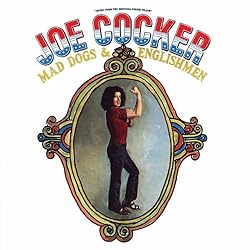
Russell's first big success as a songwriter was "Delta Lady," which became a hit for Joe Cocker in 1969.  (Russell headed up Cocker's band on the "Mad Dogs and Englishman" tour.  A very entertaining documentary movie was made about that tour.)  

The same year he co-wrote the song "Superstar," which became a big hit for the Carpenters but was also recorded by Cher, Bette Midler, Vikki Carr, and Peggy Lee.  He also recorded two very underrated albums with Marc Benno -- they called themselves the Asylum Choir.  (Click here to read my post about Asylum Choir's "Ballad for a Soldier.") 

That brings us to 1970, and Russell's eponymous (I do love that word) solo album, which includes his version of "Delta Lady," the very well-known "A Song for You," and the song featured in this post -- "Roll Away the Stone."
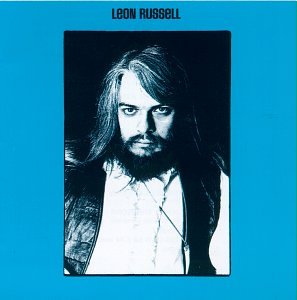


The musicians who appeared on this album are a rock and roll "who's who" -- I'm talking three Rolling Stones (Mick Jagger, Charlie Watts, and Bill Wyman), two Beatles (George Harrison and Ringo Starr),  Eric Clapton, Steve Winwood, Joe Cocker, and a host of first-rate studio musicians (like Beatles' protege Klaus Voorman and Jim Gordon, who was the drummer for Derek and the Dominoes).  

I'm familiar with this album mostly because my college girlfriend -- a graduate not of Will Rogers, but rather of Nathan Hale High School in Tulsa -- owned it.  (Yes, she owned Carole King's Tapestry as well.)  I'm not sure that this album was all that popular among my fellow classmates, but it was sure popular with her.  And since I spent a lot of time with her, I heard it a lot.   

I remember when the comic strip "Doonesbury" started to appear in the Rice student newspaper, the Thresher.  Although Garry Trudeau (who started to draw "Doonesbury" when he was a Yale undergraduate) was a very hoity-toity New Yorker, the character the strip was named for -- Mike Doonesbury -- came to Yale from good old Tulsa, Oklahoma.


Mike was terribly embarrassed when his high-school girlfriend showed up at Yale for a visit wearing bib overalls and a straw hat.  I thought that was soooooooo funny, and I made fun of my Tulsa girlfriend for months after that "Doonesbury" appeared.

Can you believe the nerve I had?  I was from Joplin, Missouri, for cryin' out loud -- where did I get off making fun of someone from Tulsa, which was much bigger and much more cosmopolitan place?   

The verses to "Roll Away the Stone" tell a fairly conventional I-caught-my-woman-cheatin'-on-me-with-my-friend story, but the chorus (quoted above) makes obvious references to Jesus Christ's death and resurrection.  

I don't know what it all means.  If you do, please let me know.  But if you, I'm not going to lose any sleep over it.


Click here to buy the song from iTunes:


Click here to buy it from Amazon:


Sunday, July 25, 2010

Leon Russell and the Shelter People – "Stranger in a Strange Land" (1971)


How many days
Has it been since I was born?
How many days 'til I die?

I recently wrote about how a number of my high-school friends and I spent much of our youth drinking 3.2% beer at Nina's Green Parrot in Galena, Kansas.  Just click here if you need to refresh your memory, or if you didn't read that post in the first place.

Let's pretend it's late on a Saturday night, and Nina's has closed for the evening.  We've grabbed a tall boy for the road, carefully backed out of our angled parking place (making a U-turn in Galena is a sure way to get ticketed), and found our way back to Route 66 for the return drive to Joplin.  So what now?

It's time to turn on the ol' Zenith and watch Mazeppa, of course!

Dr. Mazeppa Pompazoidi's Uncanny Film Festival and Camp Meeting show – featuring Gailard Sartain (a/k/a Dr. Mazeppa Pompazoidi) – aired on Tulsa television from 1970 to 1973.

Gailard Sartain (a/k/a/"Mazeppa")
The show began after midnight on Saturday nights – after the local news at 10:00 PM and after the late movie.  The "film festival" part of the show was usually an obscure old horror movie.  But the reason we watched were the extended skits and live commercials that Sartain and his sidekicks (the best known of whom was Gary Busey) did during breaks in the movie.

Click here to watch the show's opening (and closing) credit sequence.

*     *     *     *     *

I rarely made it to the closing credits, which usually ran about 2:30 AM.  By that time, I had "fallen asleep" (i.e., passed out) in the recliner in my parents' living room.  

Eventually, I would awaken (thanks to a painfully full bladder), half-blind from the combination of the bright lights I had left on and my failure to remove my contact lenses before "falling asleep."  The Mazeppa show would be long gone, and all that was playing on the TV was a screen full of snow and static.

Tulsa native Gailard Sartain – whose name appeared in the show's credits as "G. Ailard S. Artain" – went on to fame and fortune after his stint as Mazeppa.

Sartain on "Hee Haw"
He is best-remembered as a regular on "Hee Haw" for almost 20 years.  But he also appeared in a number of major motion pictures – including The Buddy Holly Story (he portrayed the Big Bopper, while his Mazeppa pal Gary Busey was nominated for an Academy Award for his portrayal of the title character), Mississippi Burning  (a drama about the 1964 murder of three civil-rights workers that starred Gene Hackman and Willem Dafoe), Robert Altman's Nashville, and the neo-noir film The Grifters (where he had a memorable sex scene with Annette Bening).  I also remember him as a regular on The Cher Show in the mid-1970's.  

Last and almost certainly least, he played Jim Varney's sidekick, Chuck, in the "Ernest P. Worrell" movies and television series.  (KnowhutImean?)

*     *     *     *     *

I first stumbled across "Mazeppa" while visiting relatives in Fayetteville, Arkansas.  (That was before my parents got cable.)  

I will never forget a skit titled "The Severed Hand" that was the highlight of the first Mazeppa episode I ever saw.  It started with a short film about a persistent door-to-door salesman, whose hand was severed when he tried to hold a female customer's door open as he continued to pitch her whatever he was selling and the woman (played by a show regular known as Judy Judy) finally just slammed the door shut on him.  

The severed hand fell into a wastebasket, but (with the help of some crude special effects) soon thereafter crawled out and started following the woman around the house.  After a couple of minutes, the hand caught up to the fleeing woman, pounced on her, and grabbed her by the throat – as the screen faded to black and the words "To be continued" appeared.

Sartain and Judy Judy were sitting together on the Mazeppa set when the film ended, pretending to speculate as to what would happen in the next installment of the film.  Sartain reached out toward Judy, supposedly to brush off a small piece of food or some other debris that she was not aware was on her face, but she jerked her head back and slapped his hand away.  He kept reaching for her face until she became so upset that she bit off his entire index finger and spit it out on to the table they were sitting at.  (The camera moved in quickly for a nice, tight close-up of the severed digit – if memory serves, it was the index finger.) 

 After a moment, you realized that Sartain had been reaching for her face with the same fake hand that had been used in the movie – but until that realization dawned on you, you really thought she had really bitten off his real finger.

*     *     *     *     *

Sartain and Busey (who went by the name Teddy Jack Eddy on the show) did a number of memorable skits.  Click here to watch one featuring Sartain as an overbearing high-school coach who is punishing a wise-ass student for his failure to suit up for gym class.

Busey graduated from Nathan Hale HS in Tulsa in 1962, a year before Sartain graduated from Will Rogers HS.  Busey always has been a piece of work.  I once met an old Miami Vice stuntman who had worked as a stuntman on one of Busey's movies, and he reported that Busey was just as crazy as everyone said.  (The stuntman was pretty crazy himself, so that was really saying something.)  This was after Busey's near-fatal and helmet-less motorcycle accident in 1988, which fractured his skull but didn't slow him down much.

Gary Busey as Teddy Jack Eddy
Sartain and his fellow cast members did all the show's commercials live.  Seven-Up was a sponsor, as was the Der Wienerschnitzel fast-food chain and a local store called Rebel Jeans.  Mazeppa used a tag line for the Rebel Jeans spots that parodied the Mattel Toys slogan of that era:  "You can tell they're Ruh-BELL – they're SWELL!" 

I remember that Sartain frequently picked on Bokchito, a tiny town in southern Oklahoma that I used to drive through on my trips to and from college.  For example, while doing a Rebel Jeans commercial, he would pretend to be a truck driver who was delivering a trailer full of tire irons to Bokchito for the annual "Hippie-Hardhat Friendship Festival" there.

When I was an attorney at the Federal Trade Commission in the late 1970s, we had a summer intern from the University of Tulsa's law school.  His father had been one of the news anchors at the station where Sartain and Busey had worked as camera operators before Mazeppa went on the air.  According to this student, the two of them were constantly begging station management to give them a show of their own.  

The two were notorious for their practical jokes.  Once, as the floor manager was counting down the last few seconds of a commercial break before the news anchors would be back on the air, Sartain and/or Busey threw a live snake on to the anchor desk.

*     *     *     *     *

Where did the name "Mazeppa" come from?  I actually researched that at the Rice University library when I was a student there. 

It turned out that Ivan Stepanovych Mazeppa was a 17th-century Ukrainian nobleman and Cossack general who allied with Sweden and Poland in a war against Russia in hopes of winning independence for the Ukraine.  (The Russians won.) 

Byron, Pushkin, and Victor Hugo all wrote long poems about Mazeppa, while Tchaikovsky composed an opera titled Mazeppa and Liszt wrote a symphonic work named for him.

Tchaikovsky's "Mazeppa"
In Byron's poem, Mazeppa is punished for becoming involved with a Polish count's wife by being tied naked to a horse that was sent galloping across the Polish plains – an ordeal that almost killed him.

According to Sartain, he learned about Mazeppa when he found an old newspaper with an article about a 19th-century dancer who had herself bound to a horse that she rode across the stage in honor of Mazeppa.  As for "Pompazoidi," he just made that up.

*     *     *     *     *

Near the end of the Mazeppa TV show's run, the cast travelled to Joplin to put on a live show at Memorial Hall.  I'm not sure how many people in Joplin had cable TV in those days, but I'm pretty sure very few people in Joplin watched the show – except for we happy few, we band of brothers (and sisters) who were returning from a night of beer drinking in Kansas.  

As I recall, about a dozen paying customers showed up for the performance.  Sartain was bitter – he insulted Joplin and everything Joplin-related over and over, complaining that he hadn't taken in enough from ticket sales to even pay the Will Rogers Turnpike tolls back to Tulsa.  (He even passed the hat – I recall that some wisenheimer contributed a comb.)  

For many years, I had a small poster advertising that Joplin show.  (Sartain is a cartoonist of the R. Crumb school, and he may have personally drawn that poster.)  I need to do some serious exploring at my parents' house this weekend to see if I can locate that bad boy.

*     *     *     *     *

Click here to go to the "Tulsa TV Memories" webpage about the Mazeppa show – there's a lot of stuff here.

And click here to go to the official Mazeppa website.  It offers four DVDs full of Mazeppa's skits – I have the first three, but haven't watched much of them.  (I'm a little afraid of being disappointed.)  

*     *     *     *     *

Leon Russell (real name: Claude Russell Bridges) was also an Oklahoma native, and like Sartain he attended Will Rogers HS in Tulsa.  

Russell once appeared on Mazeppa, but there seems to be no recording of that episode, so his performance is lost forever.  (Who knows?  Maybe he performed this very song.)

And before he became an actor, Gary Busey played drums on some of Russell's records (under the "Teddy Jack Eddy" pseudonym that he later used on Mazeppa).  Since the rules are that each post on this blog starts off with lines from a song I like, a Leon Russell song seemed like a good choice for this one.

Leon Russell
Russell has had a long and storied career as a session musician, songwriter, and solo artist.  He's performed with everyone – Eric Clapton, Elton John, George Harrison, Glen Campbell, Willie Nelson, Joe Cocker, and Bob Dylan, among others.  

I particularly like his two rather obscure albums with Marc Benno.  They called themselves the Asylum Choir, and you'll be hearing more about one of their songs someday soon.  

I could go on and on about Russell and this song, but it's late and I have many posts to do before I leave for my 40th high school reunion.  So if you want to know more, just enter "Leon Russell" into Google and knock yourself out.

Click here to listen to "Stranger in a Strange Land."

Click on the link below here if you'd like to buy the song from Amazon: