Tuesday, August 24, 2021

Who – "We're Not Gonna Take It" (1969)


Right behind you, I see the millions

On you, I see the glory

From you, I get opinions

From you, I get the story


(Those lines fit 2 or 3 lines to a T, wouldn’t you say?)


*     *     *     *     *


In  the 1947 movie, Kiss of Death, Richard Widmark portrayed a psychopathic killer named Tommy Udo:


The late movie, music, and book critic Allan McLachlan – who died in 2019 – used Tommy Udo as his nom de plume.  A hitman like Widmark’s Udo would seem to be an unlikely inspiration for someone who wrote magazine articles for a living, but McLachlan’s NME piece on the Who’s Tommy reads like something that the Kiss of Death character – who has been described as a “cackling, vindictive psychopath” – might have produced if he had spent his spare time between murder-for-hire gigs writing record reviews:


[I]n his quest to push pop music to the limit, [Pete Townshend] ended up producing this seething, rancid turd of an album, fit only for fly-food and scaring the neighbors.  In all fairness, this remastered version by The Who is nowhere near as bad as the “all-star” production that came out a few years later and that in turn was not fit to lick the arse of arseness that was the movie soundtrack that had Oliver Reed and Ann-Margret singing.


Tommy is a fucking woeful album; individual tracks like “I’m Free,” “Eyesight To The Blind,” and “Pinball Wizard” are classic Who . . . but the padding around them is like drinking vomit.  How a man capable of writing “Substitute” or “I Can See For Miles” could also be responsible for “1921” or “Go To The Mirror” is a major mystery.  This was the absolute nadir for Townshend and the Who; and the heavily-flawed Quadrophenia seems like a masterpiece in comparison.  Tommy stands as an object lesson for any of today’s young turks; as soon as you think, “Rock opera: good idea,” then it’s time to think, “Give up drugs!”


*     *     *     *     *


My grandmother told me to never speak ill of the dead, which Allan McLachlan most certainly is.  But I think McLachlan’s review of Tommy is so full of you-know-what that his eyes must have been brown when he wrote it.


“Seething, rancid turd of an album”?  A “f*cking woeful album”?  Listening to it is “like drinking vomit”?


I’ve written a lot of over-the-top sh*t in my life, so I know over-the-top sh*t when I see it.  And that review is some seriously over-the-top sh*t.


*     *     *     *     *


Other reviewers had a very different view of the Who’s rock opera.


Rolling Stone went ga-ga over Tommy.  “For the first time,” its 1969 review of the album opined, “a rock group has come up with a full-length cohesive work that could be compared to the classics.”


“For sheer power, invention and brilliance of performance,” Albert Goldman wrote in Life magazine, Tommy “outstrips anything that ever come out of a rock recording studio.”


The Village Voice’s rock critic, Robert Christgau, called Tommy the most successful “extended work” in rock music to date, and said it was the best album of 1969.


The most prominent American classical music figure of his era, Leonard Bernstein, said that the album’s “sheer power, invention and brilliance of performance outstrips anything which has ever come out of a recording studio.”  (When you remember that Bernstein is the man behind West Side Story – which probably deserves a spot on the Mount Rushmore of Broadway musicals – his opinion deserves to be taken very seriously.)


Finally, in an appreciation of the album published 50 years after its release in 1969, the National Review said that Tommy was the “ultimate expression of the upwardly surging creative arc” that produced extraordinary albums like the first Led Zeppelin album, the Rolling Stones’ Let It Bleed, and the Beatles’ Abbey Road – all of which appeared in stores that same year.


*     *     *     *     *


I’m in the camp that considers Tommy to be an uncanny work of genius.  (I say “uncanny” because Pete Townshend – the rock deity who almost single-handedly created Tommy – was only 23 when he started work on what is indisputable the greatest “rock opera” ever composed.)


And while Tommy is chockfull of interesting songs, the one I’ve chosen for induction into the 2 OR 3 LINES “GOLDEN DECADE” ALBUM TRACKS HALL OF FAME is its tour de force finale, “We’re Not Gonna Take It,” the second half of which is you may know as “See Me, Feel Me.”  
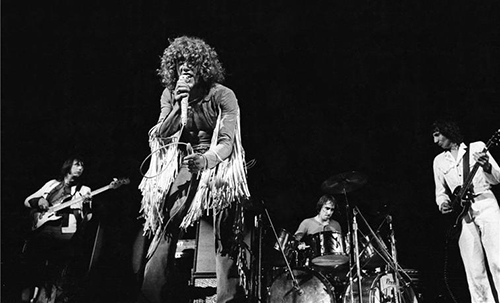

The Who at Woodstock

Click here to watch the Who performing the “See Me, Feel Me” part of today’s featured song at Woodstock.  (I have never seen rock musicians working harder than Pete Townshend and especially Keith Moon work in this performance.)


*     *     *     *      *


Click here to listen to today’s featured song.


And click on the link below to buy the track from Amazon:

Friday, August 20, 2021

Chicago Transit Authority – "Beginnings" (1969)


I’m with you

That’s all that matters


Did you know that Chicago has released THIRTY-SEVEN albums?  (That actually understates the band’s fecundity – the first three studio albums were all double albums, and the fourth album – Chicago at Carnegie Hall – consisted of four LPs.)


As for the most recent one – Chicago XXXVII: Chicago Christmas, which was released in 2019 – the less said, the better.


But Chicago’s first two albums were pretty, pretty, pretty, pretty good.


*     *     *     *     *


Chicago doesn’t get much respect because their music eventually got very . . . hmmmm, how shall I put it . . . soft?  (Remember “Wishing You Were Here”?  “If You Leave Me Now”?  “Hard to Say I’m Sorry”?  “Look Away”?  They were big hits for Chicago in 1974, 1976, 1982, respectively.)


But the first two albums were anything but soft.  


I played my Chicago II album half to death my freshman year of college.  I never owned their debut album – the eponymous Chicago Transit Authority – which in retrospect is clearly their best.  (For some reason, the Chicago mass-transit agency of the same name sued the band to force them to change that moniker to simply “Chicago” after it was released.)


That first album did OK – it peaked at #17 on the Billboard album chart – but none of the singles from it did much of anything.


After the second album was released and “Make Me Smile” and “25 or 6 to 4” (a real stick of dynamite) were top-ten hits, the group re-released three of the first album’s tracks as singles.  “Questions 67 and 68” and “I’m a Man” (which had been a hit for the Spencer Davis Group) had middling success, but the very truncated single edit of today’s featured song – “Beginnings” – climbed all the way to #7 on the Billboard “Hot 100” in July 1971.


That was more than two years after the Chicago Transit Authority album was released.


*     *     *     *     *


I thought about choosing “I’m a Man” for the 2 OR 3 LINES “GOLDEN DECADE” ALBUM TRACKS HALL OF FAME – it is an outstanding track – but I ended up going with “Beginnings” instead.  


That song was written by Chicago’s keyboard player, Robert Lamm, who is also the lead vocalist on “Beginnings.”  Lamm – who wrote most of Chicago’s most well-known songs – shared lead vocalist duties with the band’s bassist, Peter Cetera, and its shockingly good lead guitarist, Terry Kath.  (Jimi Hendrix once told one of Chicago’s horn players that “Your guitar player is better than me.”) 


“Beginnings” fools you – there’s a lot going on in the first part of the song, but there’s no drama, no sturm und drang.  Lamm’s vocals are smooth and effortless, but also quietly ecstatic – I challenge you to name a song from this era whose singer sounds happier and more contented with his current lot in life.


Chicago when they were
still Chicago Transit Authority

Things change about three minutes in, after a brief bass-and-drums break.


Lamm cuts loose, the horns cut loose – Lee Loughnane (trumpet) and James Pankow (trombone) have an instrumental duel that is a wonder to behold – and the percussion gets thicker and deeper.


Critic Charlie Ricci wrote that the middle three minutes of “Beginnings” was one of Chicago’s greatest moments, but I would take things a bit farther and say that it’s the epitome of the band’s recorded work.


The song ends with a percussion-only coda that lasts about a minute and a half.  I think that’s about twice as long as it should have been – had I been sitting in the producer’s chair, I would have started fading the song out quite a bit earlier.  But that’s a very small complaint about a beautifully conceived and executed album track.


As for the three-minute single edit – which cuts out almost all of the wonderful middle section – ay caramba!


*     *     *     *     *


Click here to listen to “Beginnings.”


Click on the link below to buy the song from Amazon:  


Tuesday, August 17, 2021

Led Zeppelin – "Good Times Bad Times" (1969)


It only took a couple of days 

'Til she was rid of me


(I hear you, Robert Plant – the same thing’s happened to me . . . more than once, I might add.)


“Good Times Bad Times” is the opening track on Led Zeppelin’s eponymous debut album, so it’s the first Led Zeppelin song most of us heard.


Believe it or not, Rolling Stone magazine originally panned that album.  Years later, they saw the error of their ways and gave it their highest rating – “Hard rock would never be the same” after Led Zeppelin I, according to the magazine’s 2001 reassessment of that album.


*     *     *     *     *


“Good Times Bad Times” is the fourth song from that album to be named to the 2 OR 3 LINES “GOLDEN DECADE” ALBUM TRACKS HALL OF FAME in as many years.  That’s no accident – and it’s certainly no mistake.


I can’t imagine how “Good Times Bad Times” could have been improved – Robert Plant’s vocals are great, John Paul Jones’s bass guitar is great, Jimmy Page’s lead guitar (which was fed through a Leslie speaker) is great, and John Bonham’s drumming is especially great.


The record was released as a single, and it did appear briefly on the Billboard “Hot 100” singles chart, peaking at #80 the week of April 19, 1969.  


The records that were in the top forty that week included “Dizzy” by Tommy Roe, “Hair” by the Cowsills, “Sweet Cherry Wine” by Tommy James, “Gimme Gimme Good Lovin’” by Crazy Elephant, and “Indian Giver” by the 1910 Fruitgum Company.  I’ve got nothing against any of those records, but can you imagine hearing “Good Times Bad Times” followed by “Dizzy” or “Indian Giver” on an AM radio station?  


The effect would be akin to seeing Raquel Welch or Ursula Andress at your high school prom – there were some really cute girls in my high school class, but they all would have been completely overshadowed if someone like Ms. Welch or Ms. Andress had shown up. 


*     *     *     *     *


“Good Times Bad Times” – which is a very tight record – clocks in at 2:43.  Every other member of this year’s group of 2 OR 3 LINES “GOLDEN DECADE” ALBUM TRACKS HALL OF FAME inductees will be considerably longer and less focused.


Many of the longer album cuts from the “Golden Decade” of rock music are padded with long instrumental solos and other filler.  But while this year’s hall of fame album tracks take their time getting to the end, they never strike the listener as being too long.  If anything, they’re too short – they may be six or seven minutes long, but you’re still sorry to see them end. 


*     *     *     *     *


Click here to listen to “Good Times Bad Times.”


Click on the link below to buy the song from Amazon:


Friday, August 13, 2021

K. Flay – "Can't Sleep" (2014)


My mother told me that

The world has got its plans

I wanna hold ‘em till they

Burn right through my hands


I had planned to write about the first of this year’s inductees into the 2 OR 3 LINES “GOLDEN DECADE” ALBUM TRACKS HALL OF FAME today, but then I got the following anonymous e-mail from someone who is obviously a yuge fan of 2 or 3 lines (despite what he says):


I’m not a regular reader of this blog.  Nor do I necessarily condone spending a lot of time blogging. 


All I know is that one minute I’m watching the new Suicide Squad movie and I hear a clip of “Can’t Sleep” by K. Flay, and the next thing I know it’s an hour later and I’m waaaaay down a rabbit hole of deep, DEEP cuts from K. Flay on YouTube.  And I just gotta shout it from the mountaintop because this song is too good not to.


I don’t know much about K.Flay.  The only thing I need to know is that she has one PERFECT song. 


“Can’t Sleep” captures millennial addiction, recklessness, and IDGAF-ness better than anything I’ve heard since Kid Cudi’s also-perfect “Pursuit of Happiness.” 


THANK ME LATER!


*     *     *     *     *


I know exactly what our anonymous friend is talking about, because I too have had the experience of hearing a stick-of-dynamite song in a movie soundtrack and becoming instantly obsessed with said song . . . and it’s happened more than once.


It may have been a song I knew but hadn’t heard in  years – as with Nilsson’s “Jump Into the Fire” (which was used to very good effect in Goodfellas) or “I Wanna Be Your Dog” by the Stooges (which was the perfect choice of music to accompany the pivotal scene in Lock, Stock and Two Smoking Barrels).


Or it may have been a record I’d never heard before but now can’t imagine living without – like Plastic Bertrand’s “Ça Plane Pour Moi” (the highlight of the very strong soundtrack of The Wolf of Wall Street) or Massive Attack’s “Angel” (which was prominently featured in Snatch).


*     *     *     *     *


The Suicide Squad is a “DC Extended Universe” movie that was released last week.  Here’s what the Washington Post had to say about it:


Expect intense blood and gore (bodies are slashed, blown apart, etc.), lots of death, heavy weaponry, brutal fighting, torture, crashes/explosions and more . . . Language is also very strong, with uses of “f–––,” “s–––,” and many more.  Characters have comically energetic sex, wrecking the room and crashing objects to the floor.  Nudity is mostly in the background but includes glimpses of breasts, chests and a penis. . . . Main characters smoke and drink, and a character is seen shooting heroin.


On the plus side, the movie also has “a lot of heart, as well as clear themes of teamwork.”


Sounds like the feel-good family movie of the summer!


*     *     *     *     *


K. Flay – who was born Kristine Meredith Flaherty in a Chicago suburb in 1985, and who attended New Trier High School and Stanford University – released “Can’t Sleep” on her debut album, Life as a Dog, in 2014:


Click here to watch the official music video for “Can’t Sleep,” which features freerunner Jason Paul doing some really bad*ss stuff in Bangkok.


Click on the link below to buy “Can’t Sleep” from Amazon:


Tuesday, August 10, 2021

Roger and the Goosebumps – "Stairway to Gilligan's Island" (1978)


Just sit right back and you’ll hear a tale

A tale of a fateful trip . . .


So what did you did think about this year’s class of 2 OR 3 LINES “GOLDEN DECADE” HIT SINGLES HALL OF FAME selections?  Man, oh Manischewitz  . . . were those eleven great records or what?


You probably need a bit of a refractory period before we move on to this year’s inductees into the 2 OR 3 LINES “GOLDEN DECADE” ALBUM TRACKS HALL OF FAME – at least you male readers do . . . am I right or what?


Ergo, this post – think of it as a little amuse-bouche courtesy of your friends at 2 OR 3 LINES.


*     *     *     *     *


Little Roger and the Goosebumps, who hailed from San Francisco, recorded their mashup of “Stairway to Heaven” and the Gilligan’s Island theme song in 1978.


Led Zeppelin’s attorneys promptly threatened to file a copyright infringement lawsuit against the band’s record label unless it agreed to destroy all copies of the record – which the label agreed to do.


Given how often Led Zeppelin took credit for songs that other artists wrote – “Dazed and Confused” (which was actually written by Jake Holmes, who recorded it over a year before Led Zeppelin released it on their debut album) is only one example – the band’s chutzpah was mind-boggling.


In 2004, Led Zeppelin lead vocalist Robert Plant told NPR that “Stairway to Gilligan’s Island” was his favorite cover of “Stairway to Heaven.”


*     *     *     *     *


Click here to listen to today’s featured song.


Friday, August 6, 2021

Temptations – "Papa Was a Rollin' Stone" (1972)


Never heard nothin' but bad things about him

Momma I'm depending on you

To tell me the truth


If you can’t handle the truth, “Papa Was a Rollin' Stone” isn’t the song for you.  Because it delivers the truth, the whole truth, and nothing but the truth.


That truth isn’t complicated – it’s as plain as the nose on your face that the father who is the subject of the song wasn't a good man.  


For one thing, he “never worked a day in his life,” preferring to spend his time “chasing women and drinking.”


And rumor has it that he had three “outside” children and another wife in addition to the woman who stoically deflects her sons’ questions about the father they never met.


It’s bad enough that he simply abandoned that woman and his sons – apparently without regrets.  It’s even worse that he did nothing to provide for their support, either during his life or after his death.  (“When he died,” the mother says, “all he left us was alone.”)


*     *     *     *     *


Records changed a lot over the course of what I like to call the “Golden Decade” of pop music (1964 to 1974).  If you like your re


Motown became world-famous on the strength of its sub-three-minute hit singles.  But the single version of “Papa Was a Rollin' Stone” was almost seven minutes long – by far the longest Motown single to date.  (The album version ran about twelve minutes.)


The Temptations

The song was written by the greatest of the Motown songwriter/producer teams, Barrett Strong and the late Norman Whitfield, who were behind not only most of the Temptations’ best records (including “Cloud Nine,” “I Can’t Get Next to You,” and “Ball of Confusion”) but also “War” (a #1 hit for Edwin Starr), “Smiling Faces Sometime” (the Undisputed Truth), and the greatest Motown record of all, “I Heard It Through the Grapevine.”


One of Strong and Whitfield’s first collaborations was a now-forgotten 1962 record by Marvin Gaye titled “Wherever I Lay My Hat (That’s My Home).”  They recycled that title to good effect in the chorus of today’s featured song – the last but certainly not the least of this year’s class of 2 OR 3 LINES “GOLDEN DECADE” HALL OF FAME inductees.


*     *     *     *     *


Click here to listen to the single version of “Papa Was a Rollin' Stone,” which was not only a #1 hit but also won three Grammys (including “Best R&B Song”).


Click here to buy the recording from Amazon:


Tuesday, August 3, 2021

Guess Who – "No Time" (1970)


Seasons change and so did I

You need not wonder why


In August 1974, I got in my car and headed south from Joplin, Missouri to Houston to visit my college girlfriend one final time before she headed west to attend Stanford Business School and I headed east to attend Harvard Law School.


Instead of driving straight to Houston, I made a couple of stops along the way.  First, I stopped in Little Rock, Arkansas to visit a cousin of mine and her husband (who was a minor-league baseball player).  Next, I spent a night with a high-school friend and his parents in Alexandria, Louisiana.


*     *     *     *     *


I remember some things about that long-ago trip vividly.  


For example, I remember that my old high-school friend was spending that summer working at a restaurant called “Po’ Paul’s” – which is how a Louisianan pronounces “Poor Paul’s.”  (My friend referred to the restaurant as “Piss-Po’ Paul’s.”)


A vintage Poor Paul’s matchbook

And I remember sitting with the wives and girlfriends of the players at one of my cousin-in-law’s baseball games.  While the players were teammates, they were also rivals with one another for a limited number of major-league roster spots – which meant there was no love lost between the “WAGs” (i.e., the “wives and girlfriends”).  When one of the pitchers got hit hard that night, the WAGs of several of the teams other pitchers made sympathetic noises to his significant other, but what they were really thinking to themselves was that their husbands and boyfriends had just moved up a spot in the organization’s prospect rankings due to that pitcher pooping the bed.


But most of all, I remember hearing that Richard Nixon had resigned the Presidency during that baseball game while I was driving south on U.S. highway 167 from Little Rock to Alexandria the next day.


*     *     *     *     *


I also remember attending a Guess Who concert at Barton Coliseum in Little Rock the night before the minor-league baseball game and the Nixon resignation announcement.  


Nixon announced his resignation – which was to be effective the following day – the evening of August 8.  So that concert must have taken place on August 7, right?


I loved me some Guess Who back in the day, but I loved Blue Öyster Cult even more – and that’s who opened for the Guess Who that night in Little Rock.


Except they almost certainly didn’t.


I’ve found several online sources that agree that BÖC performed in Harrisburg, Pennsylvania, on August 8.  It takes about sixteen hours to drive from Little Rock to Harrisburg today, and I’m guessing the roads are better today than they were in 1974 – so it’s a safe bet that the band didn’t play in Little Rock on August 7 and then drove to Harrisburg to play the next night.


They could have flown, I suppose – but I found nothing online that indicates that BÖC was in Little Rock on August 7.


As for the Guess Who, they performed at the Wisconsin State Fair on August 9.  That’s about a ten-and-a-half-hour drive from Little Rock, which is more than doable if the band didn’t have a gig on August 8.


I have no evidence of BÖC opening for the Guess Who in 1974 or any other year.  It seems very unlikely that the two bands would have shared the stage on August 7 and then headed off in two different directions – BÖC to Pennsylvania to play with Uriah Heep and Manfred Mann’s Earth Band on August 8, and the Guess Who to suburban Milwaukee to do a show on August 9.


Barton Coliseum in Little Rock, Arkansas

What isn’t very unlikely is that my memory has failed me, and that a story I’ve been telling for years – decades, in fact – is completely wrong.


*     *     *     *     *


My high school English teacher was a smart but very temperamental woman named Miss Jones.  Heaven help you if you got on her bad side.


One day, she asked one of the guys in our class what his favorite poem was.  With missing a beat, he recited this bit of doggerel:


No matter how you shake and dance

The last drop always falls down your pants


Fortunately for my classmate, the joke went right over Miss Jones’s head – either she didn’t hear what he said, or didn’t get the joke.  


For whatever reason, I never forgot that incident, which I found absolutely hilarious – I’ve told that story dozens of times over the years.


But when I told it to a group of friends at a high school reunion a few years ago, one of them told me it couldn’t have happened.


At least it couldn’t have involved the people I said it involved because Miss Jones sent that guy to the principal’s office for an unrelated offense about ten minutes into the first class of the school year, and refused to allow him to return – he was sent to study English with a different teacher.  (His offense?  He got up from his seat to use the pencil sharpener at the front of the classroom without permission.)


By the end of the evening, several other classmates had confirmed that – so what I remembered happening couldn’t have happened.


What did happen?  Maybe another guy recited the “shake and dance” poem – although I can’t think of anyone in my class who was both smart enough and ballsy enough to have come up with that answer to Miss Jones’s question.


Another possibility is that incident took place in a different English class.  (The year before we had Miss Jones, our English teacher was a younger woman who let us get away with quite a bit.)


In any event, I would have sworn on a stack of Bibles that the incident I had recounted so many times over the years had taken place just the way I recounted it.  But apparently it didn’t.


*     *     *     *     *


I’m at a loss to explain how I came to believe that I saw Blue Öyster Cult open for the Guess Who in Little Rock on August 7, 1974.  I can easily believe that I got the details confused, but I can’t believe I just made the whole thing up.  


However, I’ve been unable to confirm that either band was in Little Rock that night – much less both of them.


BOC did play in Little Rock on March 19 of that year.  My college girlfriend and I came up with the bright idea of driving from Houston to Boston and back during our spring break that year – a roughly 4000-miles round trip in just nine days.  We gave up in Baltimore and turned around because it was getting harder and harder for us to find gas for our Ford Pinto rental car.   (Our spring break coincided with the peak of the Arab oil embargo of 1973-74.)


Waiting in line for gas in 1974

The first night of that trip was spent in Little Rock with my cousin.  It’s possible – unlikely, but possible – that night was March 19, and that we saw Blue Öyster Cult that night.


It’s also possible that I did see the Guess Who in Little Rock on August 7 sans BOC.  There are a number of websites that list when and where various rock bands played concerts back in the day.  But unless you’re talking about the Beatles, the Stones, or other very famous groups, the historical record is very spotty – so just because there’s no online record of Guess Who playing in the Arkansas capital on August 7 exists doesn’t mean that didn’t.


Bottom line:


1.  My memories of August 7, 1974 are all wrong.


2.  My memories of August 7, 1974 are mostly wrong.


*     *     *     *     *


Between 1965 and 1968, the Guess Who – who got their start in Winnipeg, Manitoba as Chad Allan and the Reflections – released ten singles that were top forty hits in Canada, including a #1 hit and two recorded that reached the #3 spot.


But the band was largely unknown in the U.S. until 1969, when “These Eyes” and “Laughing” climbed to #6 and #10, respectively, on the Billboard “Hot 100.”


Their third 1969 release, “Undun” – one of the most distinctive and interesting singles of that era – wasn’t quite as big a hit, but their next record – “No Time” – went all the way to #5.


You’d best believe I owned
this album back in the day

Guess Who’s next single was “American Woman,” which held down the #1 spot on the “Hot 100” for three weeks in May 1970.  (The B-side of that single was “No Sugar Tonight,” which got a lot of radio airplay as well.) 


Guitarist Randy Bachman left the band that same month.  The Guess Who had several top forty hits after Bachman’s departure, but were never as successful as they had been in 1969-70, when they released six consecutive hit records – five of which made it into the top ten – in less than twelve months. 


*     *     *     *     *


“American Woman” wasn’t the band’s biggest seller, but I think “No Time” is the Guess Who single that has aged the most gracefully.  That’s why it has been chosen for this year’s class of the 2 OR 3 LINES “GOLDEN DECADE” HIT SINGLES HALL OF FAME.


Click here to listen to “No Time.” 


And click on the link below to buy the record from Amazon: