Friday, June 25, 2021

Friend and Lover – "Reach Out of the Darkness" (1968)


Reach out in the darkness

And you may find a friend


On Father’s Day, the Washington Post ran a story about Annie Lazor, a swimmer who had qualified for the U.S. Olympic team two days earlier – some seven weeks after the death of her father, Dave Lazor, who was only 61.  (You can click here to read his obituary.)

The late Dave Lazor

Lazor was his daughter’s biggest fan.  It’s probably redundant to say that – I don’t know any female athlete whose father isn’t her biggest fan.


My late father was certainly my sister’s biggest fan.  She was a star basketball and softball player – she was inducted into her college’s athletic hall of fame based on her prowess in both sports – but he would have been just as big a fan if she had been just average.


And I was my twin daughters’ biggest fan – I saw hundreds of their soccer and basketball games over the years, and bitterly regretted the few that I did miss.  (It so pissed me off whenever one of their games was cancelled due to rain or snow – I took it as a personal affront when the weather prevented me from seeing them play.)


*     *     *     *     *


From the Post article:


Dave Lazor wasn’t like the other swim dads you may have come across, the ones with their marked-up heat sheets in one hand and a running list of their kid’s best times in the Notes app of their phone. Half the time, he left one of Annie’s meets not even remembering her times or what place she finished. . . .


He was, however, the first to raise his hand to accompany Annie to meets, especially the many in Indianapolis, 4½ hours from his house in Beverly Hills, Michigan. . . .


“He wasn’t a times guy,” Annie Lazor said Saturday. “He was an experience guy.  ‘I get to spend four days with my daughter in one of my favorite cities?   Hell yes, I’m going.’  That’s what it was about for him.  Because he was just so invested in being there with me.  He just didn’t care about how well I swam.  Not that he didn’t care about me having good results.  Of course he cared because I cared.  But that’s not why he was there.”


That’s exactly the way I felt about seeing my daughters’ games.  Of course, I wanted to see them make goals and score baskets.  But mostly I just wanted to see them playing hard and enjoying being part of a team – win or lose.


*     *     *     *     *


Annie Lazor did so badly at the 2016 Olympic trials that she decided to retire from competitive swimming.  But she changed her mind two years later and started training again, hoping to make the U.S. team for the 2020 Olympics – which were delayed a year due to covid-19.


Last Friday, she earned a trip to Tokyo by winning the 200-meter breaststroke finals at the Olympic trials in Omaha.


From the Post:


That would have been the moment when an athlete in Lazor’s position might be expected to dedicate her performance to her late father, to look into a camera and say she wanted to win it for him.  But it was the one thought, she said, that never crossed her mind.


That surprised me.  I was expecting a feel-good Father’s Day story along those lines, but that’s not what I got.  


*     *     *     *     *


Annie Lazor’s mother said she was praying that no one would come up to Annie and tell her to win it for her dad.  “I didn’t want her to come into this meet thinking, ‘I have to do this for my dad,’” Annie’s mother told the Post reporter.  “As if swimming well — or even if she swam badly — would be some sort of reflection about how much she loved her dad.”


I guarantee you that if her father had been alive to see her swim last week, he would have been just as proud of her even if she hadn’t qualified.  


Of course, he would have been overjoyed by her victory – as Annie said above, he cared about how well she did because she cared.  


But win or lose, he would have been immensely proud to see his daughter competing at the very highest level of her sport.  


*     *     *     *     *


Annie may not have been swimming for her father, but that doesn’t mean she wasn’t swimming for someone other than herself.  


She told the reporter that she wanted to win in part to give her mother and her two brothers something to be happy about after all the sadness that resulted from her father’s death:


“The thing I thought about the most this week was that I just really want to give them something to be happy about,” Annie Lazor said, tears streaming down her face . . . . “They’ve been through so much these last couple months. I just really wanted to give them something to be excited about.  That doesn’t mean it overrides the grief we’re feeling, that it makes everything okay.  It definitely doesn’t.  But I just wanted to do this for them, more than anything.”


*     *     *     *     *


In her post-event news conference, Lazor described eloquently the difficulty of “trying to achieve the greatest thing that's ever happened to me while going through the worst thing that's ever happened to me.”


She was able to do so thanks in part to the help she received from her teammate, Lilly King, who won two gold medals in the breaststroke in the 2016 Olympics.


Lilly King and Annie Lazor celebrate

When Lazor decided to come out of retirement, she asked King if she could join her training group.  To her surprise, King agreed to Lazor's request.


“I wouldn’t be here if it wasn’t for Lilly,” Lazor said in 2019.  “I was pretty surprised.  I would think if it were my competitor and she had this program that’s working really well for her, why would you want to share that with her other competitors?”


*     *     *     *     *


For the next three years, the two women trained together, becoming fast friends.  


But they also competed against each other in a number of international swimming competitions.


After the death of Dave Lazor, Lilly King told Annie Lazor and her mother that she would do everything she could to help Annie earn a spot on the Olympic team.  


That didn’t include letting up and allowing Annie to beat her in the trials – I want to be perfectly clear about that.  In fact, Lilly King won the 100-meter breaststroke finals last Tuesday, helping to prevent Annie from qualifying for the Olympics in that event.


And she pushed Lazor hard in the 200-meter finals, finishing less than three-quarters of a second behind her friend.  (Lazor’s time was 2:21.o7, while King’s was 2:21.75.)


*     *     *     *     *


I’m sure that Lilly King – like most other U.S. Olympians – doesn’t just want to do well individually, but wants her team to do as well as possible.


But swimming isn’t like soccer or basketball or other team sports, where every team member wins a medal if the team wins.  Most Olympic swimming events are individual events.  Only one woman can win gold in the 200-meter breaststroke in Tokyo. 


By agreeing to allow Lazor to join her training group, King not only helped a potential American teammate, but also someone who could very well take an Olympic medal away from her.   


*     *     *     *     *


Lilly King lived up to her promises to do everything she could to help Annie Lazor make the Olympic team.  


Last Tuesday night, when King won the 100-meter breaststroke finals and Lazor was half a second too slow to earn an opportunity to compete in that event in Tokyo, King “tempered her own celebration out of concern for her friend and teammate,” according to the Post.


And on Friday, when the two swimmers were assigned adjacent lanes for the finals of the 200-meter event – which represented Lazor’s last chance to qualify for the Olympic team – King caught her eye and mouthed two sentences: “I love you,” and “We’ve got this.”


Lazor and King finished one-two in the qualifying finals, so both will get to swim that event – and maybe win a medal – in Tokyo.  But it didn’t have to turn out that way.


*     *     *     *     *


It comes as no surprise to read a story about a father putting his child first – that comes naturally for most fathers.  


But no one expects an athlete to bend over backwards to help one of her primary competitors be successful.  


Lilly King’s unselfishness seems truly remarkable to me.  I usually don’t pay much attention to the Olympics, but I’ll make sure I’m in front of the television when she and Annie Lazor are swimming in Tokyo later this summer.


It would be perfect if King wins gold in the 100-meter event and Lazor finishes first in the 200-meter race.


But even if neither of them wins a medal, they deserve as much respect and applause as any athlete at this year’s Olympics.


*     *     *     *     *


Today’s featured song, “Reach Out of the Darkness,” first appeared on the Billboard “Hot 100” on June 1, 1968 – just a few days before the assassination of Robert F. Kennedy.  
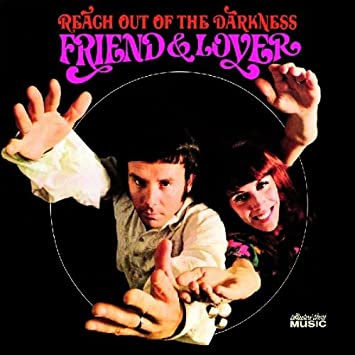

Maybe that’s why the song was played during an episode of Mad Men that depicted people watching television when news of the Kennedy assassination was breaking.


Click here to listen to “Reach Out of the Darkness.”  (Did you notice that the song title is “Reach Out of the Darkness” but the singer sings “Reach out in the darkness”?)


Click on the link below to buy the song from Amazon:


Friday, June 18, 2021

Hollies – "King Midas in Reverse" (1967)


It’s plain to see it’s hopeless

Going on the way we are


My grandson Jack (who will turn five next month) came over tonight to sleep at my house.


While we were driving back from dinner, today’s featured song – one of my personal favorites – came on the radio.


Jack often asks “What’s that song about?” when he’s in the car with me and I have the radio on – as he did tonight when “King Midas in Reverse” came on.


I explained to him that King Midas, who lived a long time ago, was a greedy man who once wished that everything he touched be turned into gold.


Midas’s wish was granted.  He was delighted to find that sticks and stones were instantly transformed into hunks of gold when he picked them up.


But when Midas’s lunch was transformed into indigestible precious metal when he started to partake of it, he began to realize that his wish might have been a bad idea.


The light bulb really went on over his head when he touched his beloved daughter, instantly turning her into a golden statue:


*     *     *     *     *


Jack’s a very sensitive little guy, and we try to avoid talking about people, animals, and even insects dying when he’s around.  


I was afraid that the image of Midas’s daughter being turned into a lifeless statue would upset him, so I left that part out when I told him the story of King Midas.


To tell the truth, that part of the story disturbs me as well.  I’d just as soon not think about it.


*     *     *     *     *


When we got home, I broke out the DVD of the movie adaptation of C. S. Lewis’s 1950 novel, The Lion, the Witch, and the Wardrobe, for Jack to watch.


Years ago, I read Lewis’s seven Narnia books to my kids, and I’ve been looking forward to the time when I could read them to my grandkids.  (Even if you don’t have kids or grandkids, you need to read the Narnia books – they are wonderful on so many levels.)


I wasn’t sure if Jack was old enough for the movie, but thought I would give it a shot – I told him that the movie was boring or confusing or scary, we could turn it off and watch Paw Patrol, or PJ Masks, or maybe his newest favorite show – My Little Pony: Friendship is Magic.  


I found out later that the people who reviewed the movie for the Common Sense Media website generally were of the opinion that the movie was too intense for kids who were younger than nine or ten years old, so I might have jumped the gun with Jack.


*     *     *     *     *


The movie opens with a scene of as mother and her four children running for shelter as bombs rain down on London during World War II.  (The father isn’t with them because he’s an RAF pilot.)  The next day, the mother puts her children on a crowded train that will take them to stay at a friend’s house in the country for the duration of the Blitz.


I was afraid that the thought of the children being separated from their mother might make Jack sad, so I explained to him that the mother was sending them away to a nice place where they would be far away from the war.


That didn’t satisfy Jack.  “But what will happen to the mom?” he asked, visibly upset.


*     *     *     *     *


Later in the movie, the White Witch – a villainess who was a very nasty piece of work indeed – pointed her magic scepter at a brave fox who had tried to foil her evil plan, turning him into a statue.


Not a golden statue – just a plain old stone statue.


Jack became distraught when he saw that scene.  I assured him that the movie’s heroes would defeat the White Witch and turn the statue back into a living fox who was as good as new.  That calmed him down.


I stopped the movie about halfway through, promised Jack that we watch the rest on his next visit, and took him upstairs to get into his pajamas.


I sure hope I’m right about the way the movie comes out.  Jack’s not going to be happy with me if I don’t deliver on my promise that that the fox will be turned from a statue back into a living, breathing fox by the end of the movie.


*     *     *     *     *


“King Midas in Reverse” was released by the Hollies as a single in September 1967:  


The song – written by Graham Nash – barely snuck into the top 20 in the UK, and peaked at #51 on the U.S. charts.  That’s pretty bad when you realize that 12 of the 13 previous Hollies singles had made it into the top ten in the UK, and nine of those singles cracked the top five.  


The ho-hum reaction of the public to “King Midas in Reverse” – a more complex and ambitious record than the Hollies’ more successful singles – caused the band to go back to releasing simpler material.  When Nash’s bandmates refused to follow up “King Midas in Reverse” by recording his "Marrakesh Express," he packed up and moved to Los Angeles, where he hooked up with Stephen Stills and David Crosby.


Click here to listen to “King Midas in Reverse.”


Click on the link below to buy the song from Amazon:


Tuesday, June 15, 2021

Hard Working Americans – "Throwing the Goats" (2016)


As he was dynamite fishing

For some compliments

Off the banks of old Lake Providence


Are you familiar with the expression “fishing for compliments”?


When you fish for compliments, you say something modest and self-deprecating about yourself in hopes that your listener will disagree and say something complimentary about you.


Women are much better at doing this than men, but I like to think that I can hold my own when it comes to fishing for compliments . . . as a recent e-mail exchange with a very special fan of 2 or 3 lines demonstrated.


*     *     *     *     *


I have a pretty high opinion of 2 or 3 lines, but I’m not completely deluded when it comes to my wildly successful little blog.


So I was pleasantly surprised when a friend of mine shared an e-mail she had sent to the editor of a magazine. 


She urged said editor to publish a feature story about 2 or 3 lines in said magazine, telling the editor that I was “amazingly prolific,” “articulate,” and “an indefatigable researcher,” and describing 2 or 3 lines as “quite remarkable.”


*     *     *     *     *


I was touched by her gesture – it was very nice of her to go to so much effort on my behalf.


But what really stunned me was that someone as smart and talented as my friend really believed what she had written about 2 or 3 lines.


I e-mailed her to thank her for her letter to the magazine editor, but also expressing doubt that 2 or 3 lines really deserved all the compliments she had paid to it.  (I like to think that I’ve published some very good posts, but I’m self-aware enough to know that the quality of 2 or 3 lines is very uneven.  A lot of my posts are just meh – I’m basically pretty lazy, and sometimes I just phone it in rather than putting my best effort into a post.)


*     *     *     *     *


Here’s what my friend e-mailed me in response to what a cynic would describe as fishing for compliments on my part:


What you have done is AMAZING!  And you will never convince anyone that you are lazy – you, like many of the greats, are more compulsively creative.  I have many artist friends who would give anything to be like you. Your oeuvre is dazzling.


You're the most impressive creative person I've met in years!


Please believe me – your blog is fabulous!!!


*     *     *     *     *


It’s shameless of me to toot my own horn by quoting what my friend’s e-mail.  Deep down inside, I don’t believe for a minute that I am worthy of her comments.  


But it appears that she was being 100% sincere – which blows me away.


I can’t express in words how good her e-mail made me feel.  Having felt that feeling once, I want to feel it over and over.  So I’ve decided to exploit my friend's kindness by fishing for compliments from her on a regular basis.


*     *     *     *     *


So far, my strategy is working beautifully!  For example, here’s a recent exchange of e-mails between us:


Me: Can you look at the photo attached to this e-mail and tell me if you think that the pants I am wearing make me look fat?


Her: Not at all – you look great in those pants!


Me: You really think so?  I feel like I look fat in these pants.  Are you sure you're not saying I don't look fat just to make me feel good?


Her: What you look like in those pants is AMAZING!  You will never convince anyone that you look fat in those pants – I have many artist friends who would give anything to look the way you look in those pants!  You're the most impressive-looking pants-wearing person I've met in years!  


Me: Do you really mean that?


Her: YOUR DERRIERE IS DAZZLING IN THOSE PANTS!


Me: OK . . . if you're sure.


Her: Please believe me – your ass looks fabulous!!!


*     *     *     *     *


The Hard Working Americans are often described as a rock “supergroup.”


I’m reserving judgment on whether I concur in that appellation until I become better acquainted with their entire body of work.  


But my friend is all in: “What this group has done is AMAZING,” she once told me. “Their oeuvre is dazzling!”  


Click here to listen to “Throwing the Goats,” which was released in 2016 on the Hard Working Americans’ Rest in Chaos album.


Click on the link below to buy that recording from Amazon:


Friday, June 11, 2021

Talking Heads – "Memories Can't Wait" (1979)


Everyone has gone to sleep

I’m wide awake on memories

These memories can’t wait


As I noted in the previous 2 or 3 lines, the biggest pop music superstars – e.g., the Beatles,  the Stones, Led Zeppelin, Elton John, Michael Jackson, Bruce Springsteen, Madonna, Taylor Swift – never performed live in my hometown of Joplin, Missouri.


You can’t blame them.  When I graduated from high school in Joplin in 1970, the city’s population was only 39,526 – making it only the 527th-largest burg in the U. S. of A.  (Joplin’s current population is just over 50,000, which might or might not be enough to make it one of the 500 most populous American cities.) 


*     *     *     *     *


A little over a year ago, the Joplinite website began to count down the 100 greatest concerts in the history of Memorial Hall, the city’s 4000-seat convention center and concert hall, which opened in 1925:


I was astonished to see how many prominent recording artists had performed there over the years.


The first few decades featured concerts by a number of first-rate jazz musicians – including Duke Ellington, Count Basie, Nat King Cole, and Bob Wills and the Texas Playboys.


A number of classic rock performers played at Memorial Hall in the sixties and seventies – among them Paul Revere & the Raiders, Chicago, Badfinger, the Guess Who, and Steely Dan.


The eighties and nineties featured visits by hair/metal bands like Nazareth, Ratt, Great White, Megadeath, and Sammy Hagar.


Not surprisingly, Memorial Hall attracted the crème de la crème of country music – including both older artists (like Roy Acuff, Ernest Tubb, Bill Monroe, Hank Thompson, Ray Price, and Johnny Cash) and more contemporary stars  (including Garth Brooks, Kenny Chesney, Alan Jackson, Willie Nelson, Brad Paisley, and Hank Williams, Jr.).


Last but not least, there were a number of performers that don’t fit into any of those genres – like John Philip Sousa (who came to Joplin in 1929), Weird Al Yankovic, and Snoop Dogg.


*     *     *     *     *


Of course, Memorial Hall isn’t the only concert venue in Joplin.


As I noted in a previous post, Junge Stadium – where Joplin High School plays its football games – has hosted a few outdoor concerts (including a 1973 Rare Earth/Sugarloaf/Dr. Hook & the Medicine Show extravaganza that I heard from afar).


And while Missouri Southern State University’s 2000-seat Taylor Performing Arts Center is utilized mostly for theatrical productions, it has hosted concerts by some well-known recording artists – including the Talking Heads.


*     *     *     *     *


I learned only recently that the Talking Heads performed in Joplin in 1979.  I still can’t quite wrap my head around the idea of that cutting-edge art-rock group – who in their heyday were the darlings of the New York City punk/new wave scene – playing songs like “Psycho Killer” and “Life During Wartime” in my little ol’ hometown.


The Talking Heads

After appearing on Saturday Night Live on February 10, 1979, the Talking Heads spent the next few months recording their third studio album, Fear of Music.  


The band spent June touring Australia and New Zealand.  In July, they visited London, Berlin, Paris and several other European cities before flying to Japan for five shows in five nights.


Between August 8 and November 17, the Talking Heads travelled the United States from pillar to post to promote Fear of Music.  Their tour stops were divided roughly 50-50 between big cities (e.g., New York City, Los Angeles, Chicago, Houston, Philadelphia) and college campuses (including the University of Massachusetts, Penn State, the University of Illinois, the University of Arizona, and San Diego State).  Why the tour promoters decided to include Joplin and Missouri Southern on their itinerary is a mystery to me.


The night before the Talking Heads played at Missouri Southern, they performed in St. Louis and reportedly drew a crowd of only about 100.  If that figure is accurate, I shudder to think what the attendance at the Joplin show was.


*     *     *     *     *


I bought Fear of Music shortly after it was released, but I never listened to it as much as I listened to the Talking Heads’ first two albums, Talking Heads:77 and More Songs About Buildings and Food – which were two of my favorites from that era.


The most familiar song from Fear of Music is “Life During Wartime”:


This ain’t no party, this ain’t no disco

This ain’t no fooling around

No time for dancing, or lovey-dovey

I ain’t got time for that now


But the track that follows – “Memories Can’t Wait” – may be the best song on the album.


Click here to listen to “Memories Can’t Wait,” which was the penultimate song on the setlist of the Talking Heads’ concert in Joplin.


Click on the link below to buy that recording from Amazon:


Tuesday, June 8, 2021

Faith No More – "Epic" (1990)


YOU WANT IT ALL

BUT YOU CAN’T HAVE IT!


My hometown – Joplin, Missouri – had a population of 39,256 in 1970, which was the year I graduated from high school.


You wouldn’t expect concert promoters to bring their biggest stars to the 527th-largest city in the U.S.  So it’s not surprising that the Beatles, the Stones, Led Zeppelin, Elton John, Michael Jackson, Bruce Springsteen, Madonna, Taylor Swift, and others of their ilk never stopped in Joplin on one of their tours.


*     *     *     *     *


In the last 2 or 3 lines, I told you about seeing Rare Earth, Sugarloaf, and Dr. Hook & the Medicine Show play at Junge Stadium in Joplin in 1973.  Each of those bands had a top ten single or two, but none of them were in the same league as the recording artists mentioned above.


Junge Stadium

The best concert I ever saw in Joplin was Paul Revere & the Raiders, who appeared with opening act Billy Joe Royal (who can forget “Down in the Boondocks”?) before roughly 2750 fans at Joplin’s Memorial Hall on June 17, 1967 – a few weeks after I had completed the ninth grade.


Paul Revere & the Raiders were busy that June – they put on shows in 21 different southern and midwestern cities in a 23-day period.  


The cities they visited that month included Houston, Atlanta, Dallas, Memphis, and New Orleans.  Joplin was by far the smallest burg on their itinerary – I don’t know why they didn’t choose Kansas City or St. Louis over Joplin, but they didn’t.


Paul Revere & the Raiders was at the peak of its popularity in 1966.  That year, they released “Kicks,” “Hungry,” and “Good Thing” – all were top ten hits – and appeared regularly on Dick Clark’s Where The Action Is television show on ABC.


Click here to read more about that 1966 concert.


*     *     *     *     *


But it turns out that Paul Revere & the Raiders were not the only superstar recording artists to perform in Joplin.


Memorial Hall

For example, Led Zeppelin’s former lead singer, Robert Plant, appeared at Memorial Hall in 1990.  Plant wasn’t as big a deal as a solo artist as he was when he fronted Led Zeppelin, but he had released three top ten albums in the eighties and was far from washed up.


And Plant’s opening act was one of my favorites, Faith No More, who was riding high in 1990.  That group’s 1989 album, The Real Thing, sold well and was nominated for a Grammy Award.  And their music video for “Epic” – an absolutely silly single from that album – was nominated for an MTV Music Video Award the year they visited Joplin.


*     *     *     *     *


I moved away from Joplin many years before that 1990 Robert Plant/Faith No More appearance, but you best believe I would have begged, borrowed, or stolen a ticket for that show if I had still lived in my old hometown.


Maybe you were at that show, but the odds are you missed it, too.  


If so, there’s no use crying over spilled milk.  Just be happy that you can click here and watch the official music video for “Epic,” which was the second single from the group’s third studio album, The Real Thing:


Click below to buy “Epic” – which made it all the way to #9 on the Billboard “Hot 100” – from Amazon:


Friday, June 4, 2021

Sugarloaf – "Don't Call Us, We'll Call You" (1974)


He said, “Hello,” and put me on hold

To say the least, the cat was cold

He said, “Don't call us, we'll call you”


“Green-Eyed Lady,” which was featured in the last 2 or 3 lines, was a big hit for Sugarloaf in 1970. 


Unfortunately, the group’s follow-ups singles were flops, and the band broke up in 1972.


Frontman Jerry Corbetta had the rights to the band’s name.  He recruited a group of replacement musicians and went on tour in 1973, opening for Rare Earth and Dr. Hook & the Medicine Show.


One of the stops on that tour was Joplin, Missouri – my hometown.  The venue for that performance was high school football stadium, which had an open-ended design that allowed my friends and I to stand outside and hear the music for free instead of shelling out $4.50 for ducats.


*     *     *     *     *


That same year, Corbetta started work on a solo album for Brut Records – a new label that had been created for the Fabergé company, the manufacturer of Brut aftershave.  (I was an English Leather man myself – I was a particular fan of English Leather lime and their soap-on-a-rope.)


Corbetta talked Bob Webber and Sugarloaf’s original bass player, Bob Raymond, into rejoining him, and the planned solo effort was released as a Sugarloaf album instead.  It tanked, but their next album included a top ten single, “Don’t Call Us, We’ll Call You,” which was a very clever song about the difficulty the band had getting a record contract.


“Don’t Call Us, We’ll Call You” includes the sound of a phone number being dialed on a touch-tone telephone.  If you listened to the tones and worked backwards, you ended with an unlisted phone number for CBS Records – which had turned toe band down when it sought a record deal.  In addition, the recording includes brief snippets of the Beatles’ “I Feel Fine” and Stevie Wonder’s “Superstition.”


*     *     *     *     *


Corbetta had an interesting post-Sugarloaf career, to say the least.  


In 1974, he played on the Disco-Tex and the Sex-O-Lettes disco hit, “Get Dancin’.”  That group’s outrageous frontman, former celebrity hairdresser Sir Monti Rock III, was a regular on The Tonight Show when I was in high school – I had no clue what to make of him.


Monti Rock with Johnny Carson

Click here to see a brief documentary about Monti Rock that includes excerpts from one of his Tonight Show appearances.


*     *     *     *     *


The brains behind Disco-Tex and the Sex-O-Lettes was the legendary record producer Bob Crewe, who is best known as the co-writer of Frankie Valli and the Four Seasons’ biggest hits – including “Big Girls Don’t Cry,” “Rag Doll,” and “Can’t Take My Eyes Off of You.”  (Crewe also produced Mitch Ryder & the Detroit Wheels, whose musical style couldn’t have been more different from that of the Four Seasons.  The man was versatile!) 


Crewe recruited Corbetta to perform with the Four Seasons in the early eighties.  Later he toured with former members of Iron Butterfly, Rare Earth, Cannibal & the Headhunters, and other sixties groups as “The Classic Rock All-Stars.”


Corbetta died in 2016 from Pick’s disease, which is a type of early-onset dementia that is somewhat similar to Alzheimer’s.


*     *     *     *     *


Click here to listen to “Don’t Call Us, We’ll Call You,” which made it all the way to #9 on the Billboard “Hot 100” in February 1975.


Click on the link below to buy the record from Amazon:


Tuesday, June 1, 2021

Sugarloaf – "Green-Eyed Lady" (1970)


Green-eyed lady feels life I never see

Setting suns and lonely lovers free


(Say what?)


In a recent 2 or 3 lines, I noted that there are a lot of songs about blue eyes but only a few about green eyes – which are the kind that yours truly has.


An old friend of mine promptly took me to task for overlooking what is without a doubt the greatest of all green-eyed songs – to wit, Sugarloaf’s 1970 hit single, “Green-Eyed Lady.”


I can’t imagine how I could have forgotten “Green-Eyed Lady” – it was released the same month I started college, and I vividly remember hearing it many times on the radio that fall.


The other two songs I associate with the first days of college are Free’s “All Right now,” and Grand Funk Railroad’s “I’m Your Captain (Closer to Home),” both of which have been featured on 2 or 3 lines.


Now it’s Sugarloaf’s turn to have its day in the 2 or 3 lines sun.


*     *     *     *     *


In 1968, keyboardist Jerry Corbetta and guitarist Bob Webber formed a band called Chocolate Hair.  Just before the release of their first album, the suits at their record label asked them to choose a new name – they were afraid that Chocolate Hair might be interpreted as racist.


I don’t know if the name Chocolate Hair is racist, but I do know that it is BY FAR the worst name for a band I’ve ever heard.


*     *     *     *     *


Sugarloaf was (briefly) kind of a big deal after “Green-Eyed Lady” made it all the way to #3 on the Billboard “Hot 100.”  


Sugarloaf’s eponymous debut album 

The group opened for the Who, Deep Purple, and Eric Burdon & War (among others) in 1970-71.  In March 1971, they performed at the Grammy Awards “after” party along with Aretha Franklin and Three Dog Night.


But the band’s second album failed to make the crack the top 100, and the two singles from that album flopped.  


*     *     *     *     *


After everyone except Jerry Corbetta bailed on Sugarloaf, he cobbled together a bunch of hirelings and went on tour.  The reconfigured Sugarloaf opened for Rare Earth on July 2, 1973, in my hometown – Joplin, Missouri.  (The truly awful Dr. Hook & the Medicine Show – best known for  “Sylvia’s Mother” and “The Cover of the Rolling Stone” – was also on the bill.)


Rare Earth – which was the first successful all-white band that Motown Records signed – had three top ten hits between 1969 and 1971, but was on its way down by the time the band played in Joplin . . . which explains why it played in Joplin.


The concert was held outdoors at Joplin’s 1934-vintage Junge Stadium, which seated about 3500 people.  (I saw many high school football games there.)


Junge Stadium

But rather than shelling out the $4.50 ticket price, my friends and I stood outside and listened to the concert from behind the chain-link fence that circled the stadium.


Sure, we were a long way from the stage, so we couldn’t see a lot.  Also, we were positioned at a 90-degree angle to the direction the speakers were pointing, so we couldn’t hear much either.  But $4.50 would pay for a whole week’s worth of 3.2% beer at the bars in Galena, Kansas, where it was legal for 18-year-olds to drink.  (Beer went for 25 or 35 cents a quart in Galena in 1973.)


*     *     *     *     *


Click here to listen to the album version of “Green-Eyed Lady” – I love it to death, despite the incoherent lyrics.


Click here to buy “Green-Eyed Lady” from Amazon.