Showing posts with label Willie Nelson. Show all posts

Tuesday, February 6, 2018

Faron Young – "Three Days" (1962)


Three days that I hate to see arrive 
Three days that I hate to be alive
Three days filled with tears and sorrow 
Yesterday . . . today . . . and tomorrow

(So have you figured out this year’s “29 Songs in 28 Days” theme?)

“Three Days,” which was written by Willie Nelson, was a top ten country hit for Faron Young in 1962.


Nelson recorded the song on his debut album, And Then I Wrote, which was released later that year.  All the songs on that album – including “Hello Walls,” “Funny How Time Slips Away,” and “Crazy,” all of which were hit singles for other artists – were written by Nelson.

*     *     *     *     *

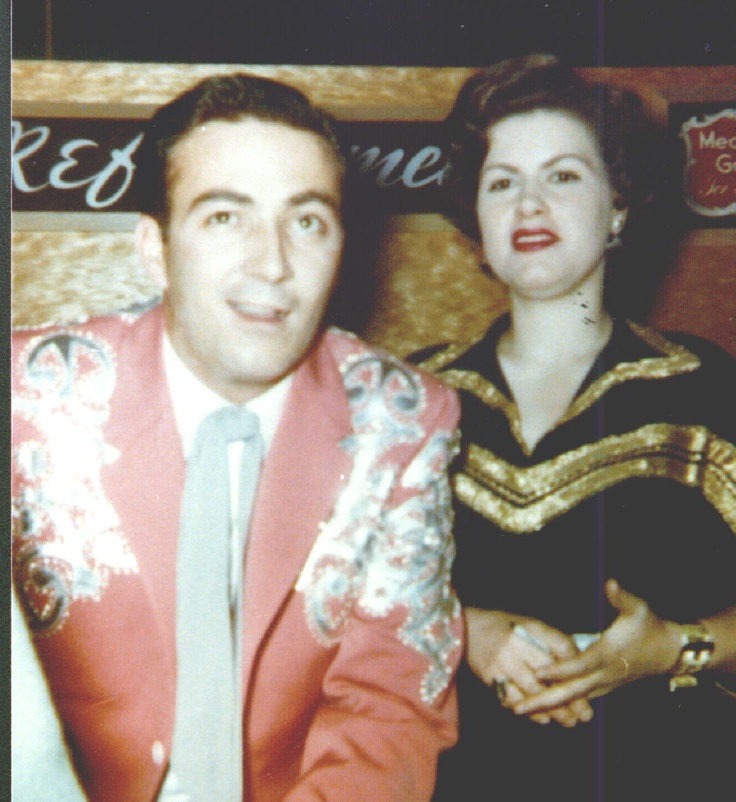
Faron “Hillbilly Heartthrob” Young was a classic honky-tonk singer.  He had 36 top ten singles between 1952 and 1973 – “Sweet Dreams” is my favorite – and became a successful Nashville businessman after his recording career ended.  But he had a lot of ups and downs in his personal life.

Faron Young and Patsy Cline both had
hits with iconic Willie Nelson songs
Young died in 1996 of a self-inflicted gunshot wound.  Depression and poor health – he suffered from emphysema, and had recently undergone prostate surgery – may have contributed to his committing suicide.

Here’s Faron Young’s recording of “Three Days”:


Click below to buy the song from Amazon:

Tuesday, December 9, 2014

Tracy Nelson (ft. Willie Nelson) – "After the Fire Is Gone" (1974)


Love is where you find it
When you find no love at home

In a recitation before the last verse of his 1975 hit, "You Never Even Called Me by My Name," David Allan Coe said that the song's writer -- Steve Goodman -- had told him that it was the perfect country-western song.


Coe demurred, arguing that Goodman's song was not the perfect country-western song because it didn't mention mama, or trains, or trucks, or prison, or getting drunk.

Goodman then added the famous final verse of the song, which incorporated all of Coe's requirements:

I was drunk the day my mama got out of prison
And I went out to pick her up in the rain
But before I got to the station in my pickup truck
She got ruined over by a damned ol' train

Goodman and Coe left something off their list.  The perfect country-western song would have to mention cheatin' as well.


"After the Fire Is Gone" covers cheatin' in spades.  Here's the first verse of this classic cheatin' duet:

The bottle is almost empty
The clock just now struck ten
Darlin' I had to call you
To our favorite place again
We know it's wrong for us to meet
But the fire's gone out at home
And there's nothin' cold as ashes
After the fire is gone

The second verse reveals that the lovers' mutual passion is tempered with a healthy dose of guilt:

Your lips are warm and tender
Your arms hold me just right
Sweet words of love you remember
That the one at home forgot
Each time we say is the last time
But we keep hangin' on
And there's nothin' cold as ashes
After the fire is gone

"After the Fire Is Gone" was penned by fiddle-player-turned-Grammy-winning-songwriter L. E. White.  It was a 1971 country hit for Loretta Lynn and Conway Twitty.

Conway Twitty
Loretta and Conway released eleven albums together, four of which made it to #1 on the Billboard country album chart.  "After the Fire Is Gone" was the first single the duo released, and it made it all the way to #1, as did their next four singles.  

Today 2 or 3 lines is featuring the 1974 Tracy Nelson-Willie Nelson cover of the song, but first I want to share a video of Lynn and Twitty performing "After the Fire Is Gone" because you need to see Twitty's hair.  Good ol' Conway had the damnedest coiffure I've ever seen on a man:


Tracy Nelson was born in 1944 in Madison, Wisconsin.  She started out singing folk music, then added traditional blues songs to her repertoire.  

Nelson moved to San Francisco when she was 21, and formed the blues-rock band Mother Earth, which performed at the Fillmore West with luminaries such as Janis Joplin and Jimi Hendrix.


A few years later, she relocated to Nashville.  In 1974, she released her first post-Mother Earth solo LP.  That eponymous album includes a 100%-country cover of "After the Fire Is Gone" (with an assist from Willie Nelson) but most of the other tracks on the record are more bluesy and soulful than country-western – think Janis and Aretha, not Loretta.


I decided to feature this song after a friend of a friend asked my help in tracking it down.

This friend of a friend is a pretty smart cookie, but she hasn't been writing a three-songs-per-week music blog for five years – I have, so I've got a few tricks up my sleeve when it comes to tracking down obscure songs that regular folks aren't aware of.

(Not the same Tracy Nelson)
In any event, I'm glad she asked for my help because it brought this very good song to my attention so I could bring it to yours.

Here's "After the Fire Is Gone":


Click below to buy the song from Amazon:  

Thursday, February 14, 2013

Waylon Jennings and Willie Nelson -- "Good Hearted Woman" (1976)


But she never complains
Of the bad times or bad things he's done
She just talks about the good times they've had
And all the good times to come

The heroine of this song doesn't just see the glass as half-full rather than half-empty -- she sees that half-full glass as filled up to overflowing.

My daughters are "mirror-image" twins -- that is, they are identical twins who are opposites in certain ways.  For example, one of my daughters is left-handed, and the other is right-handed.  (Some mirror-image twins have reversed internal organs -- which isn't really a problem, but which probably comes as a major surprise to any doctor who examines the reversed twin without knowing his or her medical history.)

Mirror-image twins
"Good Hearted Woman" is the mirror-image twin of "Stand By Your Man."  Both are about patient, all-forgiving wives who tolerate the behavior of their narcissistic and immature husbands.  

"Stand By Your Man" was co-written and recorded by Tammy Wynette, a female singer who was one of the great mainstream, Nashville-based country music superstars.  By contrast, "Good Hearted Woman" was written and performed by Willie Nelson and Waylon Jennings, two male performers who were the giants of Texas-based "outlaw" country-western music.

And the two songs have a very different mood.  The woman in Tammy's song seems to be suffering -- she is paying a price for her fidelity to a man who seems to have a lot of issues -- while I see the woman in Willie and Waylon's song as having a smile on her face because her husband is lovable and charming in spite of his foibles.

Willie and Waylon
You can't write about Texas popular music and leave out the outlaws like Willie and Waylon.  Their music is as crucial to the psyche and popular culture of Texas as the "Summer of Love" groups are to the psyche and culture of San Francisco.  Until they came along, I think a lot of people (like me) viewed country music as formulaic and sappy.  But Nelson and Jennings were great songwriters and exceptional singers, who combined finesse and style with raw emotion and a whole lotta soul.

I would have had a hard time choosing just one of them to feature in "29 Posts in 28 Days," but fortunately I didn't have to.  Their live duet of "Good Hearted Woman" was featured on the groundbreaking 1976 album Wanted! The Outlaws, which featured previously released material by Nelson, Jennings, Jessi Colter (Jennings' wife), and Tompall Glaser.  It was the first country album to sell a million copies.  The Nelson-Jennings "Good Hearted Woman" made it to #1 on the Billboard "Hot Country Singles" chart.


Willie and Waylon had written the song in 1969 while they were staying at a hotel in Fort Worth.  The story goes that the song was inspired by a newspaper story that Waylon read that referred to Tina Turner as "a good-hearted woman loving two-timing men."  He tracked down Nelson, who was in the middle of a poker game.  Jennings joined the game, and the two of them worked out the lyrics as they played.  

(That may be the best story I've ever read about how a popular song came to be written.)

Before I share the Wanted! The Outlaws version of "Good Hearted Woman," here's Waylon Jennings' solo version of the song, which was released in 1972 and was a #3 country-western hit.  The two performances have a lot in common -- including the key change before the second chorus:


Here's the live Nelson-Jennings recording of "Good Hearted Woman."  Happy Valentine's Day, ladies!


Here's a link you can use to buy the song from Amazon:

Sunday, April 8, 2012

Willie Nelson -- "Uncloudy Day" (1977)


Oh, they tell me of a home far beyond the skies
Oh, they tell me of a home far away
Oh, they tell me of a home where no storm clouds rise
Oh, they tell me of an unclouded day

Most Saturdays and Sundays, I ride my bike to Lake Needwood, a small manmade lake that's only a few miles from my house.  Yesterday, I was struck by how clear the sky over the lake was:

Lake Needwood yesterday
I knew I heard a song with the phrase "uncloudy day" or "unclouded day" in the lyrics, so I pulled out my Blackberry and did a quick Google search.  When I saw the rest of the lyrics, I decided it was the perfect song to feature on 2 or 3 lines today.

"The Unclouded Day," was written by J. K Alwood, a United Brethren Church preacher, in August 1879.  Alwood was returning to his home after participating in a theological debate with an Adventist minister when he witnessed an unusual meteorological phenomenon.  He later described what he saw that night:

It was a balmy night in August 1879, when returning from a debate in Spring Hill, Ohio, to my home in Morenci, Michigan, about 1:00 a.m., I saw a beautiful rainbow north by northwest against a dense black nimbus cloud.  The sky was all perfectly clear except this dark cloud which covered about forty degrees of the horizon and extended about halfway to the zenith.  The phenomenon was entirely new to me and my nerves refreshed by the balmy air and the lovely sight. . . . To awake [the next morning] and look abroad and remember the night was to be filled with sweet melody.  Awhile at the organ brought forth a piece of music now known as "The Unclouded Day." 

A number of well-known singers (like Johnny Cash, Ralph Stanley, and Loretta Lynn) and not-so-well-known singers have performed "The Unclouded Day" -- there are hundreds of recorded versions available through the major online music sites -- and it took me a long time to decide which version to feature on 2 or 3 lines.

I chose Willie Nelson's recording of the song (which he calls "Uncloudy Day"), which made it to #4 on the Billboard country charts in 1977, for several reasons.  First, it features some nice gospel piano playing.  (Many of the recordings of this song are done bluegrass style, which is a little foreign to where I grew up -- I prefer gospel piano accompaniment.)  Second, it includes all four verses of the songs.  (Many of those who have recorded the song cut it down to two or three verses.)  Finally, hearing Willie Nelson sing a song is always interesting.)

Here's Willie Nelson's version (which includes all the words to the song):


The late Howard and Vestal Goodman were Southern gospel legends.  Here's a video of them singing "The Unclouded Day" on The PTL Club:


Here's Ralph Stanley's bluegrass version:


According to this video, "The Unclouded Sky" was the first song Johnny Cash ever performed in public.  He was 12 years old when he sang the song in a church in Dyess, Arkansas -- accompanied on the piano by his mother.


Finally, here's Willie Nelson performing the song once more in the underrated 1980 movie, Honeysuckle Rose.  (In that movie, Nelson was a touring country singer who had an affair with a very young Amy Irving -- she replaced her father in Nelson's band when he became too ill to go on the tour -- but patched things up with his wife, Dyan Cannon, when he returned home.)


Click here to buy Willie's 1977 version of the song from Amazon: