Showing posts with label Kenny Rogers. Show all posts

Friday, March 23, 2018

The First Edition – "Just Dropped In (To See What Condition My Condition Was In)" (1968)


I pushed my soul in a deep dark hole
And then I followed it in

At the end of The Big Lebowski, the Sam Elliott cowboy-narrator character offers this pithy review of the movie:  “It was a purty good story, don't you think?  Made me laugh to beat the band.  Parts, anyway.” 

Jeff Bridges and Sam Elliott in The Big Lebowski
There’s been a lot of hoorah recently about The Big Lebowski because it turned 20 years old this month.  As a result of that hoorah, I checked the DVD out of the public library and watched the movie in its entirety for the first time.

Like Sam Elliott, it made me laugh to beat the band, too.  Parts, anyway.  

Other parts, not so much.

*     *     *     *     *

The lead character in The Big Lebowski – his name is Jeff Lebowski, but he is usually called “the Dude” – is portrayed by Jeff Bridges at his shaggy-doggiest.  

The Bridges character was inspired by a friend of the Coen brothers – who wrote and directed the movie – whom they obviously found incredibly amusing.  

I guess you had to be there.  To me, the Dude is just another unemployed, long-haired, dope-smoking sixties burnout.  

*     *     *     *     *

The other cast members of The Big Lebowski include a number of actors who appear at least semi-regularly in Joel and Ethan Coen’s movies – including the late Jon Polito, John Turturro, Steve Buscemi, and John Goodman.

The Coen brothers have said that they had those actors in mind when they wrote the parts for the characters they played.  

Polito appears in only one scene – a scene which has no apparent reason for existing.  It adds two minutes to the length of the movie but accomplishes nothing else.

Turturro absolutely kills with his over-the-top portrayal of a swishy Hispanic bowler named Jesus:


It’s a small role, but Jesus is as vivid and unforgettable as anything in the movie.  (I don’t think this character would fly today – he’s not only a gay stereotype, but a child-molester as well – but I guess that didn’t bother anyone in 1998.) 

Buscemi’s role is just the opposite: inoffensive and exceptionally forgettable.  You could cut his character out of the movie and not miss a thing.  What a waste of a great character actor.

Goodman’s character is a cliché, and an unfunny one at that.  He swears and threatens and blusters and pontificates, and generally makes you wish 90% or so of his lines had been cut.  (Perhaps the dumbest idea the Coens had was to make Goodman’s character a very observant converted Jew who refuses to bowl on the Shabbos.)

*     *     *     *     *

In an interview that’s included on the DVD of the movie, the Coens explain that The Big Lebowski was inspired by The Big Sleep, another LA-based private-eye flick with a notoriously incoherent plot.  (The story goes that neither the screenwriters – one of whom was William Faulkner – nor the director were sure whether one of the characters had killed himself or been murdered.)

There are some similarities between those two movies.  For example, The Big Lebowski’s Bunny Lebowski character – a lubricious trophy wife and part-time porn star played by Tara Reid, who couldn’t have been cuter if she tried – is an X-rated version of The Big Sleep’s Carmen Sternwood.  

Carmen’s come-on line to The Big Sleep’s male star, Humphrey Bogart, is “You’re cute.”  Bunny’s come-on line to Jeff Bridges in The Big Lebowski is a tad more explicit:


The movie that the Coen brothers stole the most from was not The Big Sleep, but Robert Altman’s 1973 flick, The Long Goodbye – which was, like The Big Sleep, based on a Raymond Chandler novel.  

The Big Lebowski is not nearly as good as The Long Goodbye, an eccentric film that also lulls you into a state of bemused confusion but then surprises you with the most shockingly violent scene I’ve ever seen in a movie.

The Busby Berkeleyesque “Gutterballs” dream sequence in The Big Lebowski is like nothing in either The Big Sleep or The Long Goodbye.  It’s a hot mess that’s redeemed only by its use of today’s featured song:


*     *     *     *     *

The Big Lebowski is the movie equivalent of side two of Abbey Road – it has its moments, but few of those moments have anything to do with one another.  The whole is less than the sum of its parts, and the sum of its parts isn’t anything to write home about.

You can say the same about the movie’s soundtrack.  Bob Dylan’s “The Man In Me” is not one of his better efforts, but it’s prominently featured on that soundtrack, as are several campy selections that were chosen with tongue firmly in cheek – like “Tumbling Tumbleweeds,” “Standing on the Corner (Watching All the Girls Go By),” and “Viva Las Vegas” (two non-Elvis versions).

But kudos to the Coens for making the Dude a devotee of Creedence Clearwater Revival rather than the Grateful Dead or the Eagles.

And for using the Townes Van Zandt cover of “Dead Flowers” over the closing credits.

And especially for choosing the truly fabulous 1968 Kenny Rogers and the First Edition hit, “Just Dropped In (To See What Condition My Condition Was In),” to accompany the aforementioned “Gutterballs” dream sequence.  BEST SONG EVER!

Here’s “Just Dropped In (To See What Condition My Condition Was In)”:


Click below to buy the song from Amazon:

Sunday, September 15, 2013

Kenny Rogers and the First Edition -- "Ruby, Don't Take Your Love to Town" (1969)


She's leaving now 'cause I just heard 
The slamming of the door
The way I know I heard it slam 
One hundred times before

The last 2 or 3 lines told the sad tale of the famous 12th-century French lovers, Abélard and Héloïse.


I learned about the unhappy couple from Marilyn Yalom's scholarly history of amour, which is titled How the French Invented Love: Nine Hundred Years of Passion and Romance.


After telling the story of Abélard and Héloïse, Marilyn Yalom spins a more contemporary tale of French romance, which also didn't end well but at least didn't involve any males getting neutered:

My French friend Marianne married Pierre in 1977, soon after a divorce . . . . She was 29 at the time, and Pierre was 49.  Pierre's sister, Jeanne, warned him that with such an age difference, he was likely to become a cuckold.  Pierre responded that if that time were to come, he would survey the field of available men and choose a lover for his wife.  

Big talker, this Pierre guy.

Marianne's favorite American wine?
Pierre should have listened to his sister.  But he was a 49-year-old guy who was about get some 29-year-old buns, and the little head was telling the big head what to do.  So he married her despite Jeanne's warning, and you can guess what happened next.

Marianne did not wait for Pierre to find her a lover.  Some 15 years into their marriage, she fell in love with Stéphane, a Frenchman of her own age.  Stéphane and Marianne did their best to keep their affair secret, but she was seen once too often exiting his apartment, and word got back to Pierre, who was at first incredulous and then enraged.  


Jules et Jim
Pierre must have been tempted to find some henchmen to do an Abélard on Stéphane, but that sort of thing is frowned upon in these more civilized times.  Instead, he confronted his wife, demanding that she choose between him and her lover.  

According to Yalom, Marianne was "deeply attached to Pierre . . . but madly in love with Stéphane," and didn't want to give either one up.  So Marianne pleaded with her sister-in-law to help her negotiate a deal with her husband.  Eventually, they worked out an arrangement:

[Marianne] would stay in the marriage until death, if she were allowed to be out of the house with no questions asked, from four to seven o'clock, every day except Sunday. . . . Pierre swallowed his pride and accepted her terms.  They stayed married for another 12 years, until Pierre became terminally ill, whereupon Marianne nursed him faithfully until he died.  She grieved him sincerely and then moved in with Stéphane.


Casablanca
I'm guessing she "grieved him sincerely" for just as long as it took for her to drive to chez Stéphane and get out of her knickers.

Let's review the bidding here.  Pierre was 49 and Marianne 29 when they were wed.  That means he was 64 and she was 44 when she started bumping uglies with Stéphane.  So Pierre was 76 when he kicked the bucket, allowing the 56-year-old Marianne to play hide the salami morning, noon, and night if she wished (assuming Stéphane was able).

I can't believe that Pierre lasted 12 years knowing what was going on between quatre heures et sept heures every day of the week (except Sunday).  I'm surprised he didn't either have a fatal stroke or take out Marianne within a year or two.  

I love the "except Sunday" detail.  Maybe Marianne was religious enough to fear getting struck by lightning if she committed blatant adultery on Sundays as well as every other day of the week.  Or maybe her kit-and-kaboodle just needed a break from its daily labors.  ("And on the seventh day, Marianne rested," etc.)  

Butch Cassidy and the Sundance Kid
The author concludes her account of Pierre, Marianne, and Stéphane with these words:

It is, I believe, a quintessentially French story.  Since I knew all the parties involved, I can say that they carried it off with great dignity. . . . Although most of the people in their circle knew that Marianne and Stéphane were lovers, no one mentioned it.  Everyone kept up appearances following the etiquette of their upper-bourgeois social class.

The story is certainly "quintessentially French," if by "quintessentially French" you mean "quintessentially disgusting" or "quintessentially sleazy" or "quintessentially dishonest."

Reality Bites
But it appears that it's perfectly OK to be disgusting and sleazy and dishonest in France if you do so "with great dignity" and follow proper bourgeois etiquette.

When I read this story, I immediately thought of Kenny Rogers and the First Edition's 1969 hit, "Ruby, Don't Take Your Love to Town."

Of course, Ruby was no upper-bourgeois -- she sounds more like good old American trailer trash.  I doubt that our French friend, Marianne, "painted up" her lips and "rolled and curled" her dyed hair before heading over to her little love nest -- she wouldn't have wanted to look like a little slut (although she certainly behaved like one).

I also get the feeling that Ruby didn't have a steady beau like Stéphane.  The song leaves the impression that Ruby heads off to town each night ready to take pot luck when it comes to male companionship.

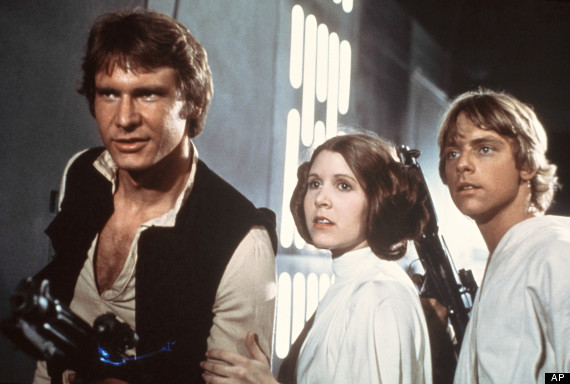
Star Wars
The song ends with the singer (a paralyzed Vietnam vet) expressing the sentiment that he would like to  could get out of his wheelchair, walk over to where his gun is, and fill little ol' Ruby with lead.  

As we learned from the Pierre-Marianne-Stéphane story, that's not a very French solution to the problem of adultery.  Emptying the contents of a high-capacity magazine into your cheating Mrs. is hardly an example of carrying anything off "with great dignity," is it?  It clearly violates upper-bourgeois etiquette.  And it is completely lacking in je ne sais quoi.  

In other words, it is pas du tout French.   


"Ruby, Don't Take Your Love to Town" was written by country singer Mel Tillis.  Tillis, who stuttered when he spoke but not when he sang, had started out writing hit songs for other country-western singers but eventually became a star recording artist in his own right.  Tillis had a winning personality, and was a popular guest on the television talk-show circuit, as well as appearing in a number of movies.  

"Ruby" was originally a top ten country hit for Johnny Darnell in 1967.  It has been covered by a wide variety of performers, including not only country singers (Waylon Jennings, Roger Miller, Bobby  Bare and the Statler Brothers, just to name a few) but also Cake, the Killers, Greek songstress Nana Mouskori (who recorded it in French), Walter Brennan (who talked it more than sang it), and  -- last and probably least -- Star Trek's Leonard Nimoy, who recorded five albums between 1967 and 1970.  (If you bought one, I'm sure you're still regretting your decision.)

Here's Kenny Rogers and the First Edition's version of "Ruby, Don't Take Your Love to Town":


Click here to buy the song from Amazon: